MDX Moonroof Glass Failures and Spontaneous Shattering
When the front moonroof on your Acura MDX suddenly implodes on the highway, it usually sounds like a gunshot inside the cabin. While road debris can be the culprit, this vehicle has a well-documented history with NHTSA complaints regarding spontaneous tempered panel failure. Thermal expansion, torsional body flex, or tiny nickel-sulfide inclusions trapped during glass manufacturing put tremendous internal tension on the dark privacy-tinted tempered safety sheet until it suddenly gives out. The result is thousands of small glass pebbles raining straight down onto the fabric sunshade or the front seats.
Every MDX trim from this run—whether you drive a front-wheel-drive Base, a Technology package, the Advance, an A-Spec, or the Sport Hybrid—shares the exact same single-pane tilt-and-slide setup over the front row. Acura did not offer a multi-panel panoramic glass roof on these vehicles. Because the roof relies on a standard single-layer tempered panel rather than an acoustic laminated sandwich, any localized impact or structural stress break destroys the entire integrity of the unit instantly.
Hardware, Gaskets, and Rail Integration
The glass unit does not use urethane glue to adhere to the car body. Instead, the assembly—which supersedes original Acura factory reference numbers 70200-TZ5-A01 and 70200-TZ5-A11 under current OEM designation 70200-TZ5-A12—consists of the privacy glass pane, bonded structural underside brackets, and an outer perimeter rubber edge seal. If your glass is intact but leaking air or whistling loudly above 80 km/h, the culprit is often that outer encapsulation molding, which corresponds to seal part number 70205-SEP-A01, drying out or shrinking over the roof sheet metal.
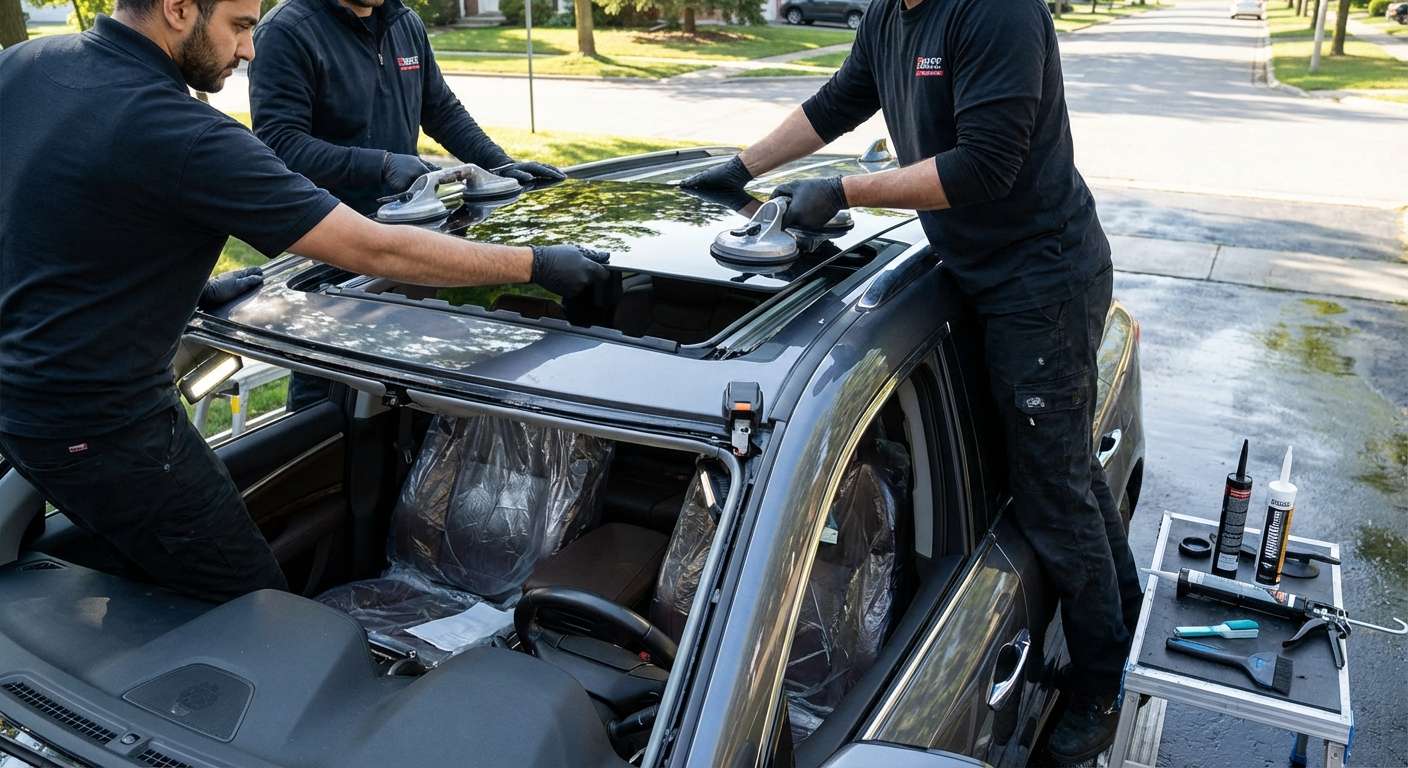
Securing the unit to the drive mechanism involves four Torx bolts—two on the driver side and two on the passenger side. These fasteners link the glass brackets directly to the electric drive guide arms. When you have a shattered roof open to the weather, I typically reach your driveway roughly an hour after you get in touch, vacuum the loose tempered beads from the headliner cavity, and unbolt the destroyed frame hardware. Because the mechanical components are concealed behind snap-on interior side plastic covers, servicing just the glass panel avoids tearing down the headliner or dropping the main cassette frame assembly (part 70100-TZ5-A02).
Cassette Track Maintenance and Drainage
Whenever moonroof glass shatters on this model, fractured shards inevitably tumble past the side tracks and settle deep inside the aluminum cassette tray. If these fragments are ignored during glass replacement, they cause severe secondary mechanical failures:
- Track obstruction: Loose glass blocks the dual cable drive regulator, causing the electric motor to stall or repeatedly trigger the auto-reverse pinch-protection mechanism.
- Corner drain blockages: The sunroof frame tray relies on four dedicated drain lines at each corner. The forward tubes snake down through the A-pillars, while the rear lines dump near the wheel wells. Stray glass bits can wash into these openings, backing water up until it overflows the headliner and drips onto the center console or front footwell electronics.
- Sunshade jamming: The interior color-matched sliding sunshade runs on an integrated sub-rail just below the glass brackets. Fragments wedged into this track will gouge the fabric or lock the shade permanently into the roof pocket.
Can I replace only the glass without changing the motor and tracks?
Yes. As long as the mechanism was not forced while choked with glass shards, the motor, drive cables, and structural tracks remain fully reusable. Swapping the panel requires only unbolting the side brackets from the guide arms, thoroughly cleaning the cassette basin, and bolting in the replacement panel before adjusting the height alignment flush with the roofline.
Why did the glass shatter if nothing hit the roof?
Tempered safety glass operates under heavy compressive surface stress balanced by internal tensile stress. Temperature swings between direct sun on the dark glass and air conditioning inside the cabin, combined with subtle roof flex over bumps, can cause microscopic manufacturing flaws to propagate instantly without an external rock strike.
Do you have to take down the entire interior headliner to replace the sunroof?
No. Full headliner removal is only necessary if the main cassette frame is cracked or the underlying cable guide rails are bent. Replacing the broken glass panel itself is performed entirely from the top and through the side mechanism access flaps while the headliner stays in place.