Curved Armor Glass Stress and Heavy Highway Debris
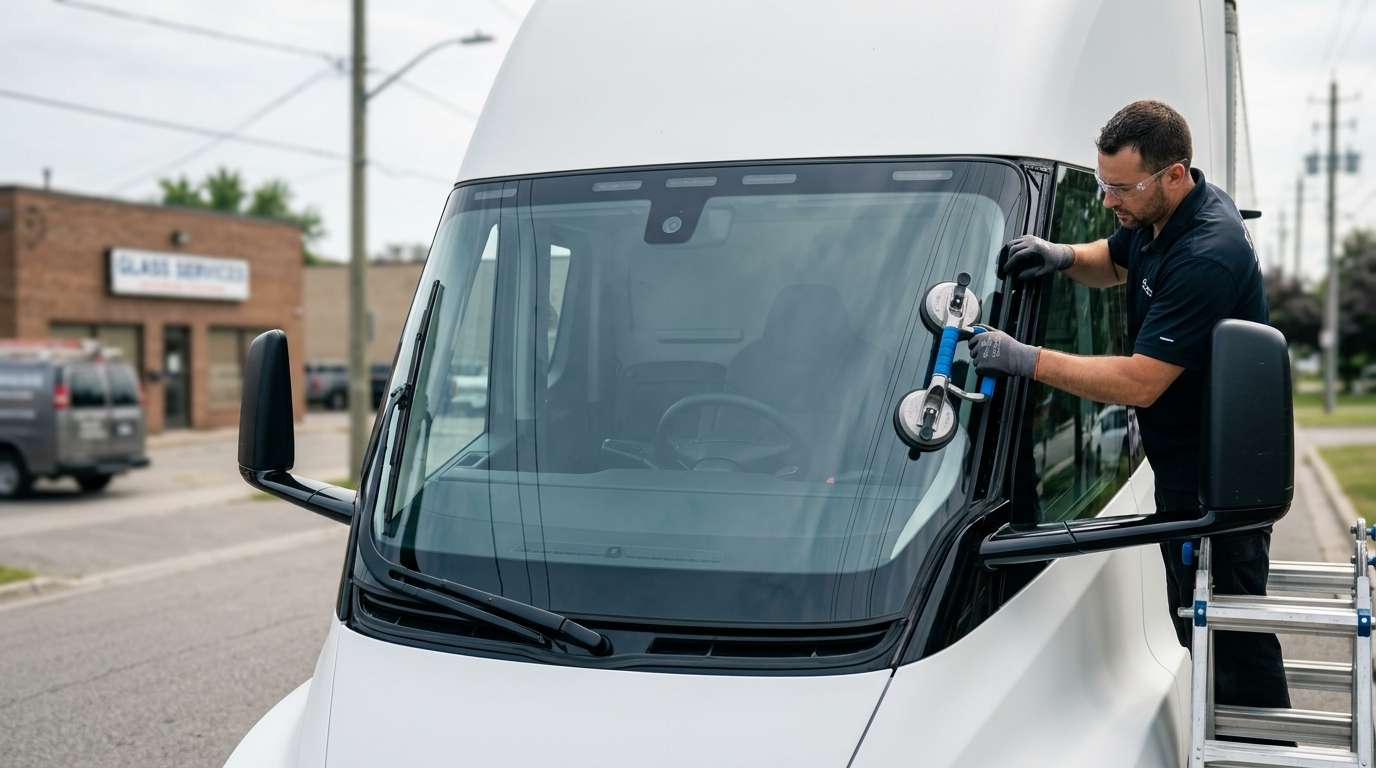
Operating a Class 8 commercial tractor with a centered driver cockpit creates a unique vulnerability along the massive curved frontal glass. The expansive panoramic windshield on this hauler functions as a primary aerodynamic fairing, wrapping tightly around the cab to meet the flush A-pillars and the overhead roof deflector. Because the driver sits directly on the vehicle centerline rather than to the left, road debris kicked up by leading transport trailers hits this glass with direct perpendicular force across the central viewing corridor. Tesla engineered this assembly using impact-resistant multi-layer Armor Glass, which pairs an energy-absorbent outer ply with a chemically strengthened inner ply to withstand heavy aggregate. Even with that reinforced composition, high-velocity gravel thrown off dump trucks along commercial freight routes can fracture the exterior laminated layer, creating extensive spiderweb cracks that immediately distort forward visibility across the center-steer vantage point.
The sheer physical scale of the curved glass means that thermal differential adds substantial stress to any existing stone chip. Heavy infrared-rejection films and acoustic dampening interlayers are sandwiched deep inside the laminate to reduce cab heat soak and dampen severe road rumble. When auxiliary cabin climate systems cycle high-output heat against the interior surface during freezing highway runs, the temperature gap between the freezing outside air and the heated cabin causes small perimeter micro-fissures to run rapidly toward the upper roof fairing joint.
Thermal Loads, Mono-Wiper Sweep, and Structural Integration
The clearing system on this cab places concentrated physical demands across the lower cowl and center face of the glass. Clearing such a tall, sweeping windshield requires a single massive articulated heavy-duty mono-wiper arm designed to cover virtually the full expanse of the laminate. If highway sand, winter grit, or road salt accumulates along the recessed lower drip channels near the composite cowl access panel, the high-tension sweep of that giant mono-wiper can drag abrasive particulates directly across the driver line of sight. Over prolonged hauls, this creates severe circular surface scoring right through the camera array line.
Whenever dispatch calls in an emergency glass replacement for a grounded transport, I plan my schedule so I can be on-site roughly sixty minutes after a haul operator books the job. Getting the cab secured quickly prevents road vibrations from driving stress fractures further into the bonded cab frame.
Mounted high against the top center of the glass sits the forward-facing Tesla Vision optical array housing, which operates without traditional cowl rain sensors. The glass itself incorporates specialized heating elements directly over the camera aperture to prevent frost, ice, and road slush from blinding the optical path. Cracks running into this heated viewing zone disrupt the electrical continuity of the defroster grids, which blinds the truck's forward tracking and forces the vehicle into degraded operational modes until the entire curved structural assembly is pulled and renewed.
Aerodynamic Perimeter Bonding and Cab Aperture Clearances
Preserving the low drag coefficient of the tractor requires the replacement glass to align flush against every surrounding structural cab panel. Unlike traditional big rigs that rely on thick rubber gaskets and exposed aluminum exterior trim, this cab utilizes an aerodynamically flush-bonded design with minimal perimeter mouldings. The edges of the glass must interface perfectly with the forward-hinged side cab windows and the composite body panels flanking the rearward side-view camera fin assemblies. If an aftermarket replacement panel deviates even slightly from the compound curvatures engineered into the factory aperture, turbulent wind noise penetrates the acoustic interlayer, and air pressure at highway speeds can stress the perimeter seal against the high-strength steel A-pillars.