Frameless Door Flex and Edge Fractures on the 992 Coupe Quarter Window
Most side glass damage comes from road debris or forced entry, but on the 992 Coupe, the stationary quarter glass frequently cracks without an outside impact. The leading vertical edge of this quarter glass forms the B-pillar closure line where the front frameless door glass meets the body. When occupants push the upper trailing corner of the frameless door glass to swing the door shut rather than using the door handle, the door glass deflects inward. That momentary flex drives the edge of the door pane directly into the leading edge of the quarter window, resulting in a distinct spider-web fracture or edge chip right at the shut line.
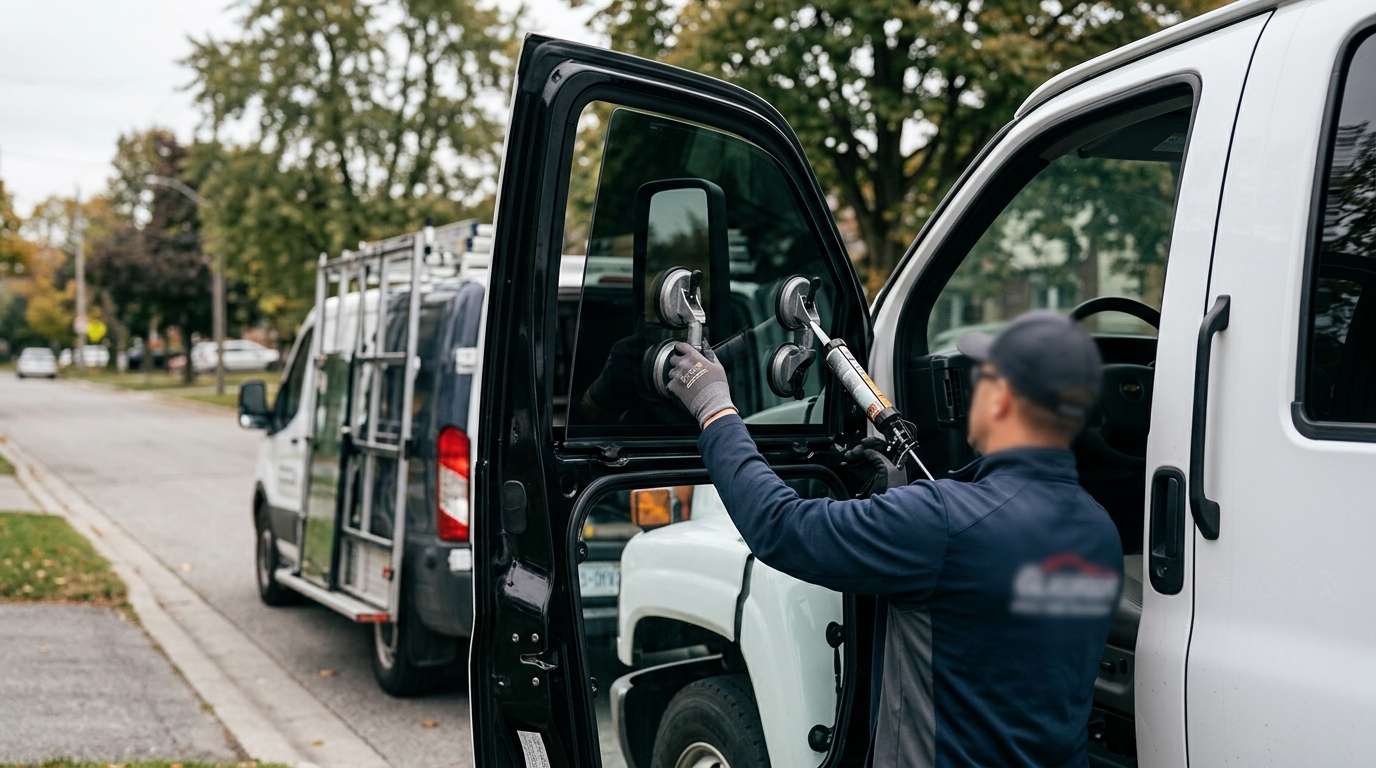
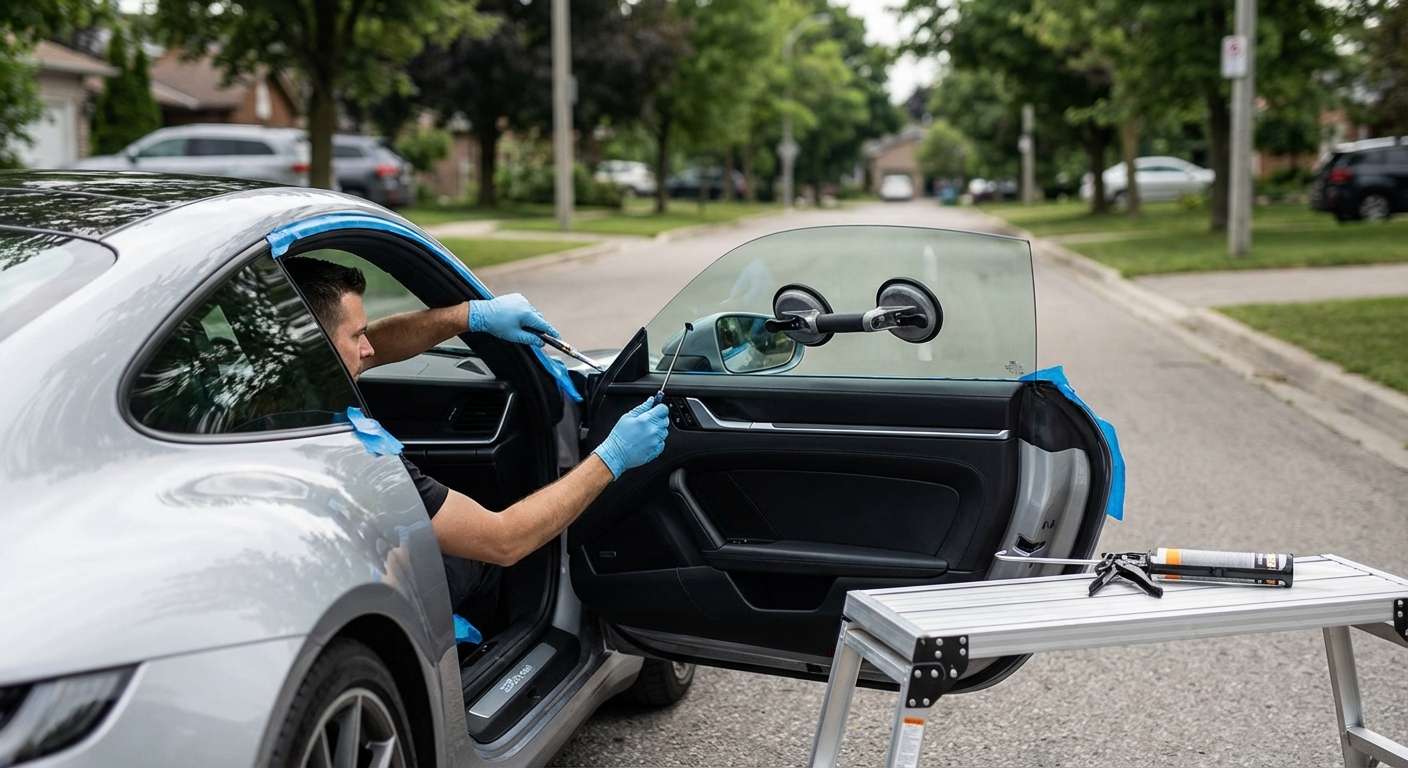
This structural sensitivity led Porsche to issue Advanced Technical Information Bulletin #2308 (.4). The bulletin details how mechanical contact from misaligned door glass, combined with over-torqued factory fastening nuts on the threaded studs inside the body cavity, pre-stresses the glass. When an owner calls with a shattered side quarter window, I typically arrive at their location roughly an hour after booking to inspect the surrounding aperture and get the replacement underway before broken fragments mark the paintwork. Because the quarter glass sits tucked between the roof rail, rear quarter panel flank, and the interior C-pillar trim, clearing fractured shards promptly is critical to prevent scratching the surrounding leather side bolsters.
Factory Glass Compositions and Mounting Architecture
Replacing the rear vent window on this platform requires distinguishing whether the car was built with standard tempered glass or the lightweight noise-insulating laminated glass (LWNG), cataloged under factory Option Codes VW4 and VW7. Track-focused builds such as the GT3, GT3 RS, and S/T make extensive use of the lightweight laminate variants (base parts 992-845-297-T-03C for the left and 992-845-298-T-03C for the right, finished with matte black trim). These thinner laminated panes were particularly prone to stress fractures along the B-pillar seal, leading the factory to abandon early revisions in favor of updated Index H assemblies or standard-thickness tempered units.
Unlike classic air-cooled 911s that utilized simple rubber friction seals or opening hinge latches, the 992 quarter window is entirely stationary. The glass assembly arrives with integrated encapsulation and perimeter trim molding attached directly to the perimeter. Standard non-insulated models with matte black trim align with base components 992-845-297-AJ-03C and 992-845-298-AJ-03C, while vehicles optioned with bright exterior styling require the silver and aluminum moldings found on variants like 992-845-298-AA-V09 and 992-845-297-AK-V09. The pane is secured using a hybrid anchoring system: threaded mounting studs that pass through the inner body frame alongside a structural urethane bed that ties the glass into the vehicle's unibody torsional rigidity.
Coupe Specifics versus Cabriolet and Targa Architecture
Fixed rear vent glass is unique to the fixed-roof Coupe. If you drive a 992 Cabriolet, the body architecture eliminates this fixed glass pane entirely, replacing it with an active, power-retractable mini quarter window that drops down inside the rear fender well when the soft top retracts. The Targa platform similarly omits this stationary quarter piece, relying instead on its distinctive wraparound curved rear greenhouse dome mounted directly behind the cast B-pillar roll hoop.
On the Coupe, the vent window plays a structural role in sealing cabin airflow at speed. Because there is no external metal B-pillar dividing the door glass from the quarter pane, alignment along the vertical edge dictates interior wind noise and cabin pressure. Setting the replacement glass requires exact depth positioning relative to the rear quarter panel flank, ensuring that the front edge cleanly matches the travel path of the frameless door window every time the door indexes up into its weatherstripping.