Frameless Window Drop Failures and Spontaneous Cracking
Stress fractures appearing along the top edge without an impact are a frequent complaint from drivers running the factory lightweight acoustic glass. Porsche documented this precise issue in Advanced Technical Information bulletin ATI 2308.4, which covers spontaneous cracking at the upper perimeter of the thin-sheet laminated glass. The structural rigidity of the body puts immense localized pressure on the window panes during hard cornering or track sessions. In other cases, simple cabin pressure spikes from closing the rear lid or doors cause micro-fractures along unchamfered glass edges on trims like the GT3 RS, Carrera T, and GTS models fitted with lightweight packages.
Mechanical interference causes another set of broken side windows. Because every Carrera, Targa, and Cabriolet uses a frameless side window setup, the glass relies on an electronic short-drop mechanism to dip roughly 10 to 15 mm the moment you touch the exterior handle. If the door control module loses its travel position or a microswitch fails, the top of the glass remains buried inside the roofline rubber weatherstrip channel when the door swings open. Even worse, if the fore-and-aft tilt on the dual-rail regulator shifts, the trailing vertical edge of the window clips the fixed rear quarter window, chipping or shattering the glass instantly.
Tempered Versus Lightweight Glazing Configurations
Identifying the exact variant installed in your door is critical because the mounting clamps and channel seals are engineered specifically for either a single thick pane or a thin multi-layer laminate.
| Glazing Profile | Factory Build Codes | Primary Vehicle Applications | Notable Characteristics |
|---|---|---|---|
| Standard Tempered | Base Glazing | Carrera, Carrera S, 4S, Turbo | Single-layer safety glass; fragments into small blunt granules upon impact. |
| Lightweight Laminated | Option VW4 / VW7 | GT3, GT3 RS, Carrera T, Lightweight Packs | Thin outer glass sheets with acoustic PVB interlayer; prone to ATI 2308 edge stress. |
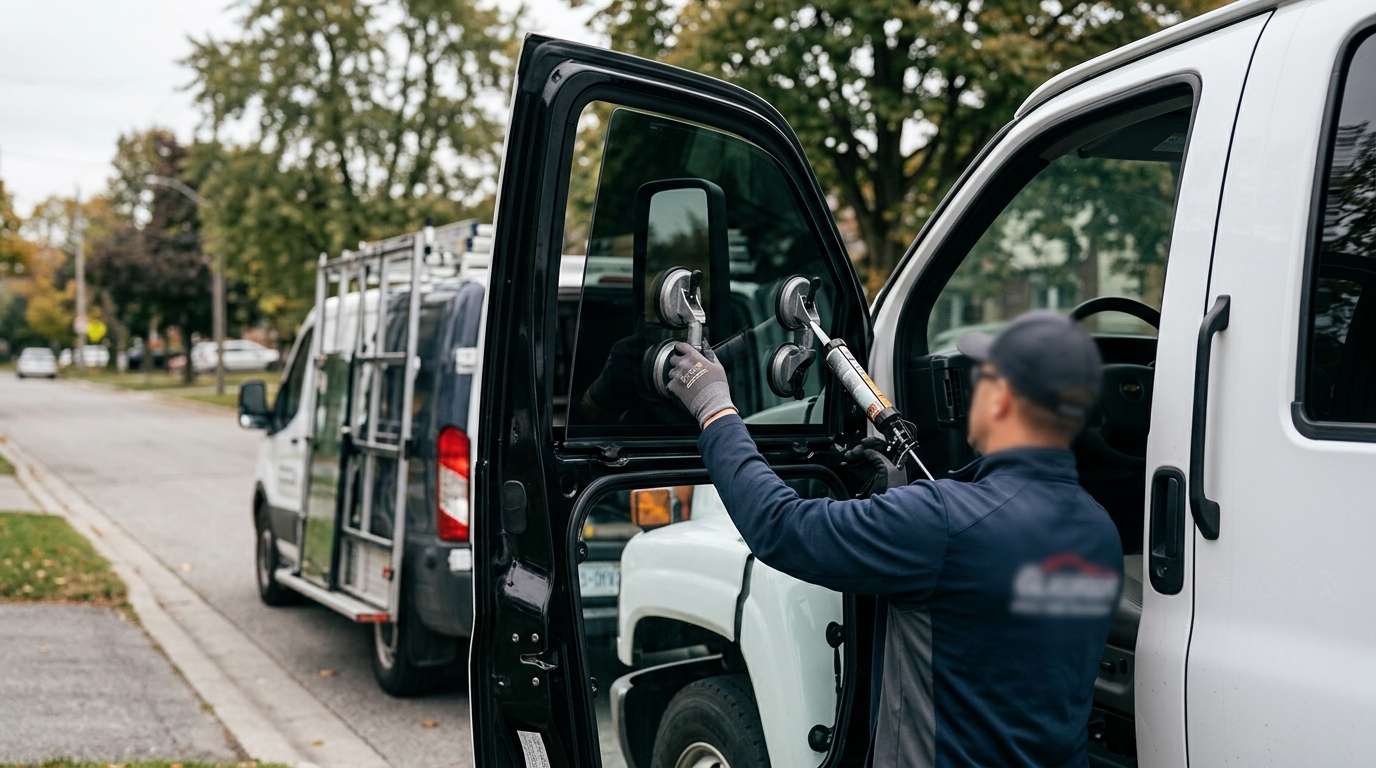
When swapping out damaged glass across the Greater Toronto Area, I travel directly to your home or office to carry out the work on-site so your vehicle never sits exposed to the elements with an open door aperture. Standard replacement glass follows the factory dimensions of OEM part 992-845-019-H for the driver side and 992-845-020-H for the passenger side, ensuring the bottom clamp tabs seat securely within the internal door carrier plate.
Carrier Plate Access and Indexing Relearn
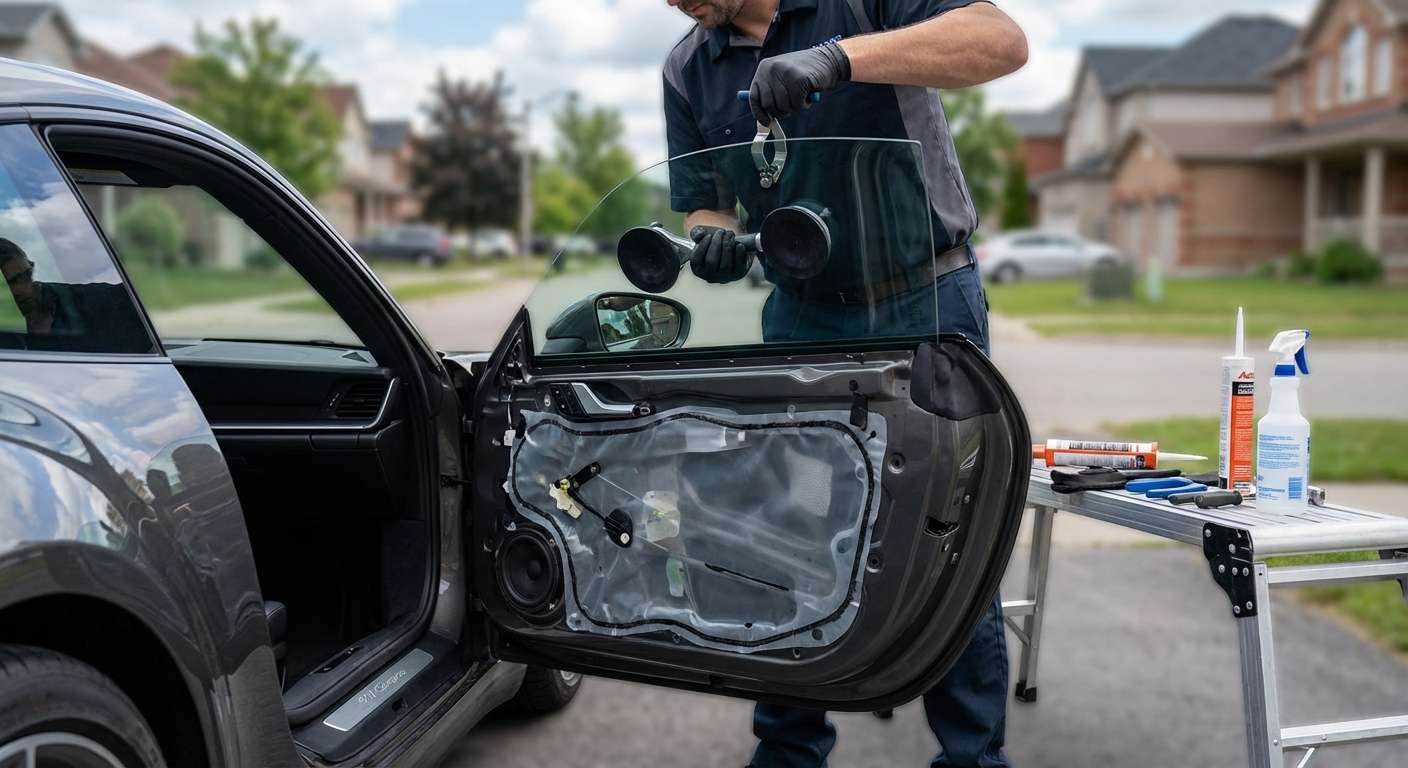
Replacing a shattered side window on these doors requires taking apart more than just a trim card. Behind the finished interior panel sits an acoustic moisture barrier and the inner aluminum carrier plate that houses the dual-rail cable window regulator. Shattered tempered glass often drops debris into the lower cavity of the door shell, which will rattle against the side-impact beams and clog the bottom water drain slots if it is not thoroughly cleared before new glass drops in.
Once the glass is locked into the lower regulator brackets, the travel limits must be set correctly. The glass cannot simply be bolted down; it requires mechanical depth adjustment against the A-pillar seal and B-pillar boundary to ensure a water-tight seal at high speeds. After the physical placement is true, the door module requires a manual switch reset or a diagnostic command via PIWIS to teach the pinch-protection threshold and restore the short-drop indexing function so the glass clears the upper body weatherstrip every time the handle is pulled.