Steep Windshield Rake and EV Acoustic Glass Requirements
Because there is no internal combustion engine masking exterior sound, wind turbulence over the Leaf's low-drag front profile is immediately noticeable inside the cabin. Nissan engineered this windshield with an acoustic vinyl interlayer bonded between two sheets of solar-control laminated glass. Using glass that lacks this specific acoustic dampening leads to a sharp increase in highway cabin hiss, defeating the quiet design of the electric motor.
The low-profile aerodynamic rake sweeps directly down to a two-piece plastic cowl top grille covering the wiper motor linkage and cabin air intake plenum. To ensure the glass seals flush with the vehicle's side drip moldings and upper reveal channel, the replacement glass must align precisely with the factory pinchweld height, which also keeps airflow smooth over the roofline to minimize drag.
ZE0 and AZE0 Glass Configurations and Rain Sensor Variations
First-generation Leaf models (covering production lines between 2011 and 2017) are straightforward when it comes to forward electronics. Unlike later models equipped with Nissan's ProPILOT system, these windshields do not carry forward-facing ADAS camera brackets or active Lane Keep Assist hardware. However, selecting the correct replacement still hinges on whether your car has automatic rain-sensing wipers.
| Model / Trim | NAGS Part Number | Rain Sensor Bracket | OEM Reference |
|---|---|---|---|
| Leaf S (Standard Intermittent) | FW03488 | No | 72700-3NF0A |
| Leaf SV / SL (Auto Wipers) | FW03488 | Yes | 72700-3NF0A |
| Export Variant (No VIN Notch) | FW03496 | Optional | N/A |
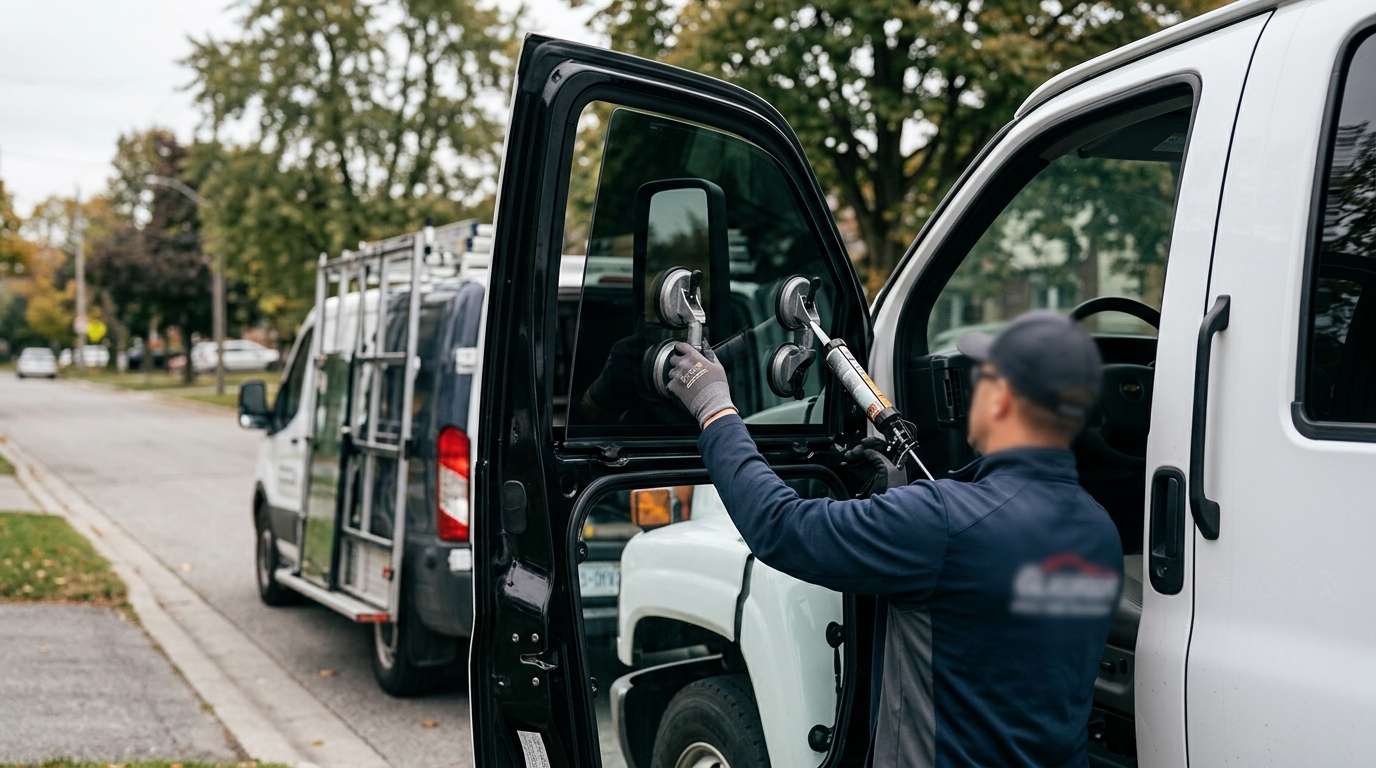
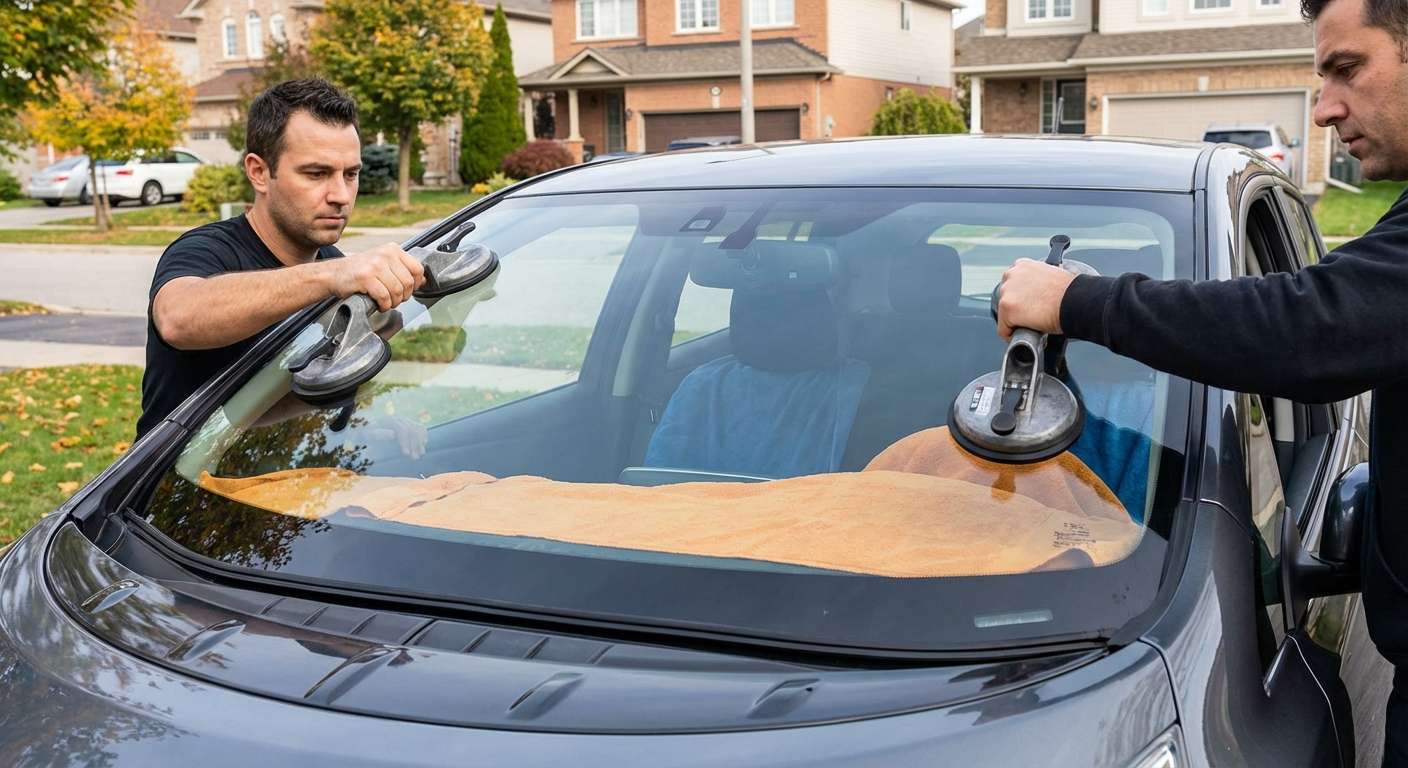
Base Leaf S trims rely on standard intermittent wipers, meaning the glass behind the rearview mirror mounting bracket is plain. Upper trims like the SV and SL feature an optical rain and ambient light sensor mounted directly against the glass under the interior mirror base. I bring my mobile setup directly to your driveway or workplace parking spot anywhere across Toronto and the GTA to replace this glass on-site while your car stays parked on the charger.
Preventing Rain Sensor Optical Failure
A frequent defect reported on the SV and SL trims after an improper windshield swap is wipers that cycle once upon startup and then fail to respond to rain completely. This happens when the installer attempts to reuse the original optical gel pad or traps air bubbles under the sensor housing. The sensor calculates precipitation by measuring light refraction angles through the windshield; any trapped dust, air pockets, or torn silicone disrupts the beam and shuts down automatic cycling.
- Gel Pack Replacement: The factory silicone coupling pad cannot be stretched or reused. A fresh optical gel pack must be fitted between the glass bracket and sensor lens to maintain optical clarity.
- Mirror Bracket Fitment: The interior rearview mirror locks onto a dedicated metal boss bonded to the windshield. This bracket must be placed within exact tolerances so the wire harness to the auto-dimming mirror and rain sensor does not strain against the headliner edge.
- A-Pillar Clearance: The interior plastic A-pillar garnish trims cover the side-curtain airbag inflator clips. Removing these trims safely without distorting the upper edge ensures proper seating against the interior black ceramic frit band of the new glass.