Fixed Rear Vent Glass Versus Body Quarter Windows
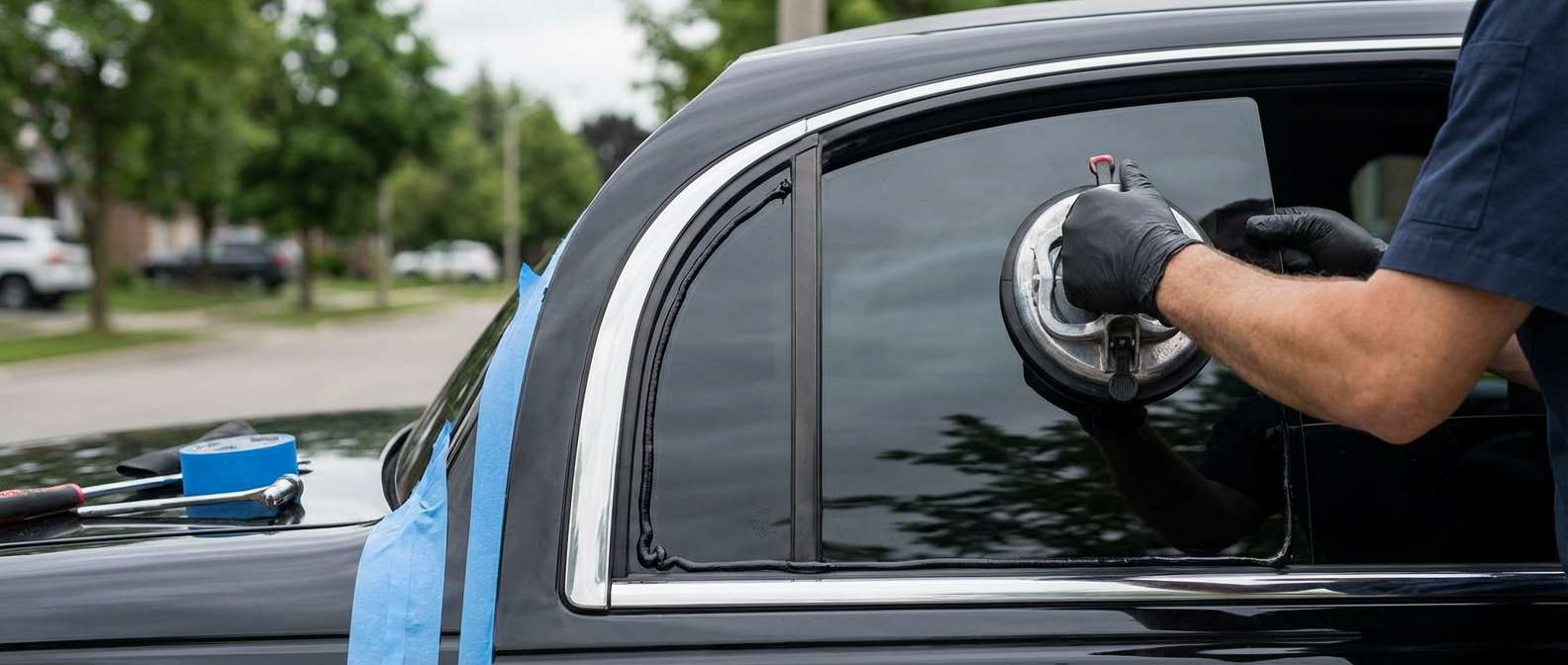
When ordering glass for this vehicle, parts catalogs frequently categorize the rear side window as a quarter panel glass, but the FN36 platform eliminated the traditional body-mounted C-pillar opera window seen on earlier models. The stationary glass on these sedans is actually a rear door vent window mounted directly inside the stamped steel door frame, positioned immediately behind the vertical division bar channel that guides the main DD9695 or DD9696 roll-down window.
Because this glass sits in the door frame rather than the vehicle body, it rests entirely inside an EPDM molded rubber run channel. Before sliding a replacement pane into place, I verify that the vertical division bar and lower retaining bracket are properly cleared of shattered tempered fragments. If even a tiny granule of the original broken glass remains trapped in the bottom of the division run, the movable door glass will bind against the track or scuff when lowered.
Wheelbase Variances and Glass Verification
The primary issue with sourcing replacement vent glass on these cars is the distinction between standard wheelbase configurations and the extended "L" models. Beginning in the 2000 model year, Lincoln offered extended wheelbases on trims like the Executive L, Signature L, and Cartier L. These models feature rear passenger doors that are six inches longer than the standard sedan, and that extra length alters the proportions of the rear door window frame.
Standard rear vent glass cannot be swapped into an L-series door, nor will an L-series vent pane seat inside a standard door channel. When I source replacement panels, I provide aftermarket units exclusively—relying on manufacturers like FYG, Pilkington, XYG, and PGW—and always measure the lower edge profile against the door frame before installation to ensure the unit matches the specific wheelbase.
| Door Configuration | Compatible Trims | Key Glass Characteristic |
|---|---|---|
| Standard Wheelbase | Executive, Signature, Cartier (Base) | Shorter base width; fits standard division bar offset |
| Extended "L" (6-inch stretch) | Executive L, Signature L, Cartier L | Elongated base profile; strictly non-interchangeable |
Post-Installation Checks: Channels, Trim, and Drainage
Once the glass is set into the rubber channel and the division bar is secured, I check the fit along the exterior perimeter. Many of these vehicles came equipped with factory black-out surround mouldings, while others received dealer-installed polished stainless steel accent overlays. I verify that the rubber lip of the run channel overlaps the glass edge smoothly without bunching up against these exterior trim pieces, which would otherwise allow wind noise at highway speeds.
The curved tempered safety glass comes with a standard solar-controlled green tint and contains no embedded defroster lines, antennas, or bracket hardware. Because the surrounding rubber weatherstrip fits exceptionally tight inside the window frame corners, I inspect the outer belt moulding alignment to confirm the division bar has not tilted backward during reassembly.
If you notice standing water in the rear footwells after glass replacement, do not assume the new door glass seal is leaking. While a damaged door vapor barrier can let moisture seep past the door panel, water pooled on the rear floorboards on this vehicle is almost always caused by blocked cowl fresh-air intake drains beneath the hood, which overflow back through the firewall plenum rather than entering via the door frame.