The Shift to a Six-Light Greenhouse Architecture
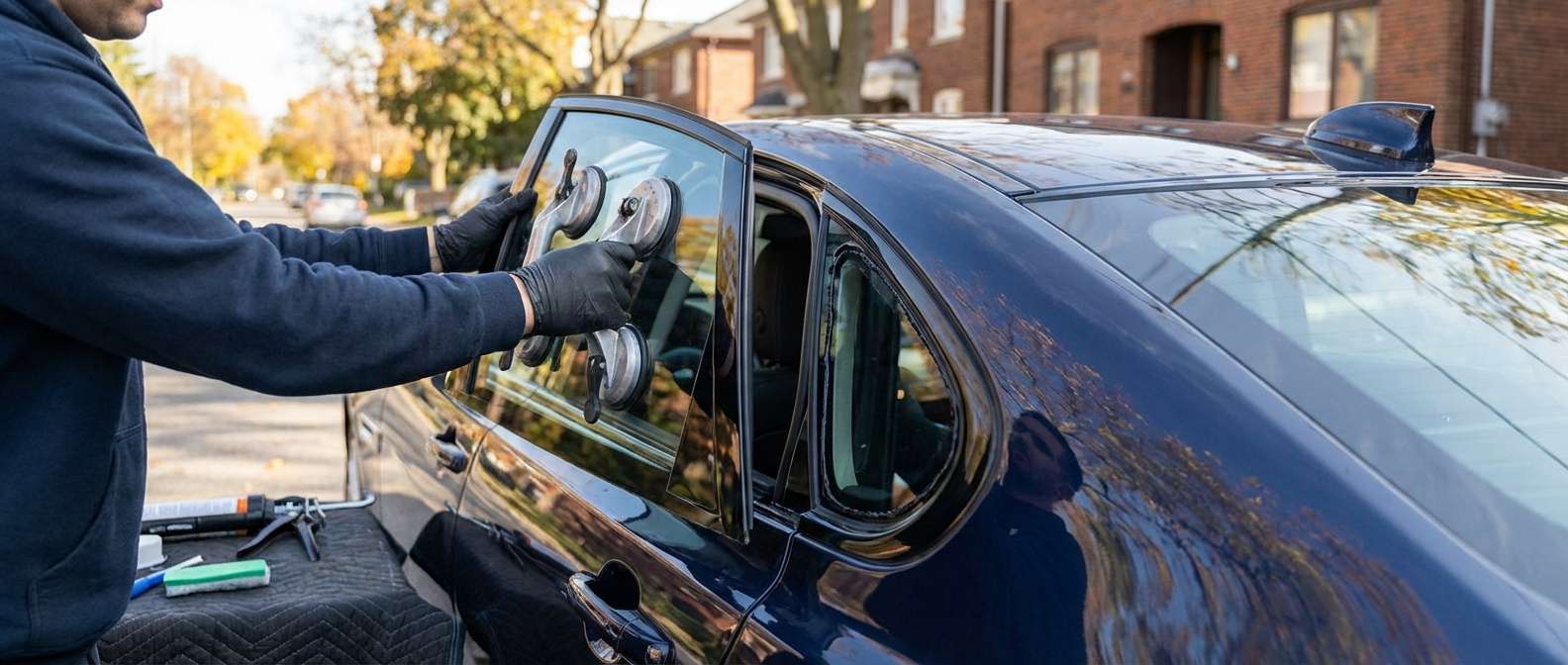
When searching for rear door vent glass on this executive saloon, many owners expect to find a mini drop-pane or a separated triangular pane seated inside the rear door frame itself. Jaguar fundamentally re-engineered the profile for the X260, moving from the prior layout to an elongated six-light greenhouse design. The rear passenger doors house only the main drop glass (OEM base reference T2H1154 on the left side) running inside an uninterrupted aluminum division channel. The fixed triangular vent glass no longer rides in the door—it is mounted directly into the vehicle's rear body C-pillar.
Because this glass sits aft of the moving window assembly, it functions structurally as a body quarter pane bonded straight onto the lightweight aluminum monocoque. For the Sportbrake wagon variant sold in North America from 2018 to 2020, this design extends into an elongated cargo-area quarter light (listed under reference FQ28304GTY for the right rear). On the four-door saloon, treating this glass properly requires recognizing that it is stationary body glazing rather than a serviceable door frame insert.
Trim Surround Finish and Common C-Pillar Seal Issues
Replacing the C-pillar quarter glass demands special attention to the perimeter hardware and exterior finishes. Vehicles optioned with the Black Exterior Pack use gloss black trim surrounds, while base models, Prestige, or R-Sport trims feature satin aluminum or bright chrome mouldings. Jaguar issued technical service bulletin JTB00613NAS to address problems where exterior window seals and paint suffered from chafing and premature delamination along these rear quarter edges.
Over time, the rubber run-channels and exterior perimeter seals can shrink or dry out, which leads to noticeable wind rush noise entering the cabin just behind the passenger headrests. When a replacement is scheduled, I can typically be on-site to inspect the glass damage and seal condition about an hour after you book your appointment. Ensuring the new aftermarket glass sits perfectly flush against the surrounding aluminum body aperture prevents these known cabin resonance problems from returning.
| Vehicle Variant | Window Location | Mounting Style | Trim Finishes Available |
|---|---|---|---|
| X260 Saloon (2016–2024) | Body C-Pillar | Direct-to-aluminum body bond | Chrome, Satin Aluminum, Gloss Black |
| X260 Sportbrake (2018–2020) | Cargo Quarter Area | Direct-to-aluminum body bond | Gloss Black, Satin Aluminum |
Interior Access and Acoustic Solar Properties
Gaining access to the mounting flange of the rear C-pillar vent glass requires working from the interior cabin outwards. I carefully unclip the upper C-pillar trim mouldings, pop out the airbag trim badges to release hidden mechanical fasteners, and remove the interior sail trim panels without distorting the headliner edge. Unlike the front windshield or the heated rear backlite, this side glass does not house camera brackets, rain sensors, or rear window defroster grids, keeping the electrical uncoupling straightforward.
The glass itself is produced with green solar-absorbing tint as standard to reduce infrared heat transfer into the rear seating area, while specific vehicle builds carry darker rear privacy glass. Matching the correct tint level ensures the quarter glass transitions invisibly into the drop door glass ahead of it, preserving the car's continuous side daylight profile.