Inspecting the X260 Sliding Glass Panel Prior to Installation
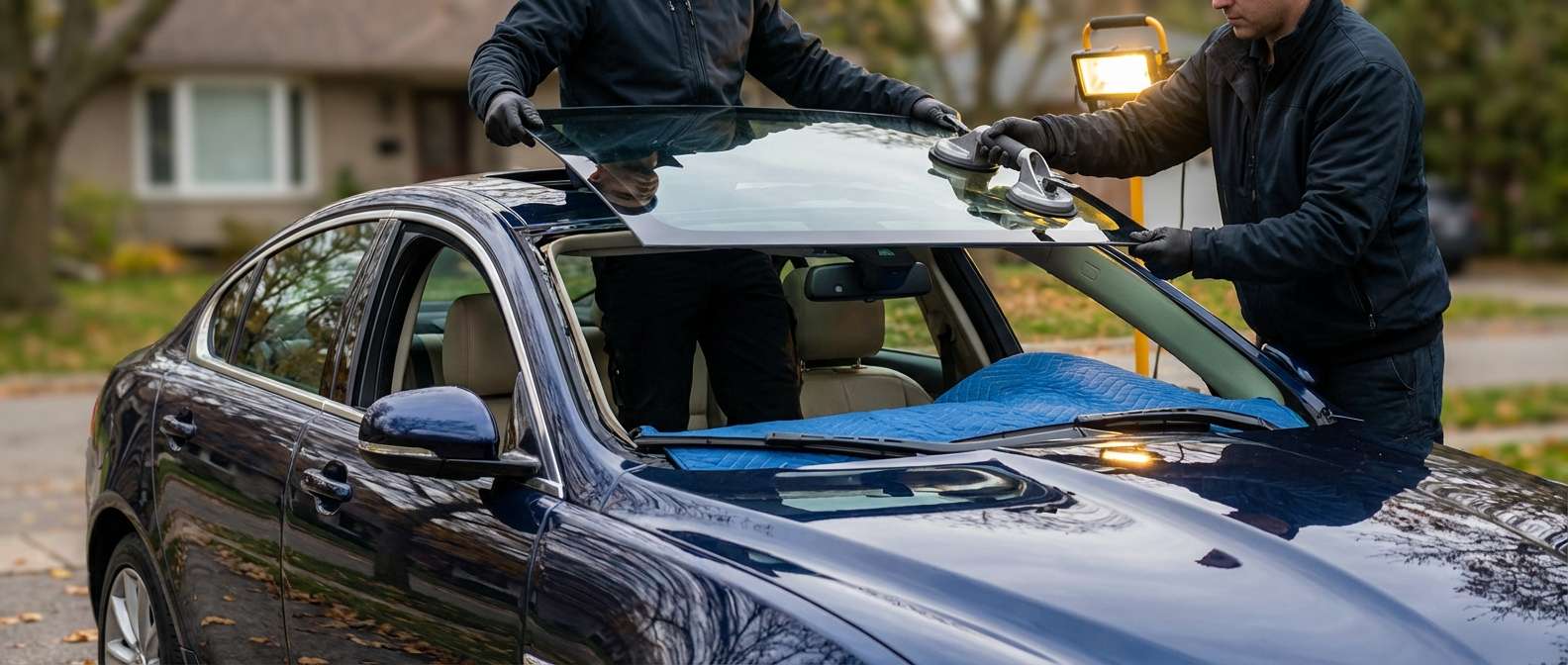
Replacing shattered or damaged sunroof glass on the Jaguar XF sedan requires close attention to the perimeter seal before the replacement panel ever touches the roof rails. The movable sedan glass panel uses an encapsulated rubber weatherstrip bonded directly along its outer edge from the factory. If that molded rubber surround has any deformities, tears, or uneven spots, wind noise will whistle directly over your head at highway speeds. I also verify that the lateral bracket mounting points match the Jaguar OEM part number T2H58063 specification—which superseded older versions like T2H31809 and T2H8912—so the four Torx mounting bolts seat flush into the drive mechanism without binding.
Whenever I replace this roof panel, I source strictly aftermarket glass manufactured by proven brands like Pilkington, PGW, FYG, or XYG, ensuring the tempered solar-control glass maintains the factory dark tint and matches the precise curvature of the roof opening. Unlike the fixed panoramic roof found on the XF Sportbrake wagon, the sedan relies on this active sliding panel. It is critical to confirm the replacement panel is entirely free of stress cracks near the screw bosses, as these anchor points take the full mechanical load every time the glass tilts or slides beneath the roof cassette.
Mounting Hardware, Track Alignment, and Drainage Verification
Once the replacement panel is placed into the opening, mechanical alignment dictates whether the roof operates silently or develops the rattles that frequently frustrate XF drivers. Fastening the glass involves four lateral Torx bolts hidden behind flexible side concertina rubber bellows. Because the X260 uses an aluminum-intensive unibody roof structure rather than traditional stamped steel, tolerance around the perimeter opening is tight. I set the leading edge of the glass roughly one millimeter lower than the front roof sheet metal and the trailing edge roughly one millimeter higher than the rear edge to deflect airflow cleanly and prevent buffeting.
After torquing the Torx fasteners, I check the moving components and perimeter drainage before reinstalling the trim:
- Concertina Bellows: The accordion-style rubber side blinds must clip smoothly into their guide channels so they do not bunch up, pinch, or cause clicking noises during roof travel.
- Wind Deflector Screen: The spring-loaded mesh air deflector at the front aperture must pop up freely when the panel retracts and fold down cleanly without catching the front edge of the glass during closure.
- Cassette Drain Tubes: Water channels built into the aluminum sunroof cassette lead to four separate drain hoses routed down the A-pillars and C-pillars; these must be clear of debris to prevent water from backing up and soaking the headliner or front footwells.
- Drive Track Lubrication: Clearing road grit from the guide tracks prevents premature wear on the cable-driven lateral slides.
Frequently Asked Questions
Why does my sunroof make creaking noises over bumps after a replacement?
Creaking or rattling on this car usually stems from dried-out perimeter weatherstripping rubbing against the painted aluminum roof aperture, or slight looseness in the four Torx mechanism mounting screws beneath the side bellows. Applying a dedicated fluoropolymer lubricant to the outer rubber seal and verifying that the lateral mounting hardware is torqued securely into the drive mechanism resolves the noise.
Is the sedan sunroof glass interchangeable with the XF Sportbrake roof?
No. The XF sedan utilizes an electric power tilt-and-slide tempered glass panel that moves inside an aluminum cassette module, whereas the Sportbrake wagon is built with an expansive fixed panoramic glass roof that does not open or slide.
Does the glass panel contain any integrated antennas or sensors?
No components are wired into or mounted on the sliding glass panel itself. The GPS and radio antennas are housed in the exterior rear shark-fin module, while the forward-facing cameras, rain sensors, and humidity sensors are mounted directly to the front windshield glass.