Frameless Glass Drop, Cable Failure, and Track Tuning on the Genesis Coupe
When the window drops unassisted into the door panel on a BK1 or BK2 coupe, owners often assume a rock shattered the pane or an intruder smashed it. More often than not, the cable on the internal window regulator has unspooled from its plastic drum, snapped a plastic pulley, or sheared the retaining clamps. Because this sports coupe uses frameless door glass, there is no upper metal sash to support the pane when mechanical components fatigue. The glass simply drops to the bottom of the steel door shell, frequently fracturing upon impact with the intrusion beam.
Replacing the pane on these cars requires matching the exact factory tint style. Hyundai shipped these vehicles with either a standard clear-green safety tint or an upgraded solar control glass. The replacement glass is a single-pane tempered unit that bolts directly into two padded lifter clamps on the carrier panel. It does not house heating elements, antennas, or driver-assist hardware, but getting the correct fitment demands matching the glass tint with your vehicle's build configuration.
| Door Position | Standard Tint (OEM Ref) | Solar Control (OEM Ref) | NAGS Reference |
|---|---|---|---|
| Left (Driver) | 82411-2M000 | 82411-2M010 | FD24310 |
| Right (Passenger) | 82421-2M000 | 82421-2M010 | FD24311 |
Correcting Pitch, Tilt, and the Auto-Drop Weatherstrip Seal
The most common complaint from owners following an amateur window replacement is high-speed highway wind noise along the A-pillar and roof rail. A conventional door frame forces the window into place, but this frameless design seals directly into a body-mounted rubber weatherstrip running from the mirror base to the rear quarter glass. If the tilt and vertical stops are off by even two millimetres, water creeps in above the B-pillar edge or air whistles across the beltline moulding.
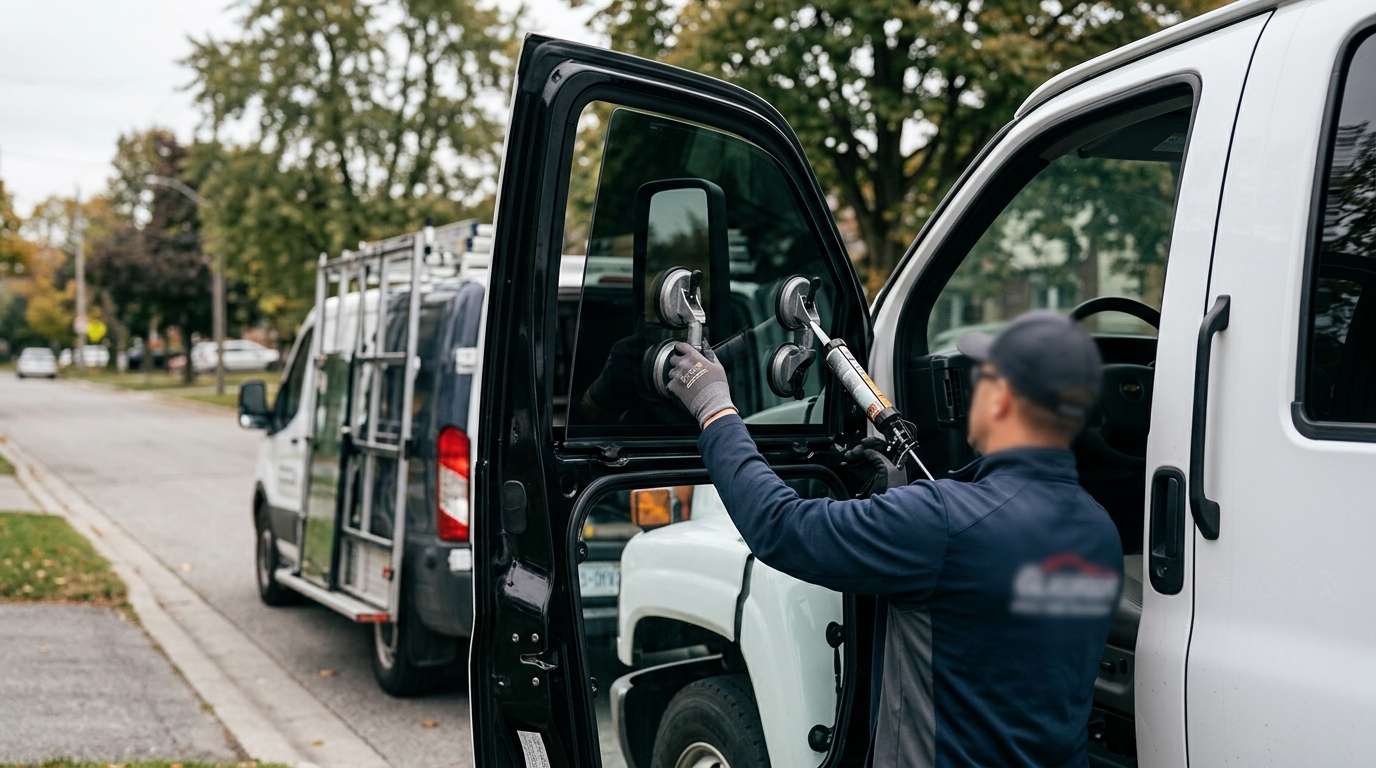
I perform all replacement and adjustment work as a mobile service directly at your home or workplace across Toronto and the GTA, ensuring the glass is tested against wind and weather exposure before you drive. Inside the door cavity, the regulator lifter plate features dedicated pitch, tilt, and height adjustment bolts. Setting these properly requires leveling the glass against the roof rail channel while verifying that the front and rear internal stabilizer guides hold the pane vertical during travel.
Executing the Window Motor Indexing Relearn
Once new aftermarket glass is bolted into the regulator clamps, the auto-drop indexing system must be reset. The Genesis Coupe relies on an automatic venting sequence: the door module drops the glass roughly half an inch the moment the exterior handle is pulled or the latch releases, allowing the top edge to clear the roof moulding. When the door latches shut, the motor drives the glass back up into the sealing channel. If the battery was disconnected or the regulator motor was unplugged during glass replacement, this indexing logic is lost.
- Close the coupe door completely with the ignition set to the ON position.
- Pull the window switch up manually to run the glass to the top of the roof rail seal.
- Continue holding the switch in the manual up position for roughly three to five seconds after the pane seats fully into the weatherstrip.
- Push the switch down to lower the window completely, holding the switch down for an extra three seconds once bottomed out.
- Cycle the door latch to confirm the glass drops the required clearance fraction when opened and seals tightly when shut.
Skipping this relearn leaves the top edge of the tempered glass exposed to hitting the metal roof frame whenever someone slams the door shut, which can easily shatter a newly installed pane.