Identifying Sunroof Glass on a Roof GM Never Built With One
If you look up at your ceiling and see daylight, your car has an aftermarket assembly because General Motors never produced an OEM factory sunroof for this model across its entire production run. When someone contacts me to replace broken glass or address a persistent leak above their seats, running the vehicle identification number through standard dealership databases produces zero factory part numbers for sunroof panels, motors, or seals. GM intentionally engineered the roof without an opening to protect battery efficiency, maintaining an aerodynamic drag coefficient of roughly 0.28 while avoiding structural weight over the T-shaped battery pack in Gen 1 models and the lower-mounted battery pack in Gen 2 models.
Because there is no factory glass, there is also no National Auto Glass Specifications (NAGS) code for this vehicle's roof panel. To figure out exactly which replacement glass panel belongs on your car, you cannot rely on trim levels like the Base, Premium, LT, or Premier. Instead, the identification comes entirely from the aftermarket unit that a previous owner or conversion shop retrofitted into the stamped sheet metal.
How to Identify Your Aftermarket Moonroof Assembly
Determining the correct replacement requires inspecting the hardware fitted to your vehicle's custom-cut headliner. Every conversion unit came from independent manufacturers who cut directly through the solid roof stamping and routed bespoke wiring around the vehicle's side-curtain airbag inflators. To source the exact glass, check the following details directly on the roof hardware:
- Manufacturer Identification: Most conversions on this vehicle were sourced from Webasto (such as the Hollandia 700 or 300 series) or Inalfa. Look for a small logo or brand stamp silk-screened into the lower corner of the glass panel or embossed on the interior plastic switch bezel.
- Frame and Glass Dimensions: Measure the exposed glass width and length across the top of the vehicle, as well as the radius of the rounded corners. Aftermarket assemblies use standardized frame sizes rather than vehicle-specific contours.
- Serial Number Labels: Retract the interior sunshade and look along the inner aluminum guide track. Most installers placed a foil tag listing the unit's model number and production date along the passenger-side guide rail.
- Mechanism Style: Note whether your glass tilts and slides internally between the roof sheet metal and the headliner, or if it is a spoiler-style roof that vents upward and slides backward over the exterior paint.
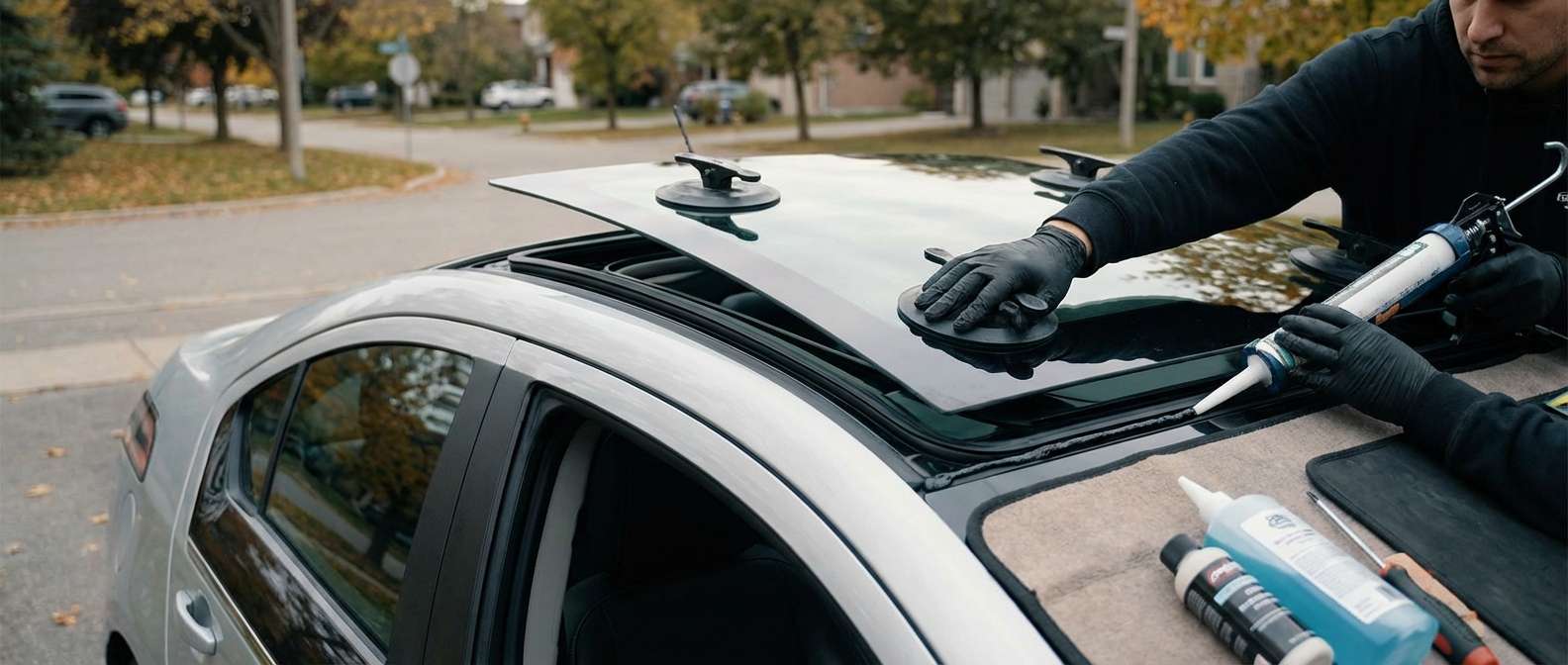
Whenever I replace an aftermarket glass panel or reseal an aftermarket frame on these cars, I back the replacement glass with a one-year warranty and cover my own installation workmanship for as long as you own the vehicle. Sourcing the correct glass requires ordering directly through specialty aftermarket hardware catalogs using these frame measurements rather than standard automotive glass ordering channels.
Addressing Common Leakage and Drainage Shortcomings
Because GM designed the overhead sheet metal strictly as a solid structure, there are no factory-stamped water runoff troughs or drainage channels built into the roof pillars. Factory sunroofs rely on dedicated drain tubes routed down the A-pillars and C-pillars directly into the wheel wells or rocker panels. Aftermarket conversions on this car rely heavily on a perimeter compression gasket or manually routed, flexible plastic hoses that can pinch against the high-voltage interior wiring harnesses or side-curtain airbag modules.
Over time, highway vibration and the low-drag body profile place stress on the cut metal opening. The rubber perimeter seals dry out, leading to wind whistle at speed or water gathering along the edges of the altered headliner. Replacing shattered glass or aged seals means matching the specific edge profile of that aftermarket brand's carrier frame to prevent water from dripping onto the center console electronics.
Can I order a replacement sunroof through a Chevrolet dealership?
No. Dealership parts counters have no catalog listings, schematics, or OEM part numbers for sunroof glass on this vehicle because GM never manufactured one. All replacement panels and related track hardware must be matched to the third-party aftermarket manufacturer that built the conversion unit.
Why did GM omit a factory sunroof from both vehicle generations?
Engineers left the roof solid to minimize curb weight, retain structural rigidity without adding heavy steel reinforcements, and protect the vehicle's electric driving range. Packaging constraints also played a major role, as the vehicle needed to maximize interior headroom while routing overhead wiring safely past the side-curtain airbags without interfering with the low roofline.
What details do I need to provide to get my roof glass replaced?
Provide the brand name stamped on the glass or switch (typically Webasto or Inalfa), the serial or model number found on the metal track inside the roof opening, and the exact edge-to-edge physical dimensions of the glass panel itself.