Identifying Single-Pane Versus Panoramic Roof Glass on Your S90
Determining which glass panel sits above your cabin comes down to whether your car has the short-wheelbase body or the extended rear cabin that followed it. When the vehicle debuted in North America for 2017, it utilized a compact, single-pane tilt-and-slide glass moonroof that vented upward or tucked neatly into the ceiling pocket directly over the front row. If you look at your roof and see painted steel across the entire rear passenger compartment, your vehicle carries this early single-pane setup.
Everything changed for the 2018 model run when the extended long-wheelbase design took over across all North American trims, including Momentum, Inscription, and R-Design, as well as the later Plus and Ultra packages. These models carry an expansive two-piece panoramic glass roof. Looking up from the interior reveals a movable front glass panel over the cockpit and a separate, stationary rear skylight stretching across the back seats. Underneath sits an electrically powered roller blind that retracts rearward to uncover both sections.
Hardware Details and Structural Components of the SPA Glass Assembly
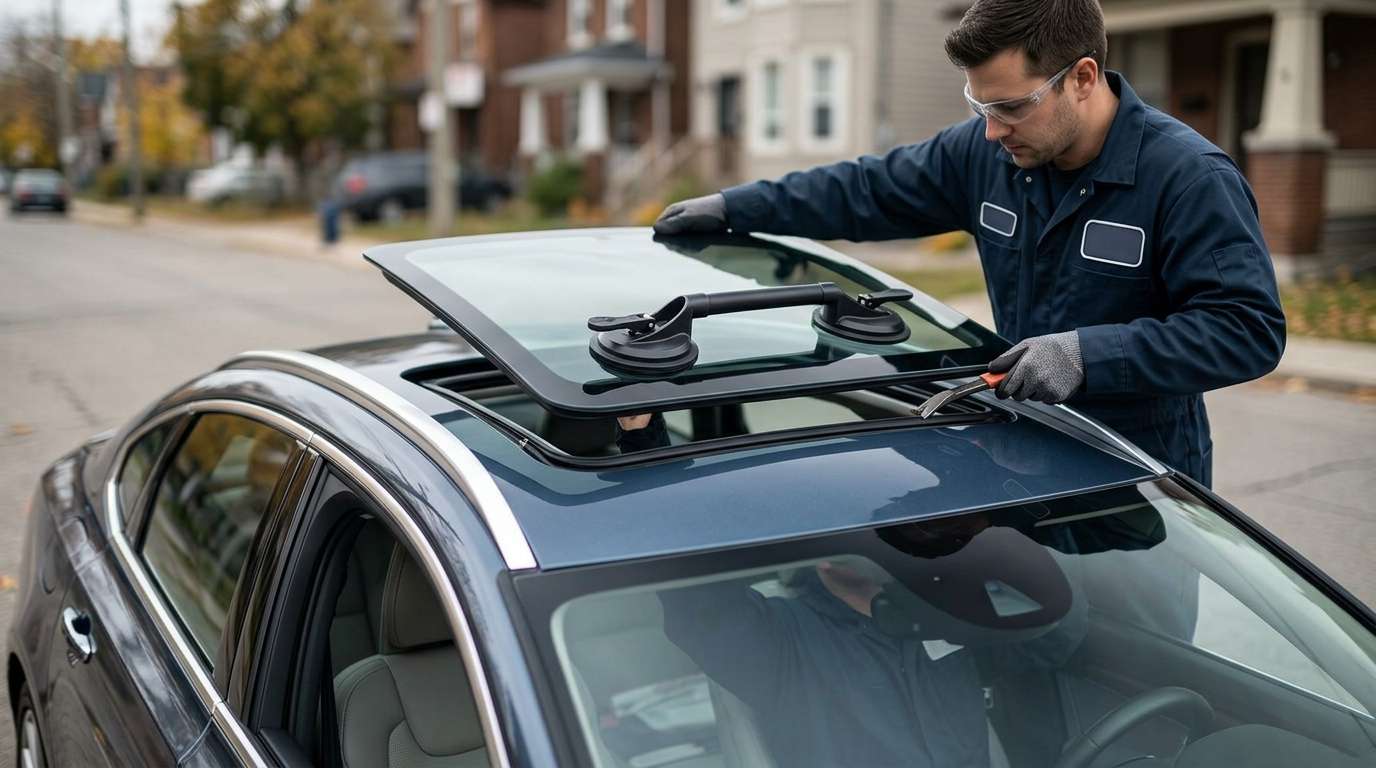
When replacing a damaged front movable panel on the panoramic setup, the panel matches the dimensions of factory reference 31434636. This movable unit is constructed from laminated, deep-tint safety glass embedded with infrared heat-blocking layers and UV filtering to keep high cabin temperatures at bay. Along the outer edge, the rubber weatherstrip is bonded directly to the glass perimeter, eliminating the separate outer metal trims found on older models. Tucked at the leading edge of the cassette frame is a mechanical pop-up mesh wind deflector that deploys automatically when the front section slides back to break up air buffeting.
Securing the panel into the internal tracking requires pulling back the flexible interior bellows skirts to access three T25 Torx alignment screws along each flank. Setting the height and flushness of these six fasteners is critical to eliminate cabin wind hiss and prevent the perimeter seal from binding against the roof sheet metal. Whenever I complete a replacement on this assembly, I back the installation with a lifetime guarantee on my labor and provide a one-year warranty covering the replacement glass itself.
Tracking Down Drainage Issues and Overhead Leaks
Water intrusion on the panoramic cassette is often blamed on a shattered or cracked panel, but it frequently stems from the internal trough routing. Water passing the outer perimeter seal flows into internal collection channels and leaves the vehicle through four dedicated drain tubes routed down the structural A-pillars and C-pillars. If road debris or aging rubber blocks these paths, overflow can soak into the headliner, spill down the A-pillar trim covers, and collect under the carpet where sensitive electronic modules rest.
The perimeter seals on these glass panels can also shrink or harden from years of sun exposure, creating tiny gaps that overload the internal troughs or produce annoying creaks over uneven pavement. If your glass is fractured from gravel impacts, or if seal degradation has damaged the panel frame, putting fresh glass into the carrier and resetting the mechanical stops restores the quiet cabin sealing the car had when new.