Dual-Panel Panoramic Glass Architecture on Newer Tiguan Models
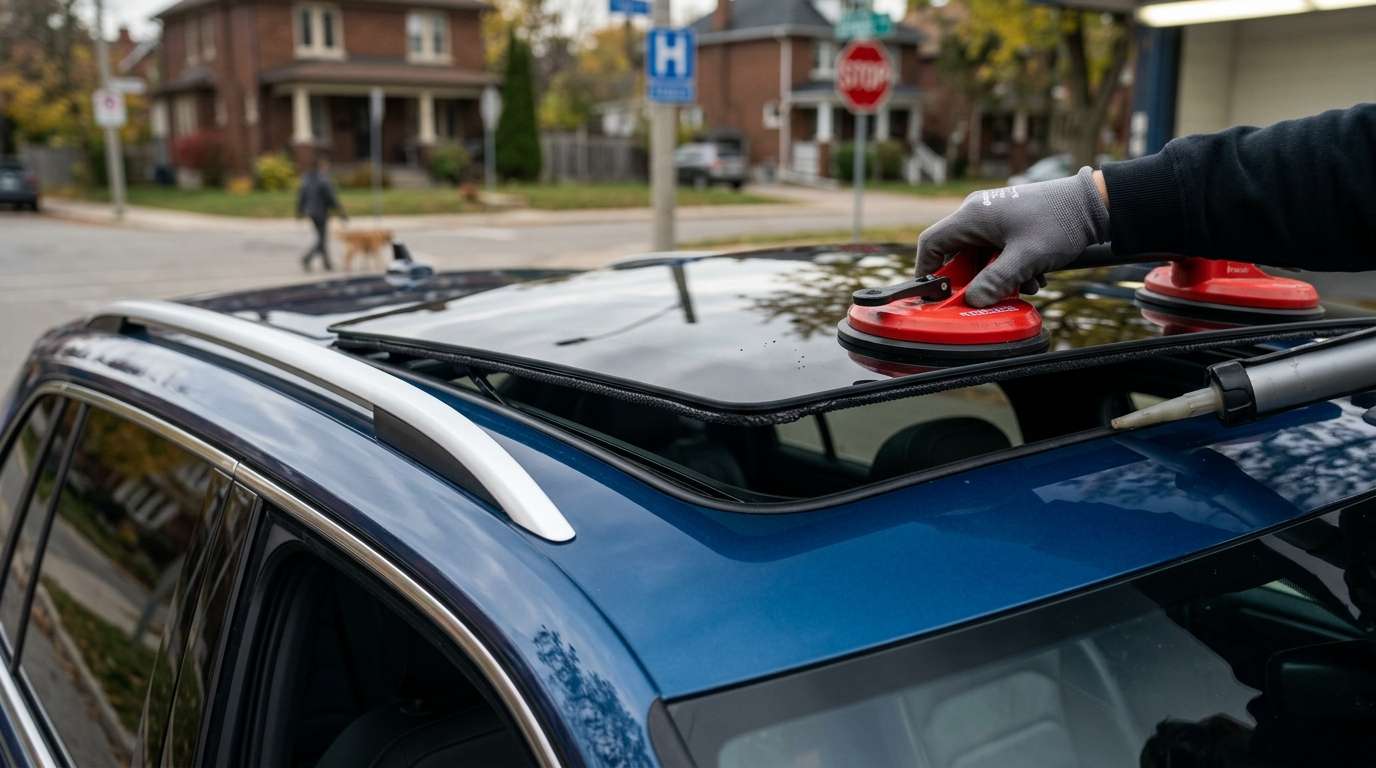
Replacing the overhead glass on this vehicle involves working around a two-piece panoramic assembly that splits into an anterior power tilt-and-slide section and a posterior fixed glass panel. The factory rear glass relies on OEM part number 8MA-877-056-A, seated flush against the roof line between the low-profile exterior roof rails—finished in black or silver depending on whether you drive a Comfortline, SE, R-Line, or Highline trim. Unlike the front windshield, neither overhead panel houses rain sensors, forward-facing camera brackets, or printed defrost grids. Instead, both sections consist solely of deep solar-tinted, heat-absorbing safety tempered glass bounded by a molded perimeter encapsulation seal. Beneath the glass sits an integrated full-length motorized roller sunshade housed directly within the cassette frame. When road debris or thermal stress shatters one of the panels, debris management requires careful isolation from the fabric shade track to prevent tearing the cloth or binding the drive cables. I generally arrive at your location roughly an hour after your booking is finalized so the broken roof does not leave the cabin exposed to weather.Hardware Constraints, Cassette Drainage, and Pinch Protection
Each section of this dual-panel roof uses distinct mounting fasteners that cannot simply be torqued down and forgotten:- Front sliding glass: Secures directly to the lateral drive guides using specialized Torx bolts. Factory service guidelines dictate that these fasteners are single-use; reusing the original bolts risks loosening from chassis vibration and motor torque.
- Rear stationary panel: Anchored with dedicated hardware kits that require specific mechanical alignment to keep the glass level with the rear sheet metal cut-out channel seal.
- Four-corner drainage tray: Water bypassing the perimeter seal collects in the cassette perimeter tray and routes through internal rubber drain tubes inside the A-pillars and C/D-pillars, exiting behind the wheel arch liners. Clearing these exits during roof service is critical to avoid water backing up into the headliner and footwells.
Why did the panoramic glass shatter without an apparent impact?
Tempered panoramic roof panels endure substantial structural twisting and rapid temperature swings. A tiny, unseen stone chip from highway driving can compromise the surface tension, causing the panel to suddenly fracture across the entire tempered sheet under thermal expansion or cabin air pressure changes.
Do both front and rear glass panels need replacement if only one breaks?
No. The front sliding section and the rear fixed panel operate as mechanically independent pieces within the cassette frame. A damaged front panel can be unbolted from its drive mechanism and swapped out without disturbing the rear panel or replacing the underlying power roller sunshade assembly.
Can the single-use mounting bolts be reused to secure the new glass?
No. The dedicated Torx hardware that mounts the front movable panel to the guide rails features factory-applied thread-locking compound and specific tensile properties designed for one-time torque retention. Reusing old bolts compromises panel height alignment and invites wind noise or seal failure.