Replacing Broken Liftgate Glass on the Smart #3
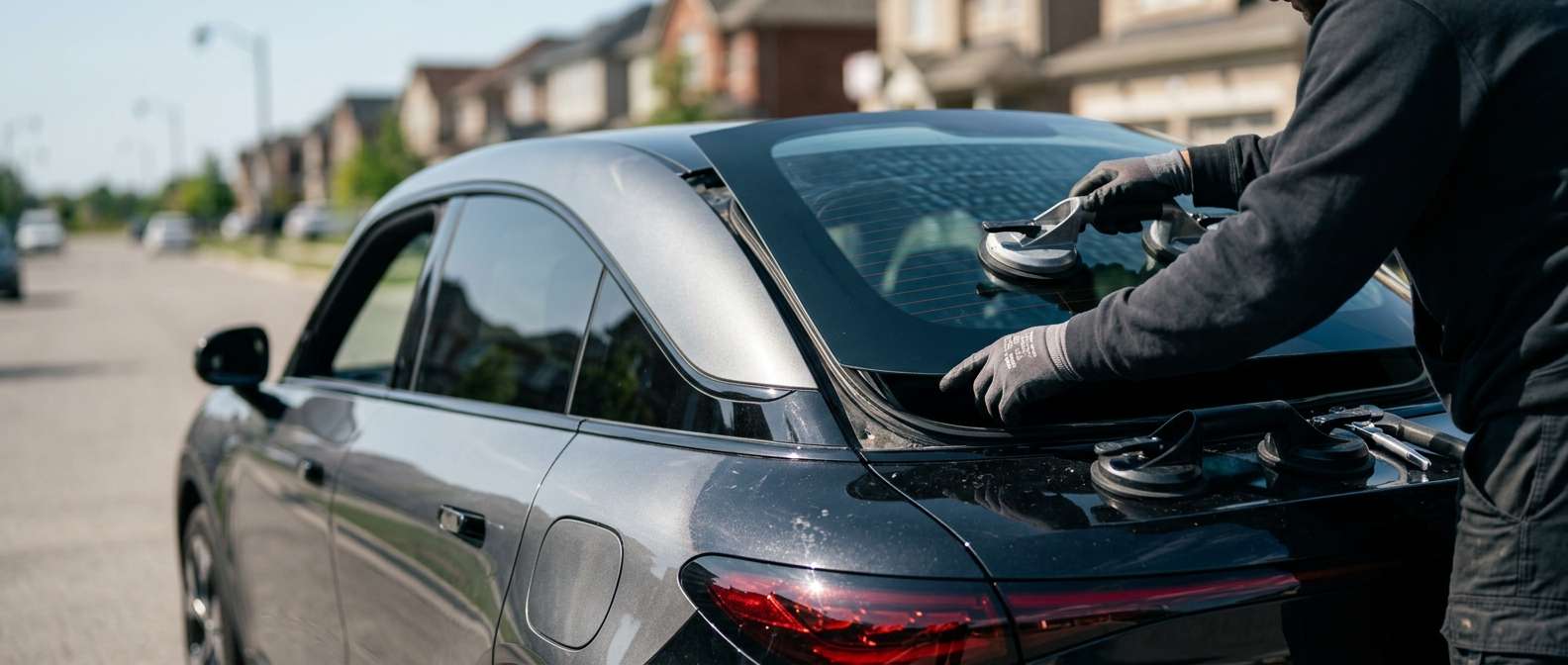
A shattered back window on the Smart #3 leaves the entire cargo area exposed because of how the raked liftgate is built. Unlike the split-tailgate setup on the classic Smart Fortwo, this fastback crossover uses a large, single-piece powered liftgate where the stationary glass panel accounts for most of the upper structural surface. When that rear pane shatters, you cannot simply swap a universal pane into place. The glass connects flush against the rear roof header right where the fixed panoramic "Halo" glass roof terminates, sitting directly beneath the aerodynamic roof spoiler that houses the center high-mount third brake light. Sourcing replacement panels for imported units takes patience because North American NAGS catalogs have not indexed this model, and parts are routed from overseas production hubs.
Every replacement I set in place comes with a full year of product defect coverage on the aftermarket pane, backed by my lifetime guarantee covering any leak or installation workmanship issue. The sloped coupé-SUV profile forces substantial road spray up against the tailgate in wet weather, meaning the defroster elements and the seal around the lower edge must perform without compromise. Because the rear wiper arm stems directly through the liftgate body panel below rather than through a pre-drilled hole in the glass itself, the back window is a solid direct-glazed unit, though it requires precise alignment so the wiper blade tracks properly across the lower ceramic frit border.
Defroster Grids and Privacy Glass Across Model Trims
The tailgate window incorporates an edge-to-edge defroster grid system paired with a heavy ceramic frit border that masks the tailgate pinchweld and wiring connections. On models like the Premium, the 25th Anniversary Edition, and the performance Brabus trim, the rear pane comes standard with factory dark privacy solar tint embedded directly in the glass composition. The glass also integrates an embedded communications grid pattern near the upper edge. Surrounding the perimeter, the interior side of the glass sits concealed by clip-on plastic tailgate garnish mouldings that frame the inner steel liftgate frame. These interior panels protect the wiring leads running to the heated grid tabs.
Neither the rearview parking camera nor the exterior hatch release handle are mounted to the rear glass. Both components reside completely separate within the lower tailgate latch recess below the glass border. This separation means a cracked rear window will not interrupt your rear camera feed or lock mechanisms, though loose tempered glass fragments frequently slide down behind the interior trim clips. Removing those interior trim pieces carefully is essential to extract the broken tempered shards from the interior cavities of the composite and steel hatch before bonding the new back glass flush against the rear roofline.