Rear Glass Configurations on the All-Electric Macan
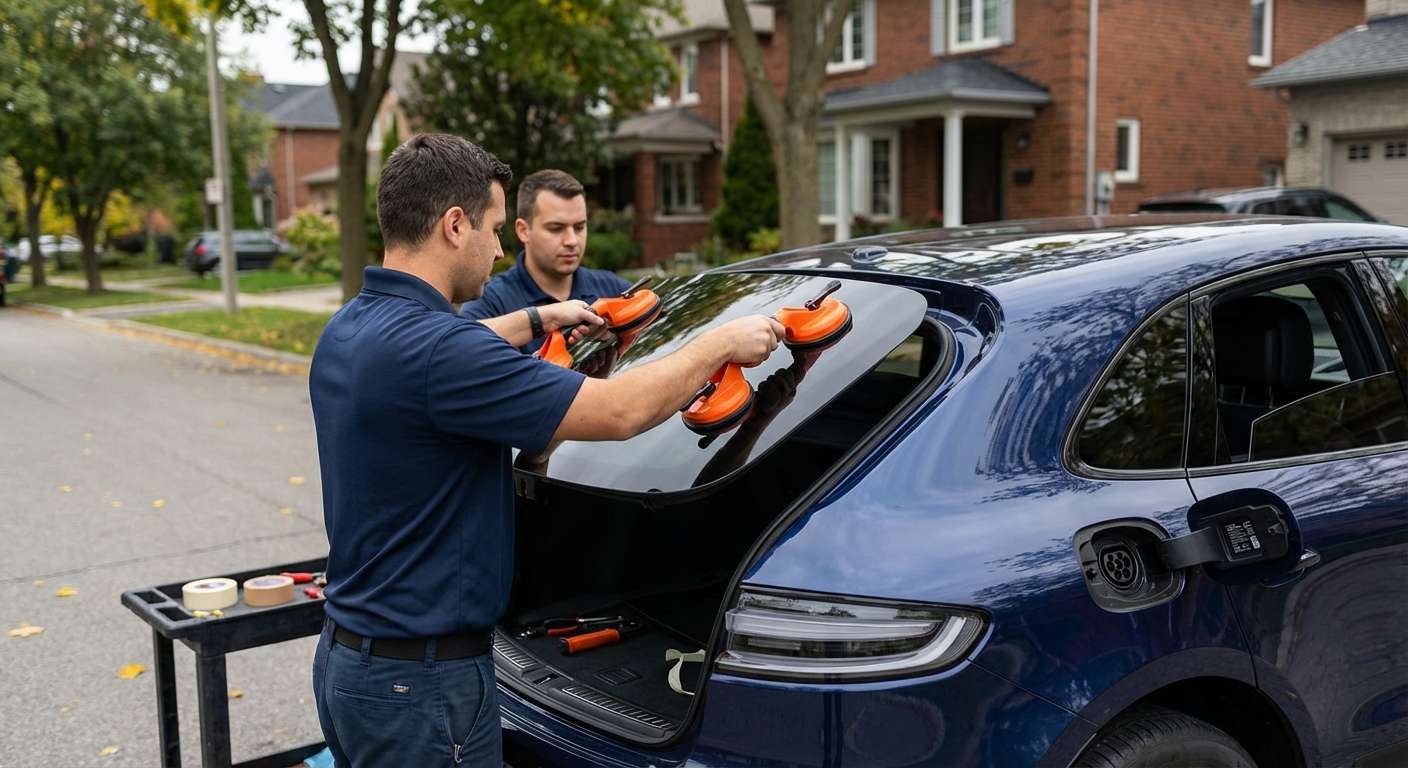
Replacing the back glass on the Macan Electric requires paying close attention to how your specific vehicle was configured from the factory, because Porsche completely overhauled the rear hatch architecture compared to the older combustion models. The rear window sits on a steeply raked flyline engineered to hit a 0.25 drag coefficient, but the critical detail involves the rear wiper. Unlike the prior gas-powered Macans, a rear wiper is not standard equipment on the electric platform; it is an optional standalone add-on. As a result, replacement rear glass comes in two distinct forms: a solid glass panel with smooth surface aerodynamics, and a variant pre-fabricated with a precision cut-out hole to accommodate the rear wiper pivot assembly.
Another factory quirk directly impacts replacement sourcing: Porsche restricts the rear wiper option if the vehicle was built with the thermally and noise-insulated acoustic glass package. If your electric Macan has the standard deep-tint privacy glass, it may or may not feature that wiper through-hole depending on the build sheet. However, if your Macan carries the thicker acoustic laminate glass, it is guaranteed to be a solid rear panel without a wiper hole. Both variations incorporate fine-line electric defroster grids and embedded radio diversity antenna traces integrated directly into the privacy glass layer. When I replace this rear window, I back my installation workmanship for as long as you own the vehicle, while the glass panel itself carries a full one-year defect guarantee.
Working Around the Deployable Spoiler and Tailgate Elements
The lower edge of the rear glass terminates immediately above the Porsche Active Aerodynamics (PAA) deployable rear spoiler. Because the motorized spoiler lifts and retracts directly against the bottom perimeter of the window frame, the glass perimeter uses a specialized flush acoustic reveal moulding. Setting the glass at the exact millimeter height is essential so the moving aero flap does not catch or foul the bottom edge of the glass during deployment at highway speeds. Directly below this motorized assembly rests the full-width 3D LED taillight bar with its illuminated Porsche lettering, meaning the entire lower perimeter involves tight, sensitive tolerances.
Unlike the front windshield, this rear tailgate glass does not house rain sensors or driver-assist cameras; Porsche mounts the rear-view and surround-vision cameras down on the exterior hatch and bumper surfaces. Above the back glass, the center high-mounted stop lamp is tucked into the upper trailing roof spoiler trim. Accessing the vehicle's electrical system requires taking apart the upper and lateral interior hatch trim cards to safely reach the defroster power terminals and antenna amplifier leads without snapping the underlying plastic retainers. Once properly fitted and plugged into the hatch harness, the defroster elements and onboard antenna system operate exactly as intended without interfering with the active aero mechanisms.