Clarifying Cayman Quarter Glass Versus the Boxster Layout
If you drive a Boxster convertible from this era, your car does not actually have a rear vent or quarter window; its soft top drops directly behind the rollover hoops, leaving a clear wind deflector between the headrests instead of side glass. The Cayman coupe, however, incorporates fixed rear quarter panels often cataloged in glass databases under rear vent glass. Neither car uses a front-door wing window, relying instead on a single continuous pane in each frameless door. For the Cayman, the fixed rear glass secures right behind the B-pillar, carrying Porsche base part numbers 981-543-111-xx for the left side and 981-543-112-xx for the right.
Because the mid-engine Cayman utilizes this area for body rigidity and interior airflow space, track variants and GT4 builds sometimes swap these panels for composite side-intake ducting. On a road-going Cayman, you are working with an encapsulated glass assembly that arrives with factory green solar tinting. There are no embedded radio antennas, defroster lines, or driver assistance cameras on these side units, but the perimeter molding is permanently bonded to the glass structure and cannot be swapped over separately from a damaged unit.
Mounting Hardware and Door Seal Interfaces
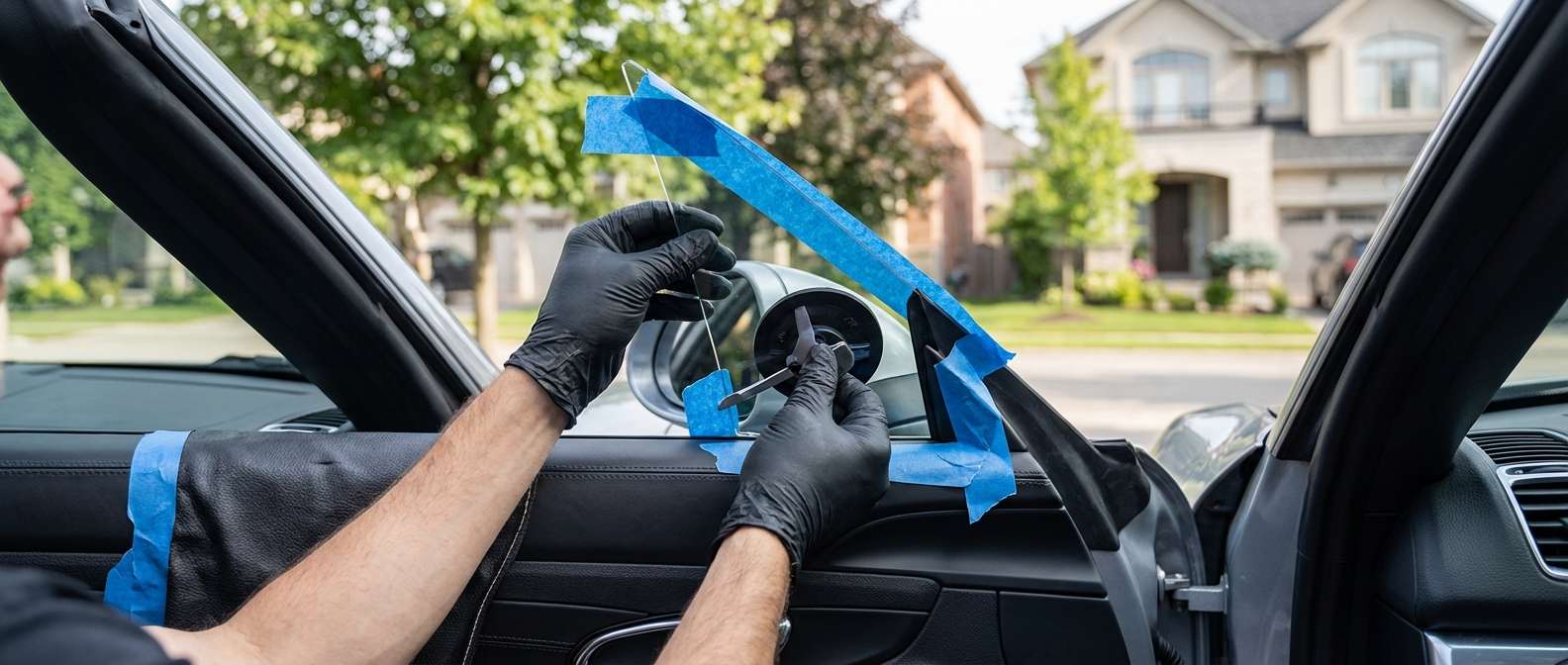
Replacing this glass involves navigating the mechanical fastening points hidden inside the cabin. Unlike standard glued-in side quarters, this design relies on integral threaded studs extending through the inner C-pillar body framework alongside the urethane channel. Accessing those retention nuts means carefully unclipping the upper B-pillar trim, C-pillar covers, and adjacent rear interior quarter panels. In fact, factory workshop documentation notes that removing these side quarter windows is the standard method to gain enough clearance to drop the headliner without bending it.
Whenever I source replacement glass for this car, I supply aftermarket units produced by manufacturers like FYG, PGW, XYG, or Pilkington, ensuring the pre-bonded exterior encapsulation matches the factory offset exactly. The critical structural element on this assembly is the front vertical weatherstrip. Because the Cayman uses frameless doors, the roll-down window glass indexes upward and seals directly against the leading rubber edge of this rear vent unit every time the door shuts.
If the replacement panel sits a fraction of a millimeter too far inboard or tilted on its inner studs, the roll-down window will either leave an air gap that screams at highway speeds or slam against the molding. If the door glass strikes the leading edge of the new quarter frame upon closing, the door glass itself must be re-indexed using the lateral and angular regulator adjustment cogs located beneath the bottom edge of the door shell.
Post-Installation Owner Inspection Checklist
Once the work is complete on your Cayman, walk around the car and evaluate how the glass integrates with the surrounding trim and door movement before heading out on the road:
- Frameless Door Indexing: Open and close both doors slowly to confirm the automatic short-drop feature clears the new quarter glass seal without scuffing the rubber lip.
- Flush Exterior Fitment: Check down the beltline to ensure the outer encapsulated molding sits perfectly flush with the rear fender sheet metal and the C-pillar frame.
- Interior C-Pillar Alignment: Inspect the cabin side to ensure the upper B-pillar plastics, rear quarter cards, and C-pillar trim panels are fully reseated with no visible gaps exposing the mounting studs.
- Uniform Glass Color: Verify that the green solar tint of the new quarter pane matches the hue of the adjacent roll-down door glass under natural daylight.
- Highway Wind Noise: Take the car up to speed on the highway to confirm there is no fluttering or whistle coming from the vertical junction where the door glass mates against the quarter window seal.