Why Break-Ins Commonly Smash the Outlander Stationary Quarter Window
Prowlers smash the fixed rear side window on this crossover because they assume a smaller pane causes less noise and avoids triggering the door-latch switches. Because the rear doors use a fully framed window channel with no separate division bar or door vent, the actual stationary glass sits behind the rear doors, bounded between the sheet metal C-pillar and the cargo D-pillar. Breaking it leaves the cabin open to the weather and litters tempered glass chunks across the third-row folding seat mechanisms.
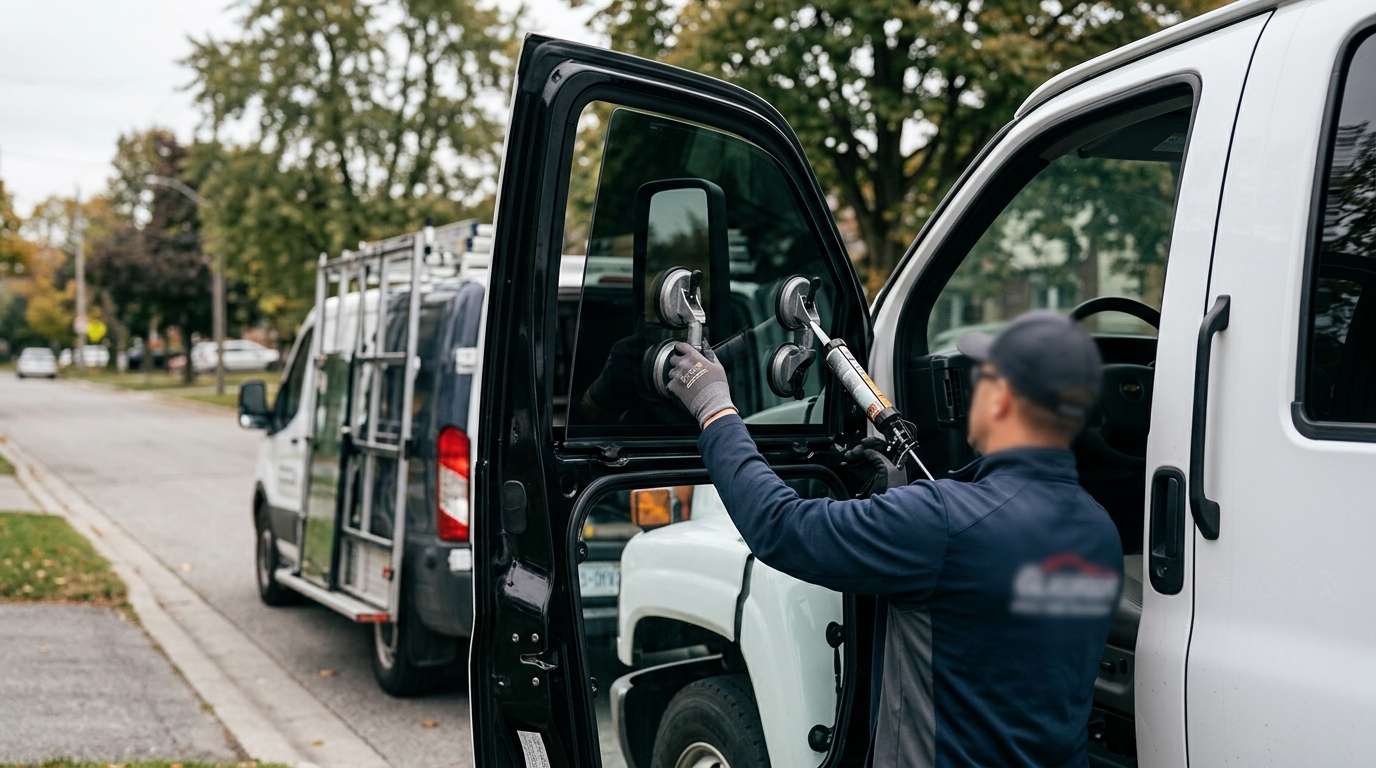
When someone shatters this panel to peek under the cargo cover, I usually get on site about an hour after a booking is finalized so the interior doesn't stay exposed to rain or snow. The irony of these break-ins is that replacing this stationary side pane requires far more effort than a simple roll-down door drop glass, as the inner cargo trim panels, upper quarter mouldings, and C-pillar liners must be stripped from the inside to protect the plastic retainers and access the body flange.
Trim Variations and Bodyside Glass Hardware
Every version of this body style—whether a standard front-wheel-drive ES, an all-wheel-control SE or SEL, a V6 GT, or the twin-motor PHEV—uses the exact same bodyside window aperture. While the glass silhouette never changed across this run, the exterior finish varies depending on package options. Lower trims carry an encapsulated matte black border, while SEL and GT models feature an integrated chrome beltline moulding along the lower edge that aligns with the door window trim.
| Glass Position | Mitsubishi Factory Reference | Standard Factory Spec | Exterior Trim Style |
|---|---|---|---|
| Left (Driver Side) | 6121A497 | Tempered, Dark Privacy Tint | Black or Chrome Lower Accent |
| Right (Passenger Side) | 6121A496 | Tempered, Dark Privacy Tint | Black or Chrome Lower Accent |
Unlike windshields or liftgate glass, these side units carry no embedded defroster lines, rain sensor brackets, or forward-facing camera hardware. Both the left and right positions come standard with dark factory solar tint, so aftermarket replacement units must match that deep tone to maintain a uniform look against the factory-tinted rear door glass.
Cargo Area Hazards and Liftgate Strut Damage
Beyond smash-and-grab thefts, these side panels frequently break from shifting cargo inside the trunk space. The glass sits immediately adjacent to the cargo hold where strollers, tools, or luggage can slide laterally and strike the tempered pane from the inside. Even a small localized hit from a steel corner will cause the entire pane to fracture instantly into pebble-sized safety fragments.
Corrosion around the rear hatch hardware also presents a risk to the quarter glass area. Mitsubishi issued recall SR-25-001 (Transport Canada recall 2025405) covering 2014–2020 Outlander and 2018–2022 PHEV variants for corroding liftgate gas support struts. When an end-cap or cylinder collar snaps under pressure, the sudden mechanical failure can violently fling metal fragments or twist the liftgate, occasionally striking the edge of the adjacent bodyside glass.