Wheelbase Length and Tint Matching on the Metris Quarter Glass
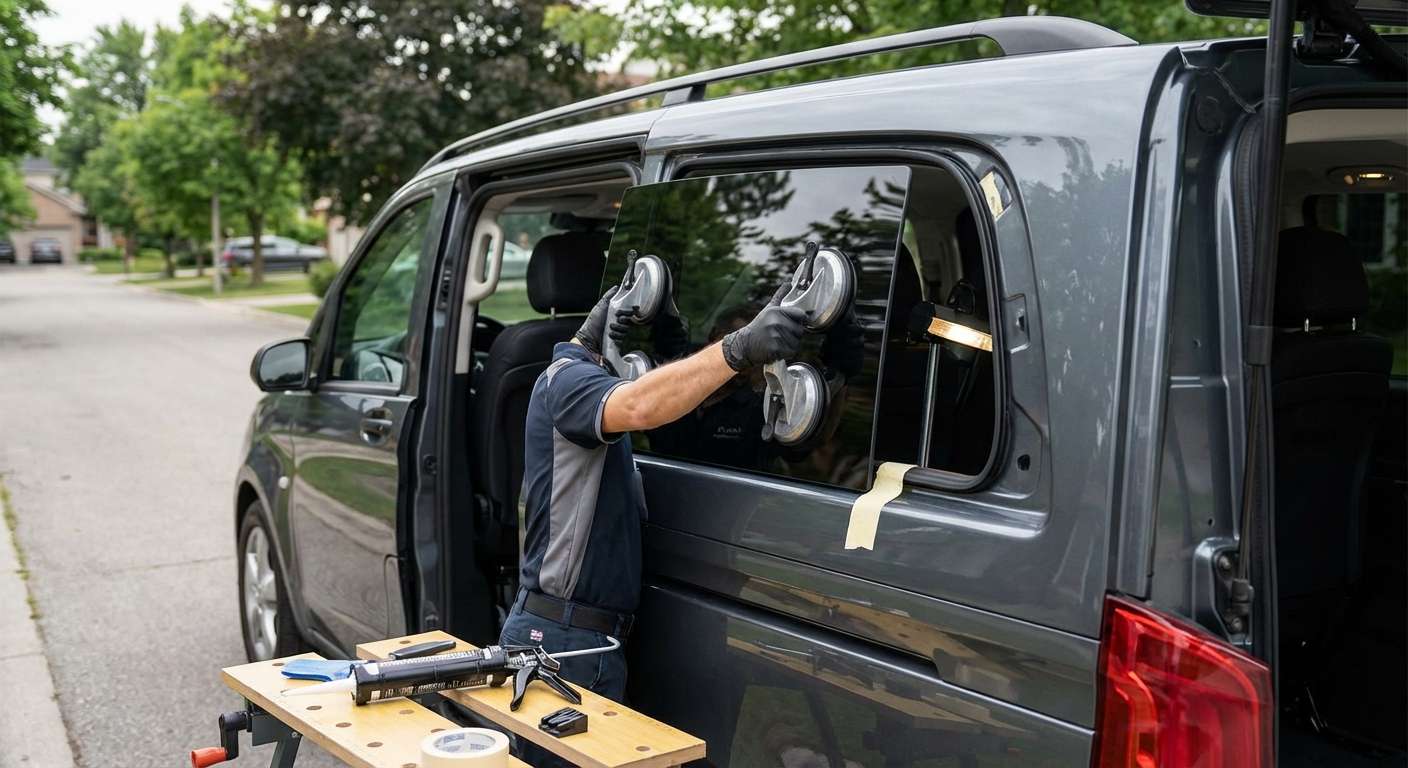
Replacing the stationary rear quarter glass on this midsize van requires verifying your body configuration before anything else. The van came in two distinct footprints: a standard 126-inch wheelbase and a long 135-inch wheelbase. The fixed side glass lengths are entirely different between them, meaning an extended-body window will not seat in the standard aperture. For the passenger/right side on the standard wheelbase, the industry standard glass code is NAGS FQ25598.
Beyond body length, factory light transmittance varies widely. Mercedes-Benz shipped passenger and dual-purpose vans with two distinct glass finishes: a standard light-green solar tint or a heavy factory privacy tint offering roughly 15% light transmission with enhanced heat absorption. On standard 126-inch builds, the dark privacy glass corresponds to dealer references 447-673-30-05 (driver side) and 447-673-31-05 (passenger side), whereas the clear-to-light-green variants use 447-673-21-05 and 447-673-22-05. Installing a standard clear pane on a van with dark factory privacy glass on the sliding door immediately highlights an obvious visual mismatch.
When sourcing glass for these replacements, I rely exclusively on aftermarket manufacturers including Pilkington, PGW, FYG, and XYG to ensure the solar absorption and edge profiles align with factory standards. None of these side units contain integrated defrosters, rear wipers, or ADAS camera brackets, keeping the panel focused strictly on structural sealing and thermal barrier performance.
Critical Fit Points: Perimeter Mouldings, Sliding Door Tracks, and Pillars
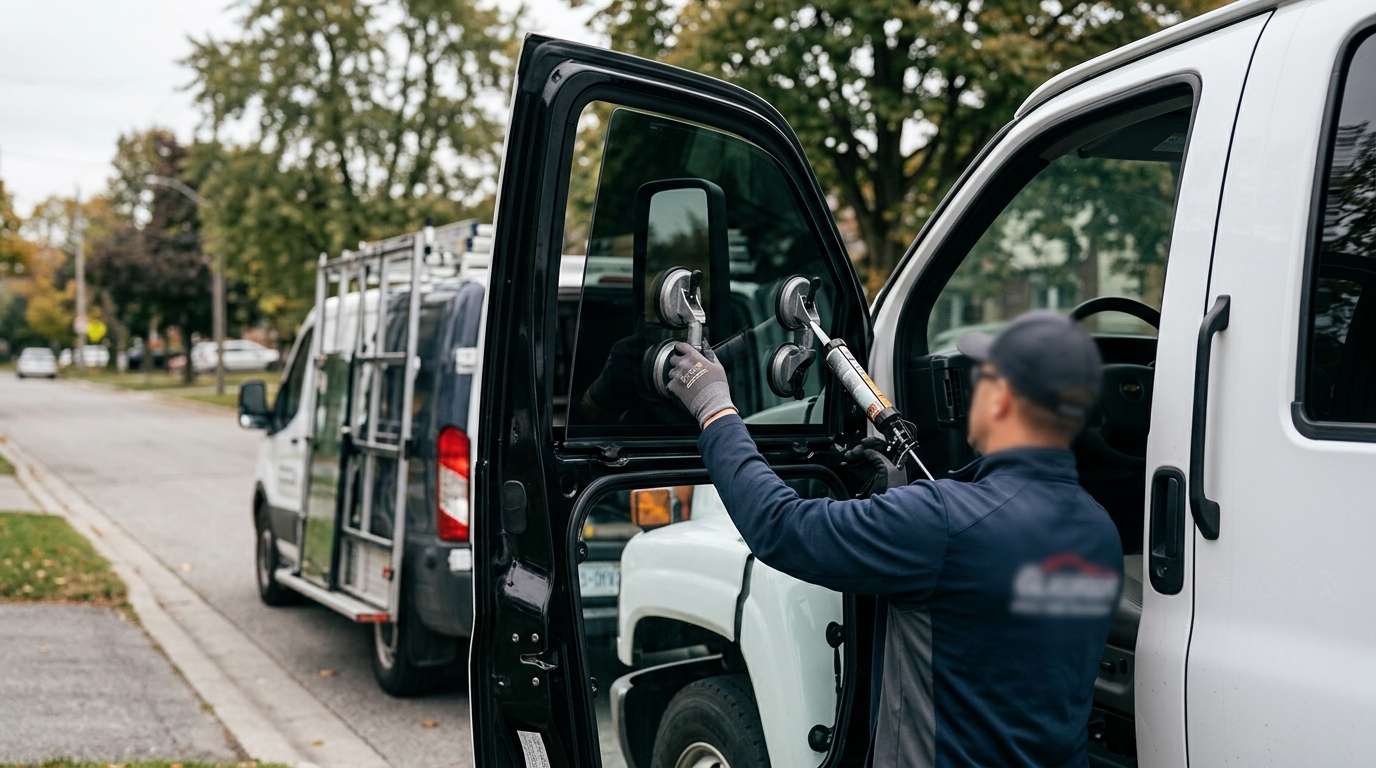
The rear quarter window sits flush against the unibody sheet metal between the C-pillar and D-pillar, directly behind the sliding door track guide. The forward vertical edge of the glass shares tight physical proximity with the sliding door rear rubber weatherstrip. If the replacement pane sits too far forward or too proud of the body, the sliding door rear edge will clip the glass surround when opening.
Achieving the correct glass depth requires the factory-style perimeter sealing frame—part number 447-671-14-20 on the 126-inch body or 447-671-18-20 on the 135-inch body—alongside the lower sealing rail (447-673-01-00) and dedicated alignment spacer blocks (639-671-01-53). Without these spacers, the weight of the tempered pane causes it to slide downward along the pinchweld before bonding fully, creating a gap at the roofline and binding against the rear liftgate or rear barn door outer jamb.
Inside the cabin, passenger models feature molded interior D-pillar trim pieces and upper headliner edge retainers that clip around the window flange. These plastic garnishes must sit flush against the glass borders without forced distortion or bowing.
Owner Handover Inspection
Before driving the vehicle, review these specific assembly points to confirm the quarter window is properly seated and sealed:
- Sliding Door Clearance: Slowly slide the side cargo door fully rearward along its track guide to verify that the door frame and internal rubber track seals clear the forward edge of the quarter glass without contact.
- Rear Door Clearance: Open and close the rear liftgate or dual barn doors to check that the trailing edge of the quarter glass does not impede the outer weatherstrip or sheet metal closure.
- Flush Alignment: Sight down the van's exterior flank from front to back; the quarter glass must sit flush with the C-pillar and D-pillar contours rather than projecting outward.
- Perimeter Moulding Seating: Inspect the perimeter rubber frame along the upper edge and lower sill to make sure it lays flat against the paint without pinching, waves, or lifted corners.
- Interior Trim Alignment: Check inside the cargo or passenger area to confirm that the molded D-pillar trim, luggage wall side panel, and headliner edge are fully re-engaged in their mounting clips without resting unevenly against the glass.
- Tint and Solar Consistency: Compare the replacement glass against the sliding door window in direct light to ensure the privacy shading percentage and solar tint tone match the rest of the vehicle.