Biturbo Side Glass Variations Across Coupé, Sedan, and Zagato Bodies
Replacing a vent or quarter pane on these cars requires knowing exactly which body style you have, because Maserati altered the side glazing architecture completely between models. The two-door coupés—including the Biturbo S, Si, 222, 228, and Racing—do not have a front opening vent wing. Their doors carry a single roll-down drop pane, meaning the only stationary side glazing is the rear quarter glass. In contrast, the four-door sedans such as the 420, 425, 430, and 4.24v incorporate a dedicated triangular rear vent window within the rear door frame, segregated from the drop glass by a vertical metal division bar. If you own a Zagato-built Spyder, the configuration changes entirely again: the convertible uses frameless door glass and omits the fixed triangular vent structure altogether.
These factory side glasses came with either a subtle light green (Solextra heat-absorbing) tint or a warm bronze hue, varying by production run and delivery destination. None of these panes house defroster grids, integrated radio wire antennas, or modern acoustic dampeners; Biturbo audio systems relied on an external power mast antenna drilled into the bodywork. Sourcing correct-tint replacement units demands close attention to original glass stamps, as mixing bronze and green on the same side profile ruins the car's visual lines.
| Body Style | Vent Glass Position | Glazing Attachment Style |
|---|---|---|
| 2-Door Coupé (Biturbo, Si, 222) | Rear quarter flank | Vulcanized EPDM gasket with trim channel |
| 4-Door Sedan (420, 425, 430) | Rear passenger door | Upright division guide bar and rubber seal |
| 2-Door Spyder (Zagato) | None (frameless) | Full drop glass assembly only |
Mechanical Retention, Division Bars, and Gasket Challenges
Rather than using direct polyurethane adhesive bonding, the Biturbo's stationary glass depends on mechanical retention. The pane sits nested within a thick vulcanized EPDM rubber channel, locked into position by painted black or anodized aluminum perimeter mouldings. On four-door sedans, the front edge of the triangular rear vent glass slots straight into the back face of the vertical division channel bar. This metal bar serves a dual purpose: its reverse side functions as the felted drop-channel that guides the roll-down main window.
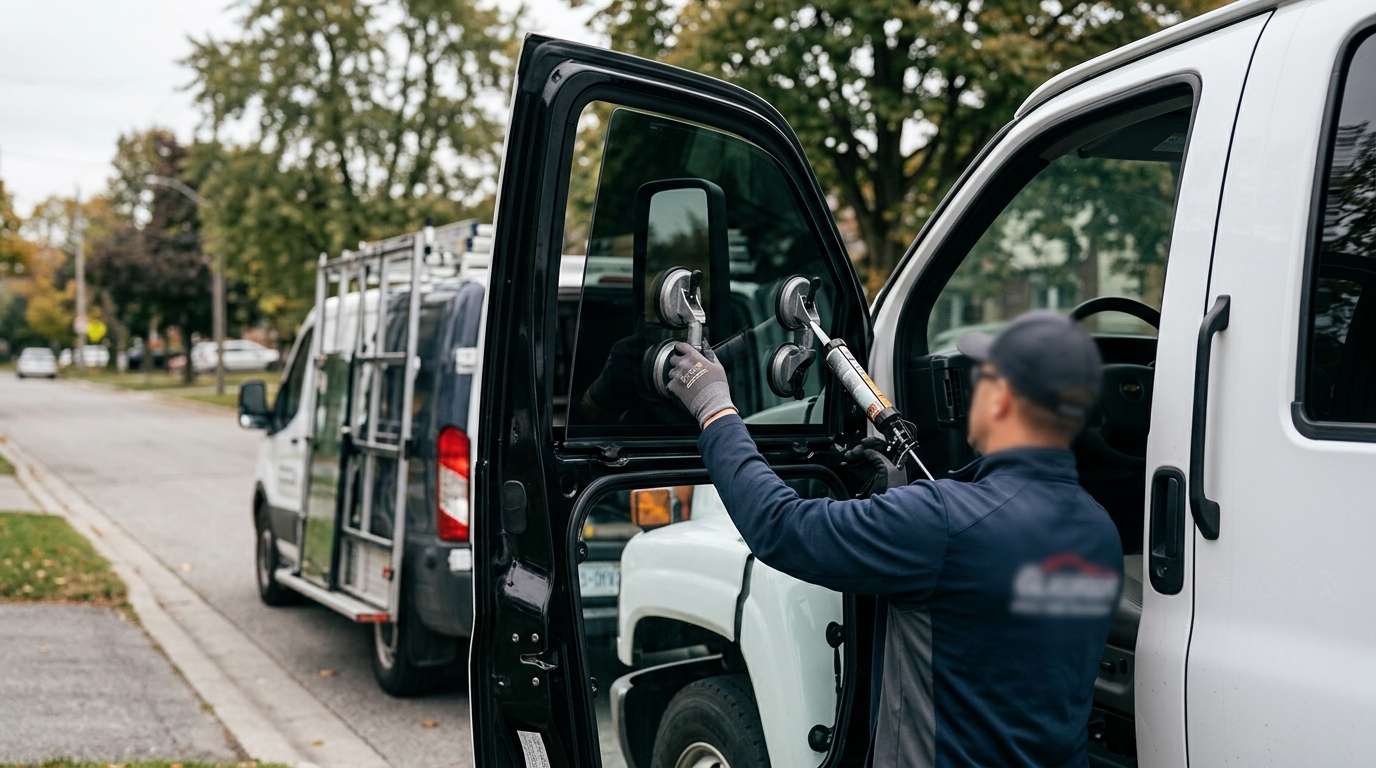
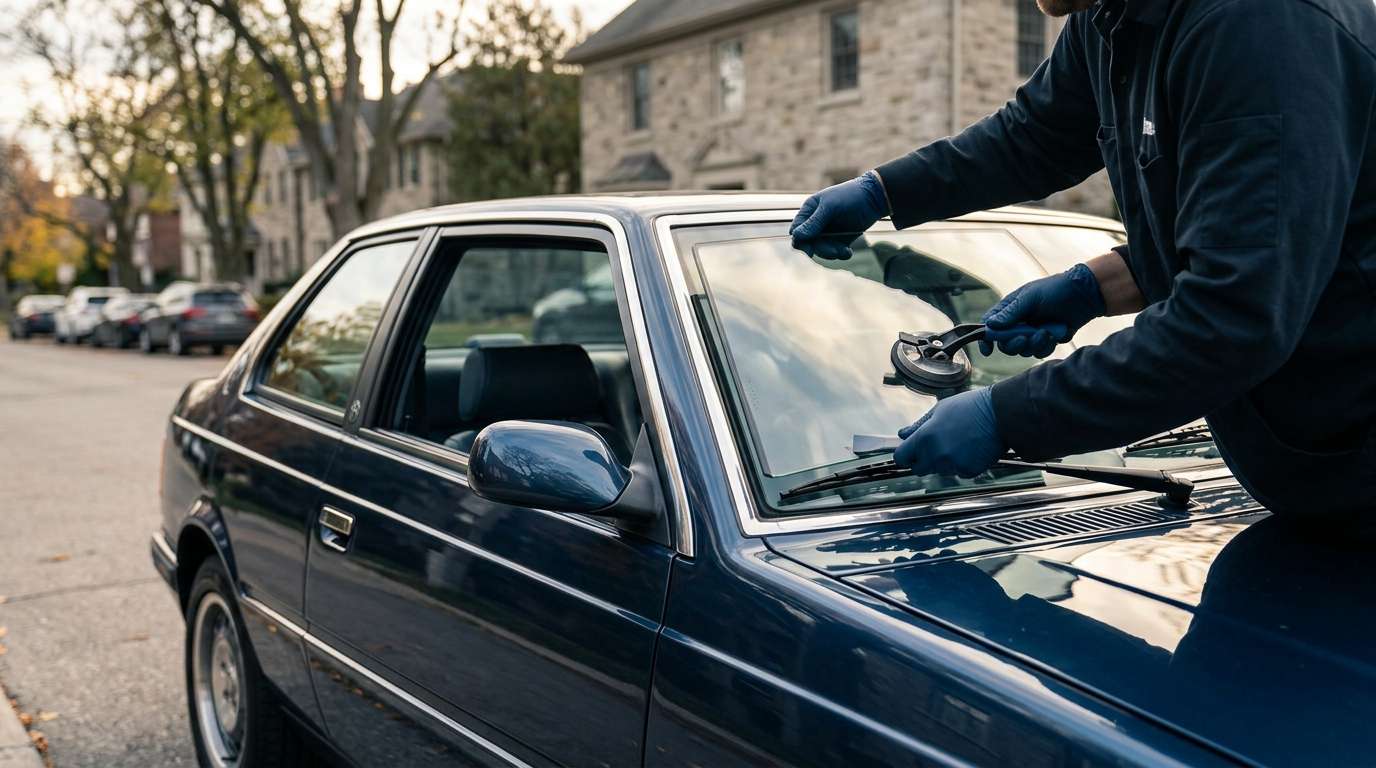
When working on these cars across Toronto and the GTA, I travel directly to the customer's home or workplace to handle the replacement on-site without putting the vehicle into transit. Working on Biturbo door frames requires exceptional care around the delicate interior fittings. The upper door caps and adjacent pillar covers feature fragile hand-stitched leather or vinyl stretched over backing boards that turn brittle with age. To release the glass and its division bar, those interior trims must be eased off without cracking the aged substrate or pulling the metal mounting clips through the cardboard cores.
Managing Aged Weatherstripping and Window Track Alignment
Over decades of heat cycling, the original rubber seals around the vent glass shrink, harden, and pull away at the corners. This deterioration allows rainwater to bypass the frame, run down the inside of the door cavity, and collect in the lower footwells—especially if the small drain flaps at the bottom of the door shell are clogged with old undercoating wax. Furthermore, the exterior anodized black trim framing the glass frequently suffers from severe UV fading and surface corrosion, making the metal soft and prone to twisting if handled roughly.
Because the drop window regulator mechanisms in the Biturbo utilize relatively weak electric motors and plastic drive gears, the vertical division bar bordering the vent glass must sit perfectly plumb upon reassembly. If the division channel binds against the main window by even a fraction of a millimetre, the drop glass will stall or strip the plastic teeth inside the regulator gearbox. Ensuring the glass sits true inside its rubber profile prevents wind whistles at highway speeds and spares the fragile window lift motor from premature mechanical failure.