Dual-Panel Panoramic Roof Failure Points on the Lincoln MKS
Unlike the standard single-pane sunroof found on the Ford Taurus, every Lincoln MKS equipped with overhead glass uses a specialized dual-panel panoramic moonroof setup. This design splits the ceiling into an active front tilt-and-slide unit and a stationary rear skylight. Because the roof expanse is so large, highway debris strikes carry a high risk of shattering the front panel, while the fixed rear panel often suffers impact stress cracks around its perimeter mounting points.
Mechanical fatigue also leads to roof replacements on this vehicle. The front panel relies on molded plastic track sliders and drive cables driven by an electric motor in the overhead console. When those guides crack, the front glass twists out of alignment. If forced, the motor can bind against the frame, shattering the tempered panel against the stamped steel roof opening or snapping the brackets. Furthermore, aging perimeter rubber weatherstrips shrink over time, which lets wind roar past the A-pillars and overpowers the front mesh wind deflector.
Replacing Front vs. Rear Panoramic Glass Panels
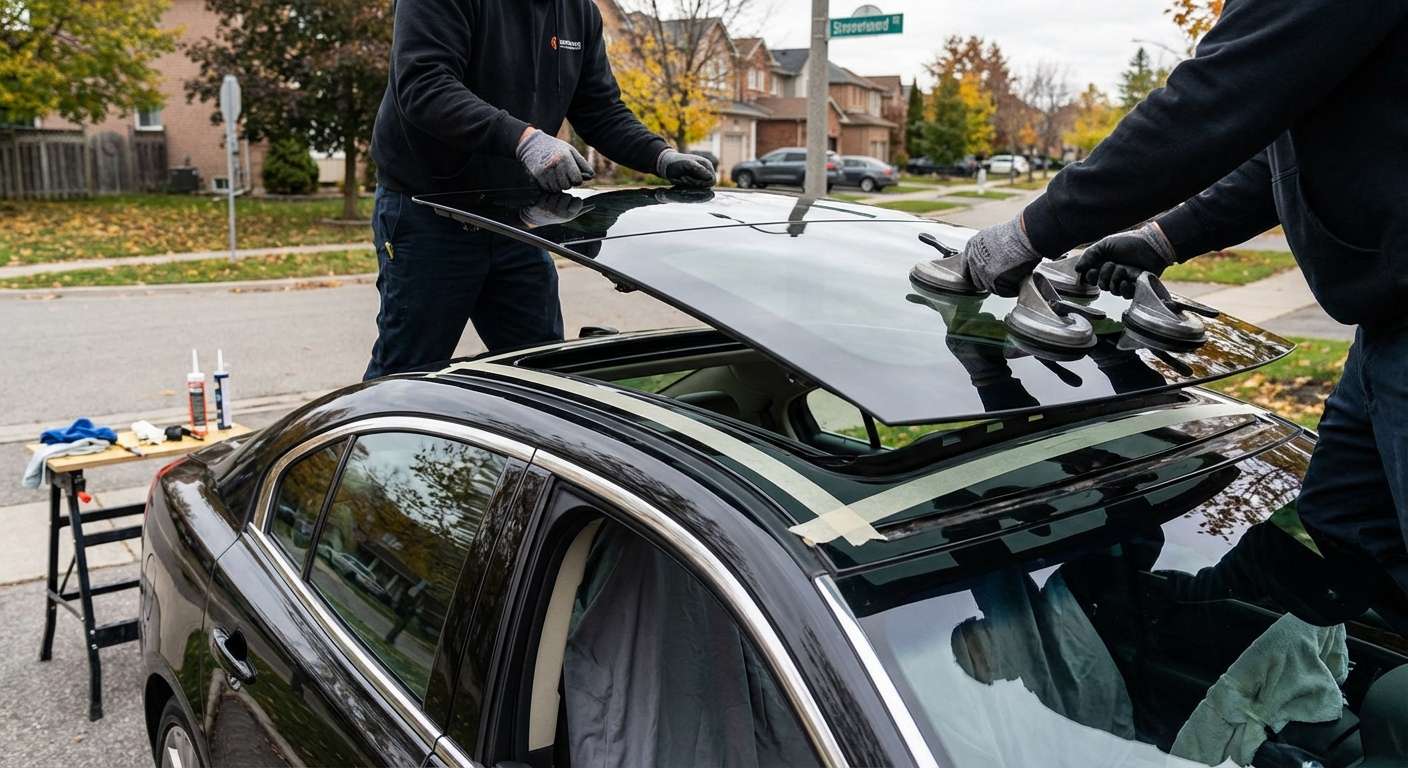
The two glass sections on the MKS mount entirely differently despite sitting flush along the center roof seam. The movable forward glass bolts directly into adjustable track brackets linked to the cable drive. The rear skylight panel bolts down into the underlying frame module without track hardware. Both sections arrive from the factory with a heavy solar tint and encapsulated edge seals, meaning the weatherstrip is molded directly onto the glass rather than glued to the vehicle body.
| Glass Section | OEM Reference | Mounting Design | Key Components |
|---|---|---|---|
| Front Operable Panel | 8A5Z-54500A18-A | Bolted to slide brackets | Pop-up mesh deflector, drive cables |
| Rear Fixed Skylight | 8A5Z-54500A18-B | Bolted rigid to frame | Encapsulated perimeter seal |
When I replace the shattered front or rear glass on your MKS, I back the replacement glass panel with a one-year guarantee against defects and provide lifetime coverage on the workmanship to ensure the panel sits level and leak-free. Proper height alignment relative to the steel roof aperture is critical; if the leading edge of the front panel sits even a millimeter higher than the roofline, air will scoop underneath it at highway speeds, straining the track sliders.
Interior Clearances, Water Management, and Sunshade Operation
Working on the MKS roof requires careful attention to the four corner drain tubes and the power-operated full-coverage cloth roller shade. When glass shatters above, tempered fragments drop past the glass seals into the drainage troughs and down into the A-pillar and C-pillar drain tubes. If these lines remain blocked, rainwater backs up into the molded headliner and drips onto the floorboards. Clearing these passages while the glass panel is removed prevents interior flooding later.
The secondary motor driving the dual-panel fabric shade also requires inspection. Tempered glass shards frequently jam the roller tracks, causing the fabric guides to snap or the shade to sag loose from its tensioner. Neither panel uses built-in rain sensors, defrosters, or radio antennas, so electrical concerns are limited strictly to the twin motor drives and track synchronization.