Panoramic Roof Layout and XM Glass Failures
Exploding panoramic roof glass on these XM crossovers became notorious enough to trigger Transport Canada safety recalls and federal defect investigations. The setup uses a dual-panel arrangement: a movable front tilt-and-slide section and an expansive fixed rear panel. What often surprises drivers when the front tempered panel shatters without warning is that the glass failure is tied directly to manufacturing stresses around the ceramic frit perimeter band, combined with torsional flex through the XM roof structure on uneven pavement. That dark solar band is designed to protect the track sleds and inner seal edges from UV degradation, but internal glass stress along those borders frequently leads to spontaneous failure.
Because there are no antenna elements, defroster lines, or rain-sensing electronics embedded inside either overhead pane, the mechanical challenge is strictly structural alignment. The front moving panel carries an integrated, encapsulated rubber perimeter bulb seal that presses directly against the roof opening sheet metal. When this seal hardens, or when debris wedges into the side tracks, the drive cables bind. The overhead drive motor (factory reference 81631-2P500) detects the resistance and trips the anti-pinch safety mechanism, bouncing the roof back open or jamming the sled shoes entirely.
Front Venting Panel vs Fixed Rear Glass
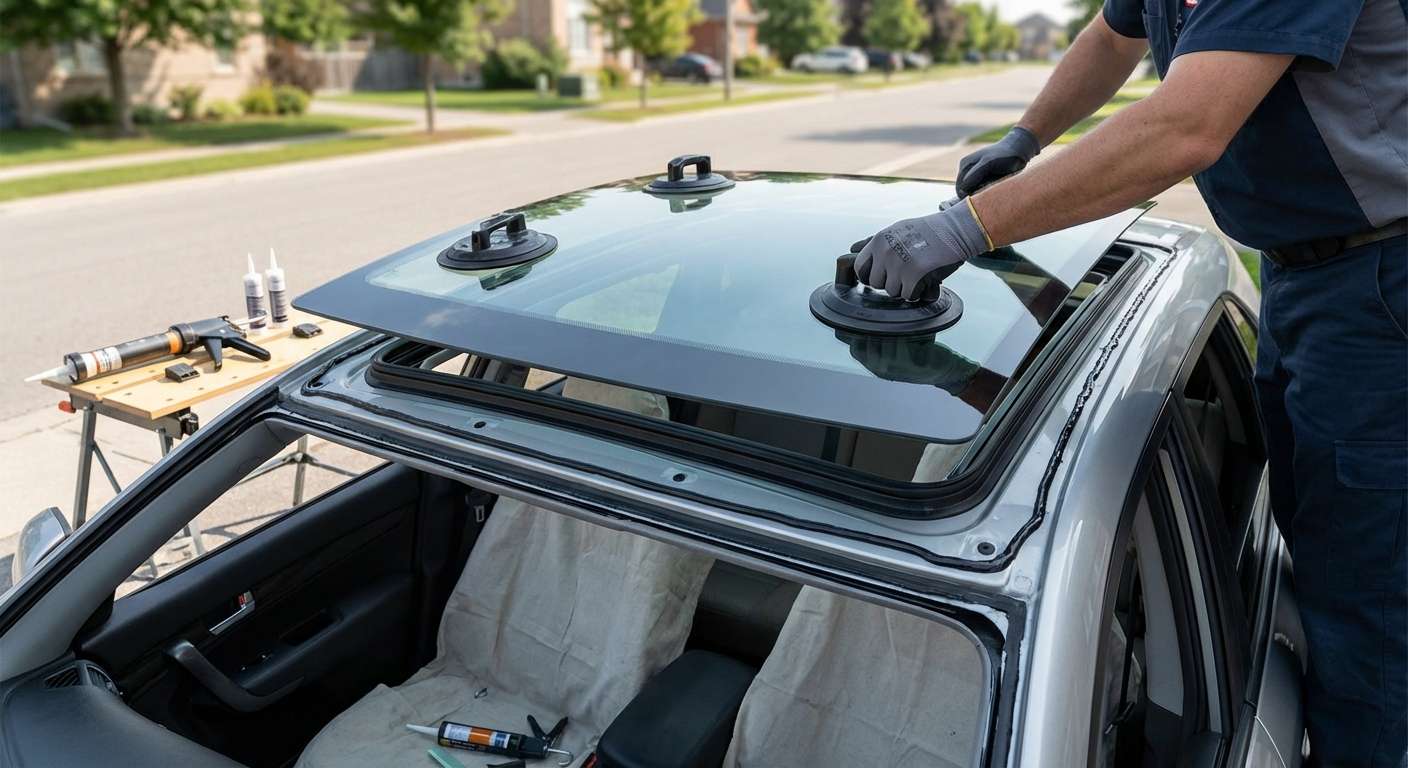
Servicing the overhead glass depends entirely on which section took the impact or shattered. Swapping the front operable section (OEM part 81610-2P000) does not require disturbing the vehicle cabin interior. The glass bolts straight into the mechanical drive sleds using Torx hardware hidden behind flexible interior side covers. However, if the entire frame assembly or the dual-roller cloth sunshade system fails, the repair expands drastically. The fabric shades—split into front roller assembly 81666-2P000 and rear roller 81667-2P000—run inside guide channels that sit underneath the glass cassette.
| Component | Roof Position | Interior Trim Removal Required |
|---|---|---|
| Operable Slide Panel | Front | No (Side accordion boots only) |
| Fixed Vista Panel | Rear | Yes (Upper cabin trim access) |
| Cassette & Track Frame | Full Roof | Yes (A, B, C, D-pillars and headliner) |
| Roller Sunshade Modules | Underside | Yes (Headliner dropped) |
Every aftermarket panel I fit on these EX, SX, and SX Limited trims includes a full one-year warranty on the glass itself alongside my lifetime guarantee covering all aspects of the workmanship. Making sure the pop-up mesh wind deflector at the leading roof edge collapses freely into its pocket prevents high-speed wind buffeting and keeps excessive lift from stressing the front glass mounts.
Water Management and Track Track Misalignment
Water intrusion inside the cabin of this vehicle almost always traces back to the four hidden drain exits rather than catastrophic glass seal failure. Water that slips past the encapsulated outer rubber lip drops into an integrated drainage trough cast into the perimeter cassette. From there, four vinyl drain hoses route down through the A-pillars and rear quarter pillars to dump water under the chassis.
- A-Pillar Hose Disconnects: The front drainage nipples sit right above the windshield top corners. If pine needles or fine road dust plug the exit grommets, backed-up water overflows the trough, saturates the forward headliner, and runs down the A-pillar plastic trim onto the front floor carpets.
- Track Guide Wear: The slide shoes running inside the extruded aluminum rails develop lateral slop over time. This looseness creates a distinctive metallic clicking or rattling noise directly over the driver's head when traversing washboard roads, which side-loads the glass pane if left unadjusted.
- Rear Fixed Pane Leaks: The rear stationary glass relies on a wide perimeter bed. If body twisting pulls the frame loose from its factory seating, water will bypass the rear drain wells and soak into the C-pillar trim panels behind the second-row seating.