Tempered Glass Cleanup and Matching Kia Seltos Tint Levels
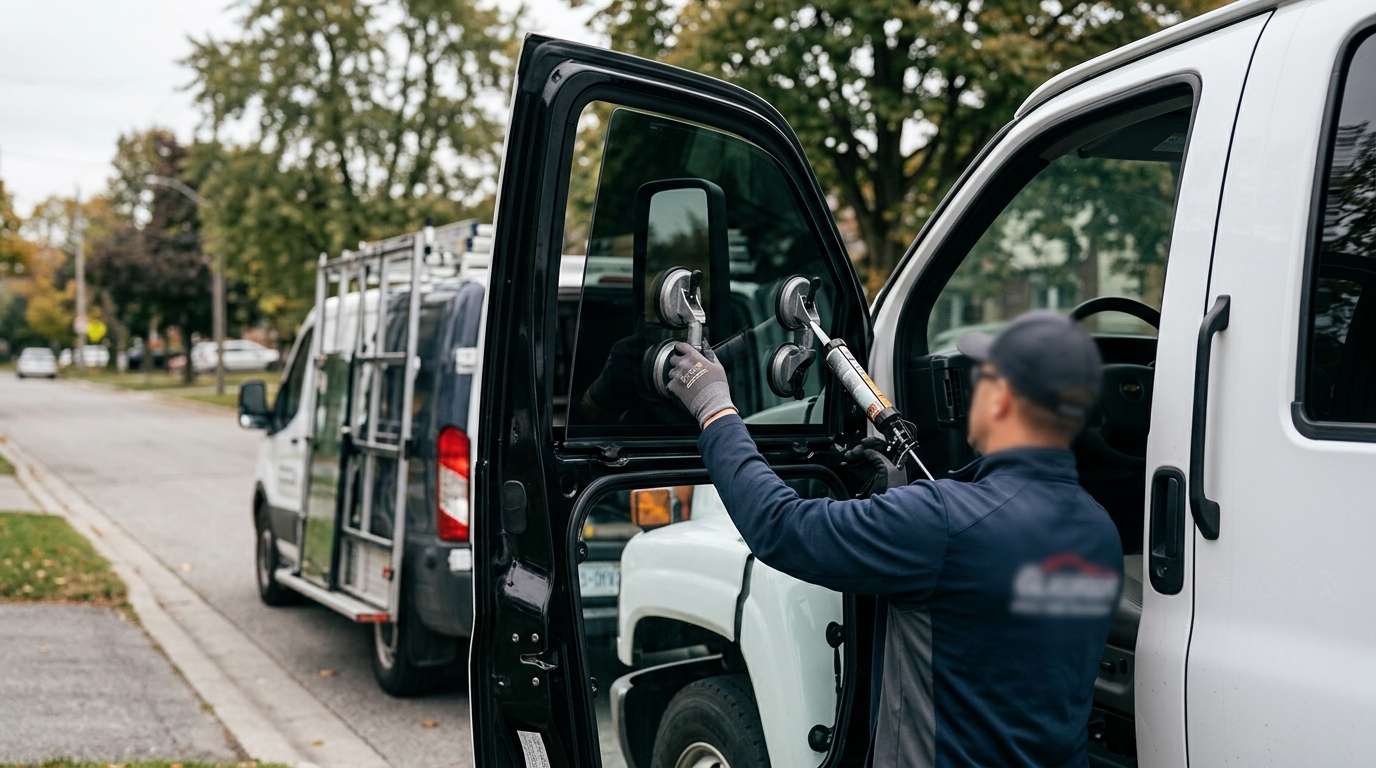
When a side window shatters on your Kia Seltos, it does not crack in place like the front windshield. The door glass on this subcompact crossover is single-pane tempered safety glass, engineered to burst into thousands of blunt granular chunks upon impact. That leaves your interior floorboards, seat tracks, and the hollow pocket inside the steel door frame full of loose debris. A break on the driver side or front passenger side leaves a completely clear opening, whereas a rear window break leaves an opening flanked by a stationary rear vent window, requiring the glass track to be cleared thoroughly before anything new can drop in.
The first practical concern is matching the tint between the front and back rows. Front doors on every trim level—whether the base LX, S, EX, Nightfall edition, X-Line, or turbo SX—use standard solar green glass that lets light through while cutting UV rays. Rear doors behave differently depending on the build. Mid-to-high trims like the Seltos EX, Nightfall, and SX arrive with deep factory privacy glass starting right at the B-pillar, while base entry models feature standard light solar glass. I source strictly aftermarket glass manufactured by major fabricators like Pilkington, PGW, XYG, and FYG, which replicate the exact factory solar green for front positions and the correct privacy dark-smoke hue for rear doors so the replacement blends seamlessly with your remaining windows.
Navigating the Seltos Door Shell and Regulator Assembly
Replacing the movable drop glass on this vehicle requires going well beyond popping off the interior upholstery panel. The door structure uses conventional framed steel channels rather than frameless coupe architecture, relying on a full-frame rubber run channel gasket to stabilize the pane as it moves. Inside the door cavity, the glass rides on a cable-driven window regulator carrier. Accessing the mechanical mounting clamps means taking off the plastic quadrant cover near the side mirror, unplugging the master switch harness, and working through the internal service access points in the inner door module plate.
If you are replacing a rear door window (dealer reference 83410-Q5000 for the left side or 83420-Q5000 for the right side), the construction adds a structural vertical division bar. This metal channel splits the movable drop glass from the fixed quarter glass at the trailing edge of the rear door. Tempered glass shards invariably wedge themselves tight inside this division bar channel and the bottom rubber sweeps. If those tracks are not meticulously vacuumed out and realigned, the replacement pane will bind against the channel or screech whenever the power window motor engages.
Resolving Wind Noise and Track Drag After Glass Failure
A frequent nuisance on this platform involves wind buffeting or track friction along the window perimeter. When a side window is smashed, the forceful blowout often pulls the delicate outer beltline mouldings out of alignment or deforms the upper run channel gasket. If the new glass binds or rises slowly, it is rarely a failing motor; the rubber channel has likely pinched inside the upper door frame or collected microscopic glass powder along the felt lining.
Properly seating the pane into its bottom carrier clamps through the inner sheet metal ports ensures the glass travels on a true vertical axis. Once the fresh glass is seated squarely in the regulator clips and the rubber run channel is re-seated without twists, the door seals tight against the frame, eliminating the highway whistling and slow-roll issues that happen when a replacement is rushed.