Door-Mounted Construction on the Forte Sedan
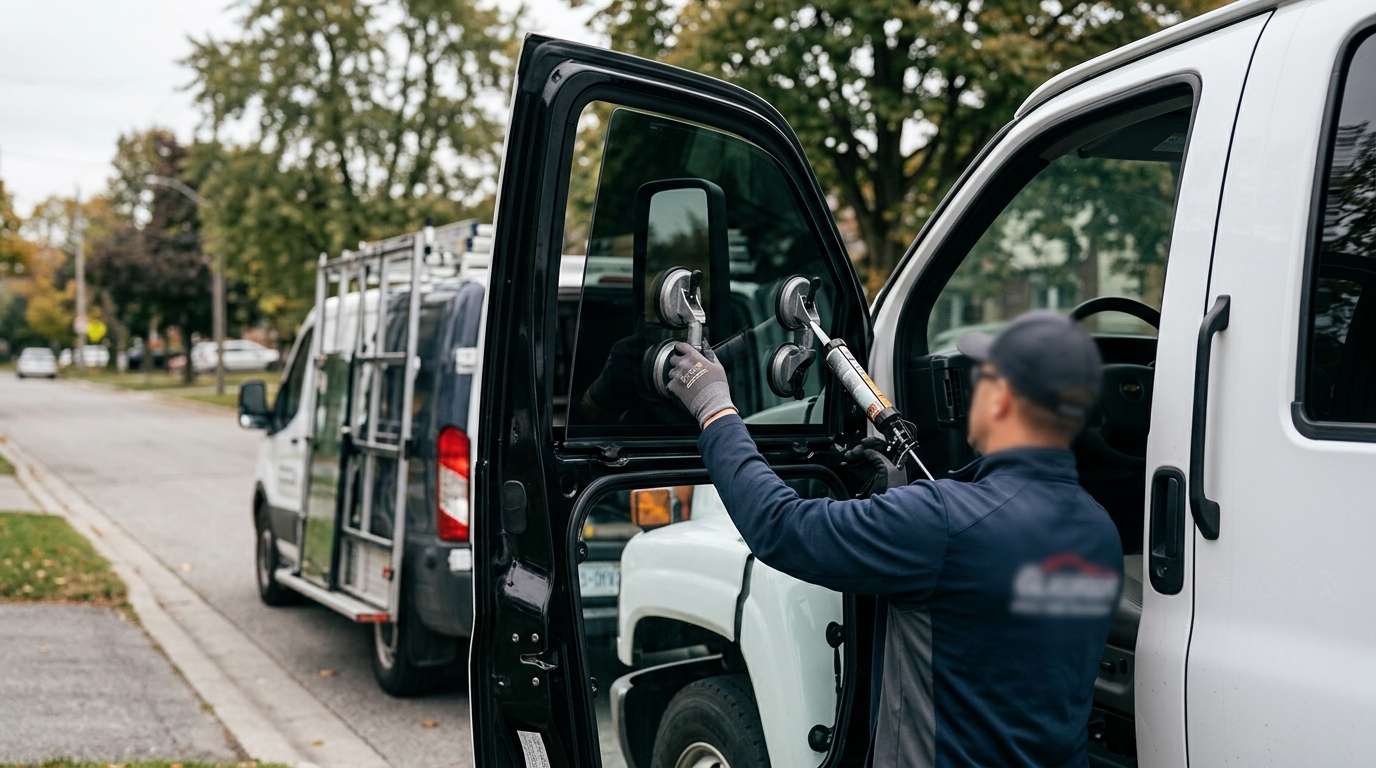
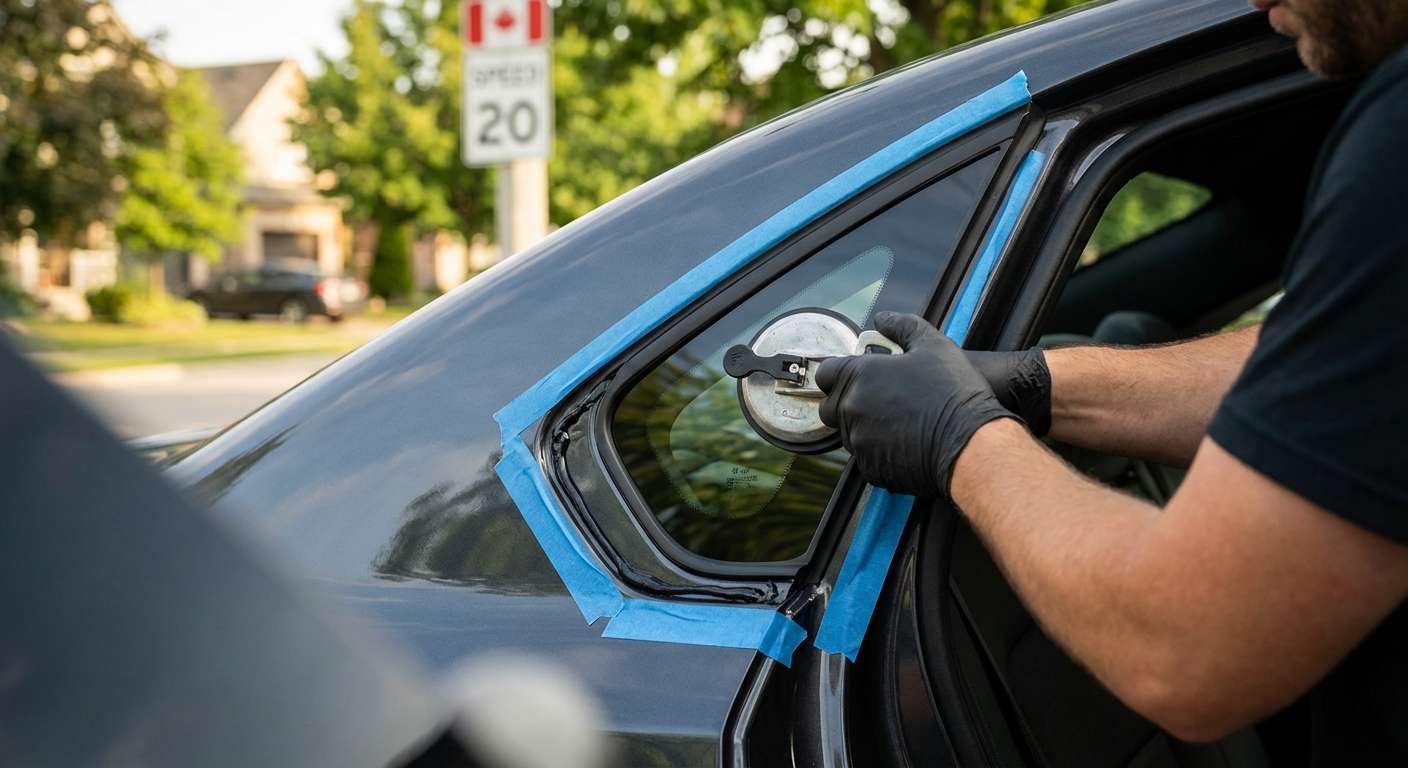
Replacing the stationary rear quarter glass on this car is entirely a door service job rather than a structural body glass repair. Kia engineered this triangular pane directly inside the stamped steel frame of the rear passenger door instead of gluing it onto the exterior sheet metal of the C-pillar. Because it shares the door cavity with the main roll-down window, it relies on an integrated encapsulation assembly with pre-molded rubber channels that slot into the door sash. A rigid vertical division bar separates the stationary quarter window from the moving door glass, which means access requires tearing down the interior door card and dislodging the moisture barrier rather than slicing urethane off a body pinchweld.
Vandalism and forced entry have made this particular pane one of the most frequently replaced pieces on key-turn Forte models from 2019 through 2021. Prying or smashing this rear window bypasses the car's basic perimeter perimeter, leaving shattered tempered glass trapped inside the door shell and the bottom guide channels. Whenever I install replacement glass for these doors, I source exclusively high-grade aftermarket units from trusted manufacturers like PGW, FYG, XYG, and Pilkington to ensure the solar green tint matches the factory roll-down glass beside it.
Distinguishing Black and Chrome Window Trims
Kia utilized two distinct exterior finishes across the Forte trim lineup, and selecting the correct replacement relies on matching this factory reveal moulding. The encapsulation comes bonded directly to the perimeter of the glass from the factory, making the moulding non-transferable if the original window is shattered. Lower and sportier builds, including the FE, LX, LXS, GT-Line, and turbocharged GT, feature a stealth matte black surround. The factory part references for these dark assemblies are 87810-M6000 and 87810-M6050 on the left side, with 87820-M6000 and 87820-M6050 mirrored on the right.
Upscale models such as the EX utilize a bright chrome accent moulding embedded into the upper and lower edges of the glass seal. For these bright-trim variants, the corresponding OEM references correspond to 87810-M6150 for the driver-side rear door and 87820-M6150 for the passenger side, which supersede the older M6120 production run. Both trim configurations are free of active electronics, as the pane carries no defroster lines, embedded antenna traces, or acoustic dampening interlayers.
Securing the Division Bar and Preventing Cabin Whistles
Because this glass is encapsulated within an operational door frame, sealing performance depends entirely on mechanical alignment. The vertical division channel must be unbolted from the inner door structure and slid downward to release the old glass assembly. When the new tempered quarter unit is seated, that division channel must be torqued back into exact parallel alignment with the descending path of the primary door glass.
If the division bar is nudged even a few millimeters out of true, air leaks through the upper door frame where the C-pillar meets the roofline, producing an annoying highway wind whistle. An off-center track also pinches the felt run-channel, causing the power window motor to bind or drag whenever the main door glass is rolled up. Correctly seating the encapsulation tabs against the inner door sash ensures a weather-tight fit that functions silently at speed.