Acoustic Laminated Front Glass vs. Tempered Construction
Matching the correct door glass on this vehicle requires checking your trim level before sourcing parts, because the front side windows came in two distinct glass compositions. High-tier trims like the Overland and Summit were equipped from the factory with acoustic laminated front door glass, engineered with a sound-dampening interlayer sandwiched between two sheets of glass to eliminate highway wind buffeting. In contrast, standard configurations use single-pane tempered glass. On later model year Summit editions, Chrysler extended this acoustic lamination treatment back into the rear passenger drop windows as well.
Replacing an acoustic pane with a standard tempered window introduces a noticeable difference in cabin acoustics and changes how the glass behaves in extreme weather. When an acoustic panel shatters, it holds together on the polyvinyl butyral interlayer, whereas the tempered version drops directly into the lower door skin. The table below outlines how the front and rear openings differ across this platform:
| Door Location | Standard Glass Type | Tint Level | Key Structural Neighbour |
|---|---|---|---|
| Front Left & Right | Acoustic Laminated or Tempered | 70% Solar Green | Outer belt moulding (e.g. 55399290AF) |
| Rear Left & Right | Tempered (Acoustic on late Summit) | Deep Factory Privacy | Fixed vertical division bar channel |
Manoeuvring Around the WK2 Stamped Inner Structure
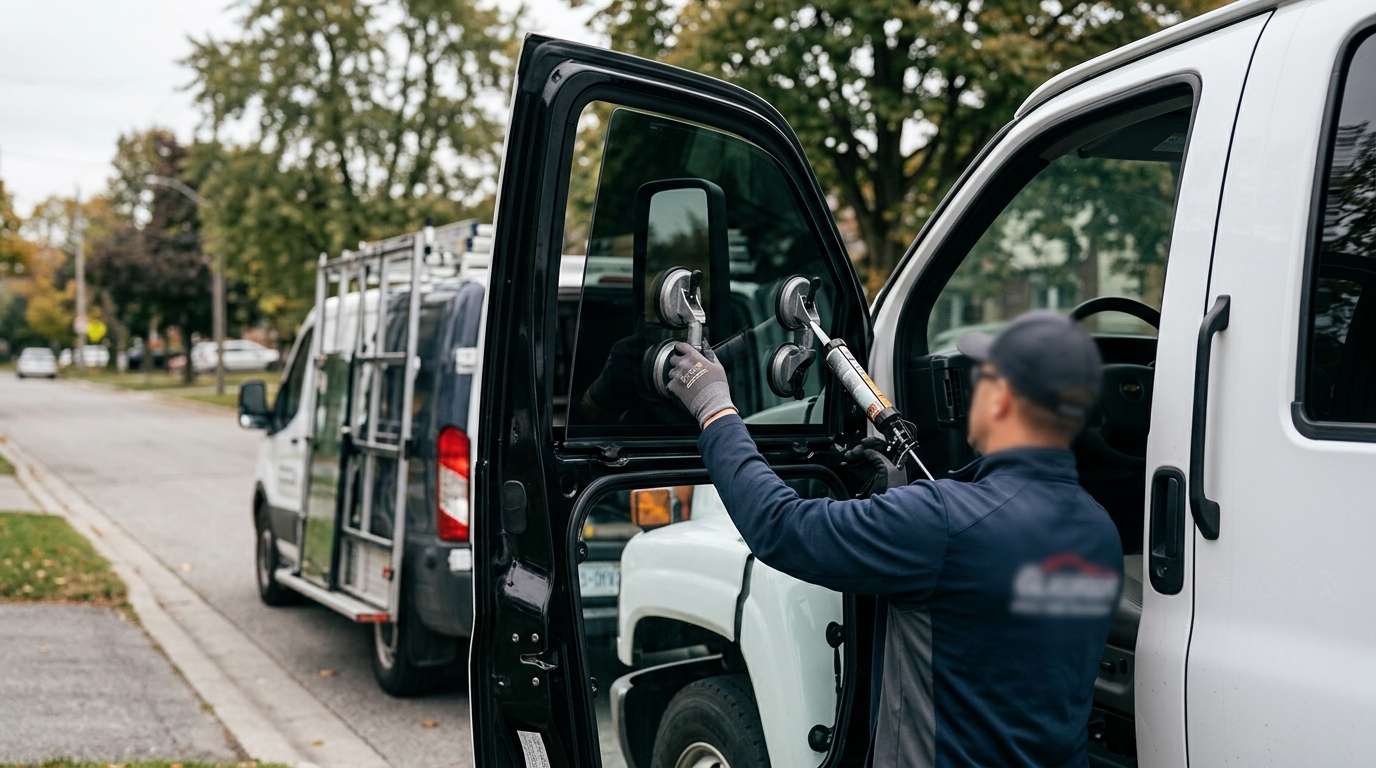
Unlike frameless doors found on many contemporary utility crossovers, these doors use a stamped steel full-frame construction. The drop glass rides on a cable-driven regulator and locks into place via snap-fit plastic clamp tabs at the bottom edge. Because the inner stamped sheet metal has minimal access cutouts, getting a new pane into the door cavity demands precise orientation. For emergency call-outs where broken glass leaves an interior vulnerable to weather, I aim to be at your vehicle roughly an hour after you book so the door cavity can be cleared and sealed properly.
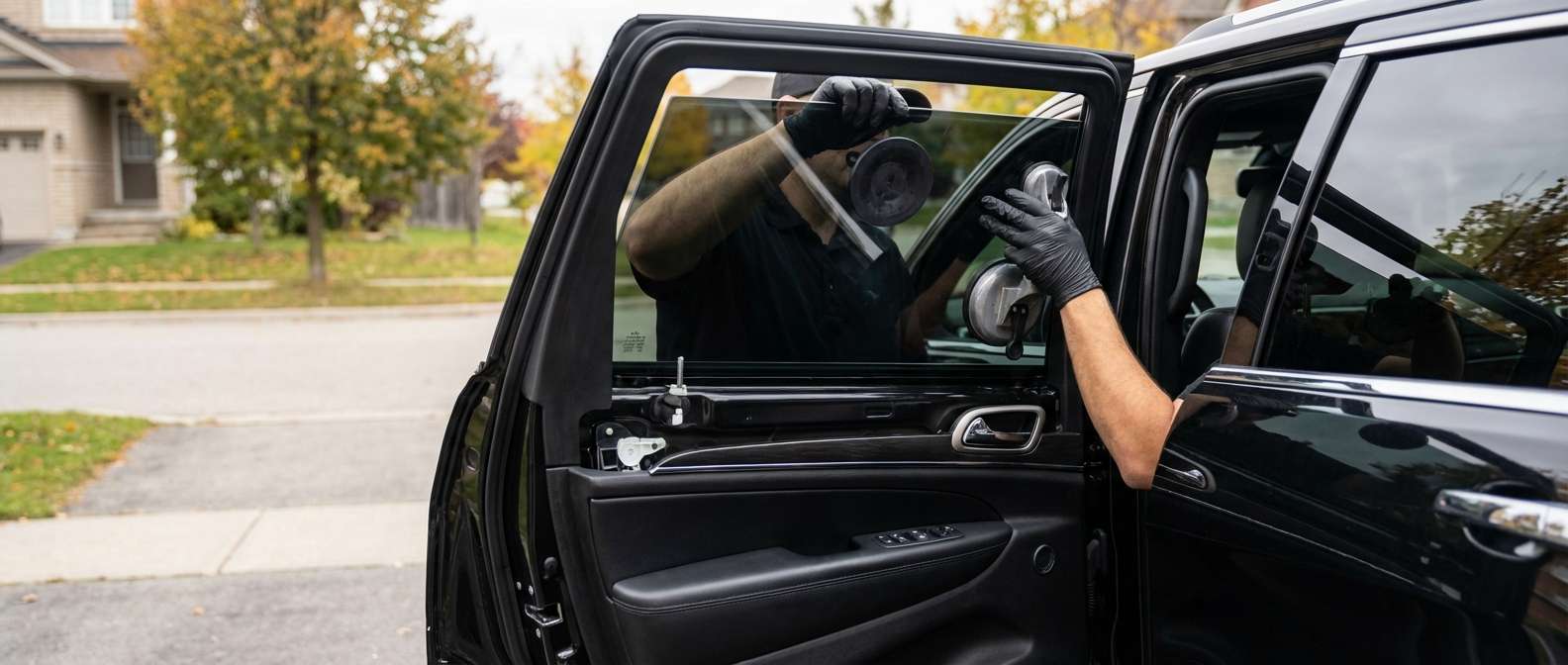
The rear passenger door is particularly confined. The drop window operates adjacent to a stationary rear vent section, separated by a rigid vertical division bar. To clear the internal tracks, the replacement rear glass must be fed through the window slot at a steep diagonal angle without binding against the division run channel. Forcing the panel down can warp the sheet metal framing or shear the plastic retaining tabs off the aftermarket replacement pane.
Factory Belt Mouldings and Internal Cavity Debris
A window replacement on this platform involves more than seating the glass into the lower carrier clip. The horizontal exterior belt mouldings, such as front right part number 55399290AF, and the inner belt mouldings (55399208AB) feature a flocked felt lining that collects glass fragments whenever a side window breaks. If every single tempered fragment is not vacuumed out of these mouldings and the bottom of the steel door shell, the debris will score the replacement tint surface on the very first roll-down.
I also inspect the window regulator cables and guides whenever the inner door liner is detached. The factory plastic regulator sliders can fatigue, leading to sudden cable binding or windows dropping crooked into the door. Verifying that the wiring harness through the rubber door jamb boot remains intact ensures the motor receives clean signals, avoiding phantom reversals caused by pinch sensors triggering against dirty run channels.