Acoustic Laminated Fronts versus Tinted Rears on the I-Pace
Identifying the exact side window configuration on your Jaguar I-Pace comes down to checking whether you are replacing front or rear glass, alongside your trim level's tint package. The front door glass across all trims—S, SE, and HSE—uses specialized dual-pane acoustic laminated glass designed specifically to block high-frequency road and wind noise in the silent electric cabin. You can confirm this on your vehicle by lowering the front window slightly and looking at the top exposed edge: you will see two thin sheets of glass bonded together with a clear acoustic interlayer. Jaguar cataloged the left front door glass under OEM part number T4K12810, engineered specifically to drop into the factory T4K3133 perimeter rubber run channel.
The rear doors present a different choice. While the movable drop glass in the rear operates next to a fixed vertical division bar separating it from the quarter glass, the glass itself is single-pane tempered safety glass rather than laminate. You will need to check the factory shading on the rear pane before ordering. Jaguar equipped these rear doors with either standard light green solar-tinted glass or deep-dyed dark privacy glass, often bundled with the Black Exterior Pack. The left rear glass carries original reference numbers such as T4K1053 and T4K10217 (engineering stamping J9D3-25713-B). Unlike the windshield, neither the front nor the rear movable side windows house embedded sensors, defroster lines, or antenna grids, simplifying the pane's internal makeup.
Interior Clearances and the Flush Handle Assemblies
Inside the door shell of the X590 platform, the window drop glass bolts into lower clamping brackets driven by a cable regulator. What makes this electric Jaguar distinct during a door glass replacement is the tight clearance behind the inner acoustic vapor barrier. Because the I-Pace uses motorized flush-fitting exterior door handles, the door cavity contains sensitive mechanical linkages and dedicated proximity wiring harnesses positioned immediately adjacent to the lower travel path of the window glass.
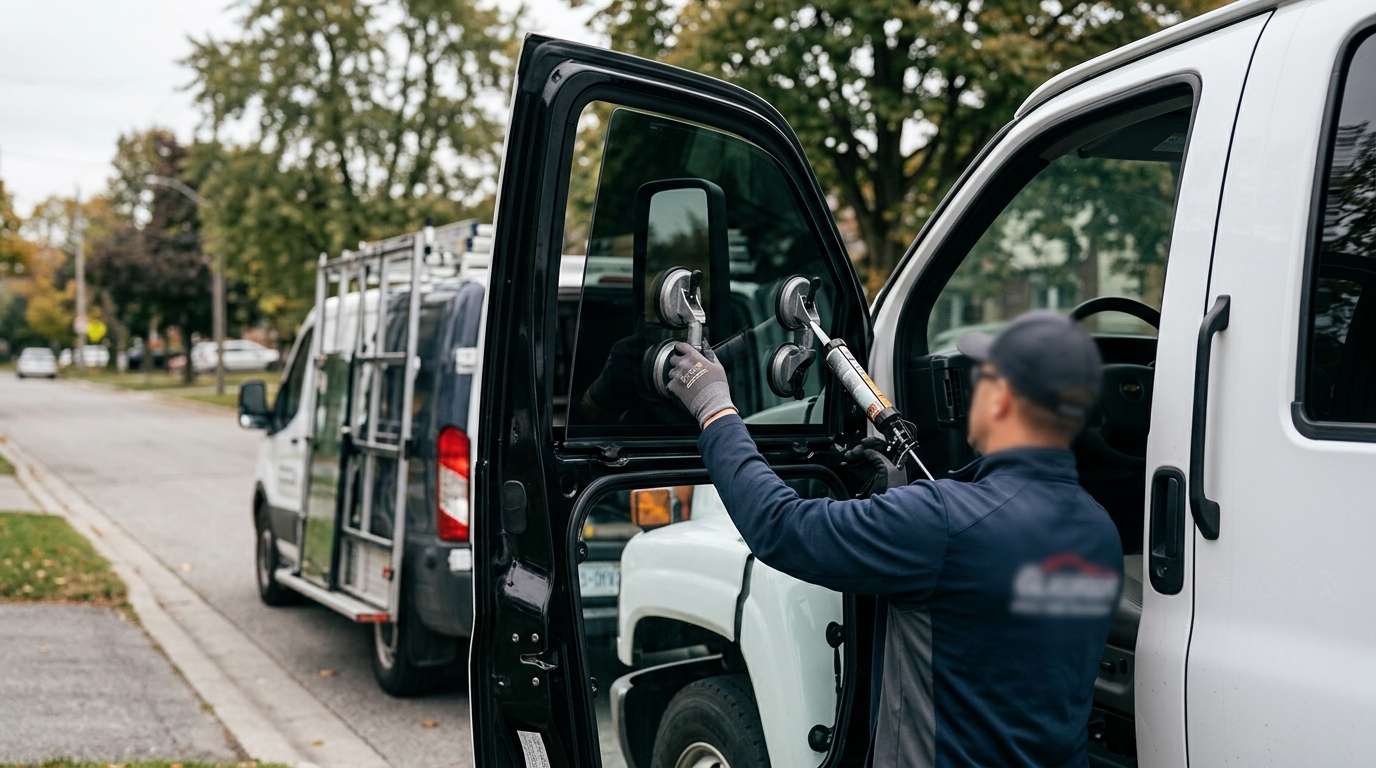
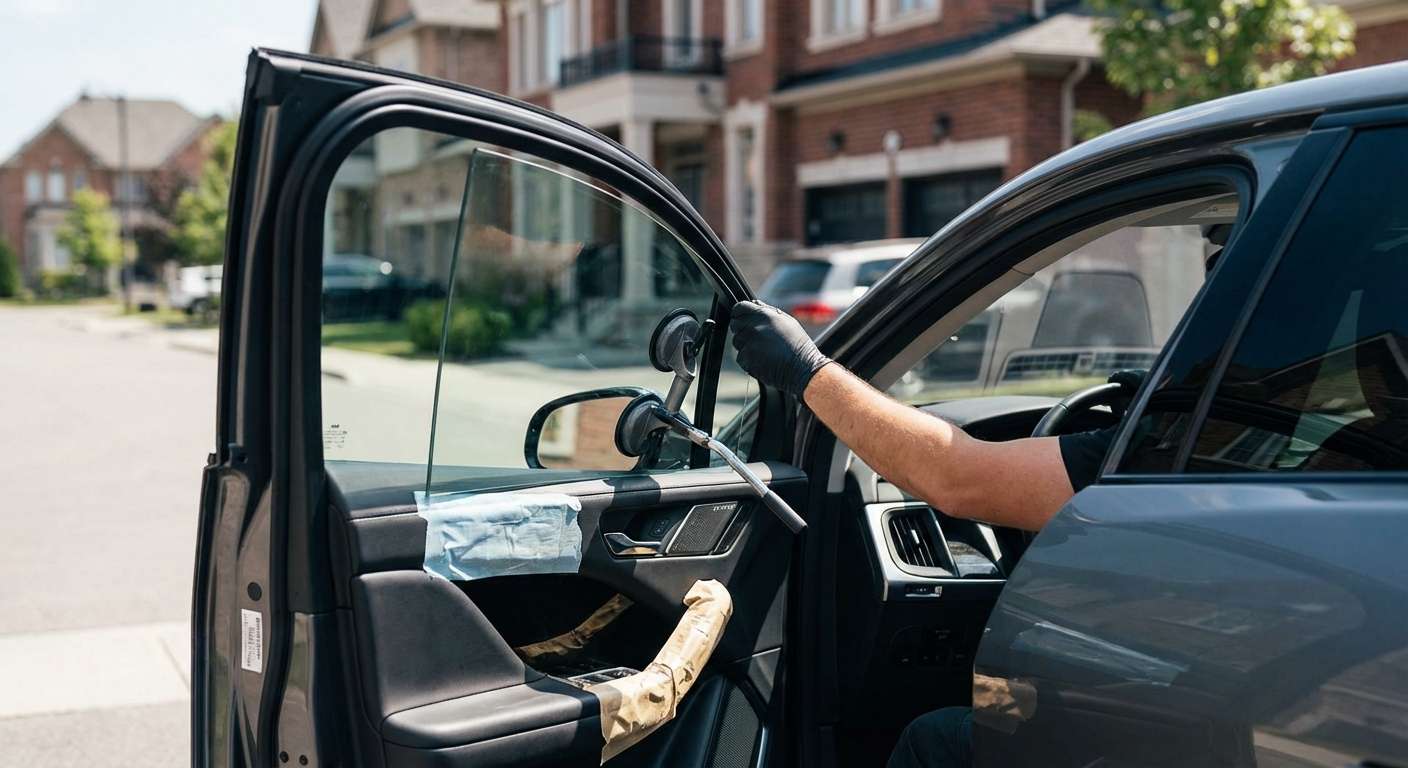
When I travel out to your driveway or office parking spot anywhere across Toronto and the GTA to replace broken side glass on an I-Pace, navigating around these flush-handle modules requires deliberate care so that no internal connectors are strained while vacuuming shattered safety glass out of the bottom door shell. The exterior beltline scrapers—finished in either bright chrome or gloss black depending on your styling pack—must also seat dead-flat against the pane to prevent excessive friction against the regulator motor.
Post-Replacement Inspection Checklist for Owners
Once your new door glass is seated in the clamps and the inner door card is fully secured, check these specific vehicle functions before putting the car back into regular service:
- One-Touch Auto Up/Down: Cycle the window switch entirely up and down. If the window stops midway or reverses direction, the anti-pinch safety system is detecting run-channel resistance and requires a switch limit reset.
- Perimeter Run Channel Fitment: Check that the T4K3133 rubber weatherstrip has not rolled or bunched in the upper corners or along the rear vertical division bar, which can cause high-speed wind buffeting.
- Flush Exterior Beltline Seating: Inspect the gloss black or bright chrome exterior waist moulding to ensure it clips down flush against the sheet metal and seals evenly across the bottom edge of the glass.
- Retracting Handle Operation: Lock and unlock the vehicle to verify that the motorized exterior door handle extends and retracts smoothly without catching against internal glass guide brackets.
- Acoustic Edge Check (Front Doors): If a front door pane was replaced, verify the top finished edge shows the correct dual-pane laminate profile to ensure the cabin maintains proper EV acoustic insulation.