Identifying the Correct Glass for Your Late-Production F-Pace
When stone chips or stress fractures spread across your front screen, matching the exact factory options is critical before ordering a replacement. Jaguar prepared to wind down internal-combustion F-Pace assembly around late 2024 to early 2025 as part of its brand-wide electric vehicle pivot, leaving late-cycle models with specific carry-over glass setups. While every variant leaves the factory with acoustic laminated glass to isolate the cabin, the internal layers change significantly across individual builds.
Your screen may incorporate full-surface micro-filaments for rapid winter defrosting, an infrared-reflective solar coating to cut cabin heat, or a specialized wedge-shaped PVB interlayer engineered to prevent ghosting on vehicles equipped with the Head-Up Display (HUD). When I replace these screens, I supply aftermarket glass exclusively, sourcing units produced by manufacturers like Pilkington, PGW, FYG, and XYG that match these exact internal features.
| Jaguar Base Part Reference | Integrated Micro-Filament Heat | Head-Up Display (HUD) Wedge | Solar Attenuation (IR Coating) |
|---|---|---|---|
| T4A16297 | No | No | Standard Tint |
| T4A16298 | Yes | No | Solar Reflective |
| T4A47218 | Yes | Yes | Solar Reflective |
Hardware, Cowl Components, and Moldings Surrounding the Screen
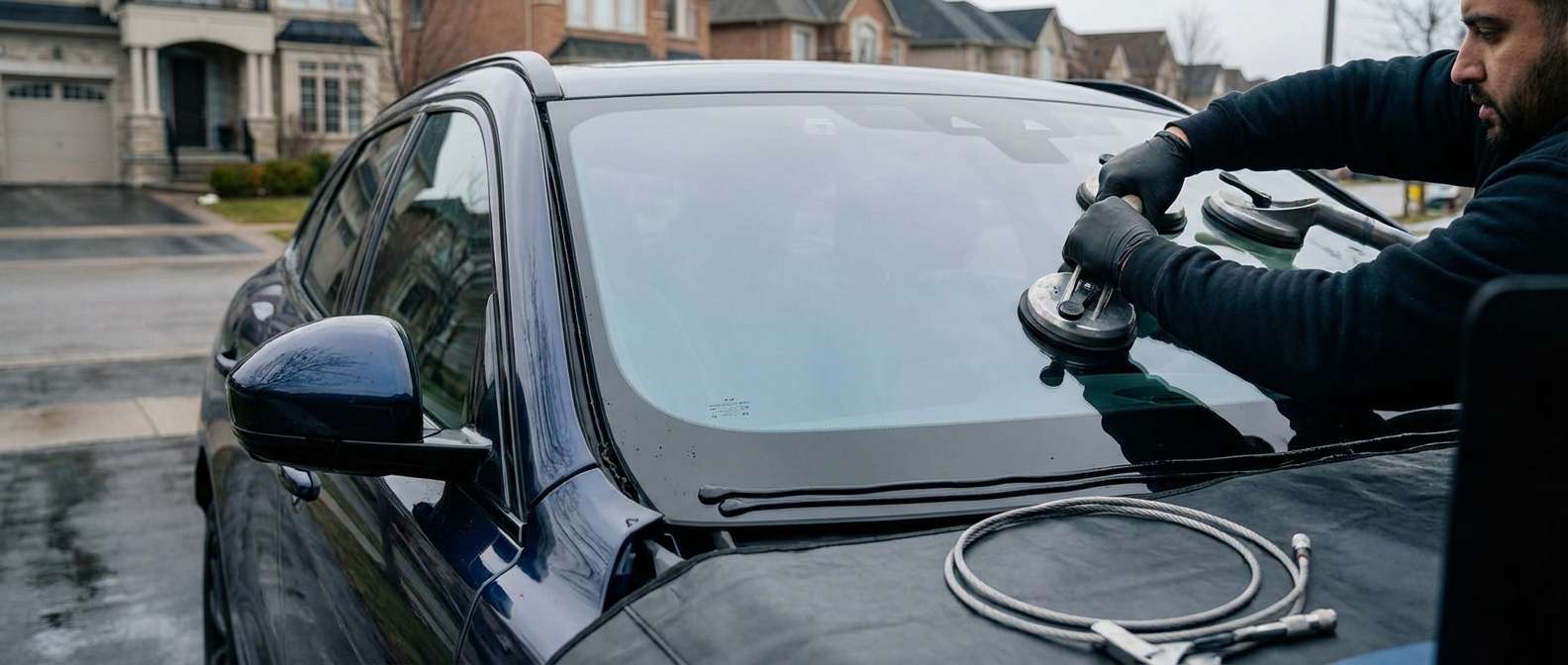
Replacing the glass on this SUV involves detaching precision-molded exterior components before the pane can be accessed. The base of the windshield tucks securely beneath a two-piece plastic leaf screen cowl panel. This assembly protects the cabin air intake and isolates the wiper linkage, requiring the dual front wiper arms to be pulled from their splines through dedicated pass-throughs below the lower ceramic frit line.
Along the roof pillars, the glass borders exterior gloss-black A-pillar reveal moldings that snap into structural clips alongside the body frame. If these trims or the cowl pins are stressed during disassembly, wind noise can develop at highway speeds. At the lower driver-side corner, every replacement screen features a dedicated cutout etched into the black ceramic enamel border to keep your vehicle identification number clearly visible from the exterior.
Interior Sensor Modules and Glass Stress Vulnerabilities
Mounted directly to the upper center of the glass beneath the rearview mirror is a combined rain, ambient light, and humidity sensor. Transferring this unit demands a fresh optical gel disc to eliminate air pockets, which otherwise cause false rain detection and erratic wiper cycling. Flanking this housing is the forward-facing ADAS camera bracket, bonded permanently to the inner glass surface to provide lane guidance and autonomous emergency braking systems with an unobstructed view through the sweep of the wipers.
Many drivers notice that modern F-Pace screens develop rapid horizontal stress fractures from minor gravel impacts. The vehicle's stiff aluminum-intensive architecture transfers immense torsional load through the glass opening during cornering and over uneven pavement. On models equipped with the micro-wire defroster grid, thermal expansion between the heated filaments and the exterior glass during freezing mornings adds localized tension, meaning an untreated chip often turns into an unrepairable crack across the entire viewing area within hours.