Acoustic Laminated Fronts Versus Factory Privacy Rears on the QX56
When side window glass shatters on this full-size luxury SUV, the replacement pane must match distinct acoustic and visual properties depending on the door position. The front doors do not take standard tempered glass. Nissan engineered the front door glass (originally OEM part 80301-1LA0A for the driver side and 80300-1LA0A for the passenger side, later updated to the 5ZA0A series) with an acoustic laminated interlayer. This acoustic vinyl core dampens exterior highway rumble and wind turbulence around the A-pillars, while offering solar-tinted UV protection. If a non-laminated pane were fitted up front, you would immediately notice a severe cabin decibel increase at speed.
The rear doors use a completely different setup: a two-piece framed system consisting of a movable drop glass and a stationary quarter vent pane, separated by a steel division bar. These rear panes feature a heavy factory dark privacy tint infused straight into the tempered structure. The main roll-down glass (part numbers 82301-1LA1A/5ZA0A for left, 82300-1LA0A/5ZA0A for right) sits forward of the small stationary partition glass (82221-1LA0A left, 82220-1LA0A right). Replacing either rear section requires matching the deep factory tint depth exactly so the rear passenger profile does not show mismatched glass shades.
Hardware Connections and the Y62 Door Shell Assembly
Behind the door trim and vapour barrier, the glass does not rely on pressure clamps or adhesive channels. Instead, the bottom of the glass pane features pre-drilled holes where mounting brackets bolt securely to the cable-driven window regulator carriage. On the Y62 platform—which this vehicle shares with the later QX80 and the overseas Nissan Patrol—these cable regulators (such as 80721-1LA0B on the front left) carry significant glass weight, especially the thicker acoustic front panes.
When sourcing your replacement, I supply high-grade aftermarket door glass from manufacturers such as Pilkington, PGW, FYG, or XYG, which mirror the exact bracket hole spacing and curvature of the original panels. This precise fit is critical because if the glass shifts even slightly off square, the heavy pane binds inside the 80330/80331 series rubber run channels. Binding places massive drag on the regulator spools and lift motor, eventually stripping the internal plastic drive gears or wearing out the master switch contacts.
| Glass Position | OEM Reference (Original / Superseded) | Glass Construction & Properties |
|---|---|---|
| Front Left (Driver) | 80301-1LA0A / 80301-5ZA0A | Acoustic Laminated, Solar Green Tint |
| Front Right (Passenger) | 80300-1LA0A / 80300-5ZA0A | Acoustic Laminated, Solar Green Tint |
| Rear Left Movable | 82301-1LA1A / 82301-5ZA0A | Tempered, Factory Dark Privacy Tint |
| Rear Right Movable | 82300-1LA0A / 82300-5ZA0A | Tempered, Factory Dark Privacy Tint |
| Rear Left Stationary Vent | 82221-1LA0A / 82221-5ZA0A | Tempered, Factory Dark Privacy Tint |
| Rear Right Stationary Vent | 82220-1LA0A / 82220-5ZA0A | Tempered, Factory Dark Privacy Tint |
Owner Inspection After Side Glass Replacement
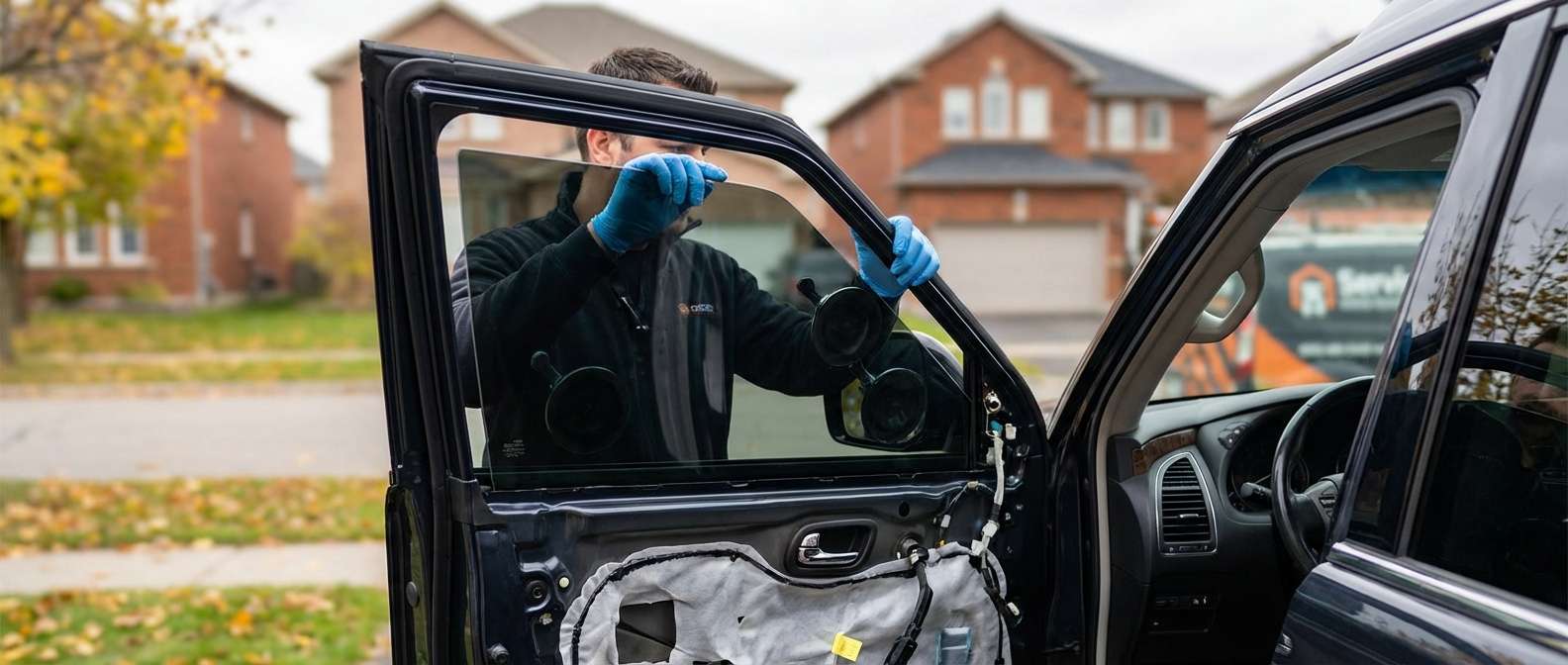
Take a few minutes to inspect your door assembly and window operation after the new glass is installed. Check these specific areas before driving:
- Glass Travel and Channel Seating: Run the window fully down and up using the door switch. Watch for smooth movement with no chattering, creaking, or tilt as the glass edges glide through the rubber run channels.
- Beltline Moulding Sealing: Look at the lower exterior chrome beltline trim (82821-1LA1D series). It should sit completely flat against the outer glass surface without gaps where rainwater could wash down inside the door cavity.
- Division Bar Alignment (Rear Doors): If a rear movable or vent pane was replaced, verify that the vertical division bar is rigid and flush, holding the stationary glass firmly while leaving clean clearance for the sliding glass.
- Auto-Reverse and Express Limits: Verify the auto-up function works seamlessly from the driver master switch. If the glass bounces back upon hitting the top frame, the motor limit switch needs a simple reset.
- Cabin Noise and Wind Drafts: On your first drive above 80 km/h, listen along the upper window frame. A properly seated acoustic laminated front pane will seal silently against the upper weatherstrip with zero whistling.