Window Glass Construction on the Y51 Platform
When a side window breaks on your M37 or M56, the replacement panel depends entirely on which door is damaged. Infiniti built the front doors of this sedan with dual-pane acoustic laminate glass to isolate wind buffeting around the A-pillars. The rear doors, by contrast, use single-layer tempered safety glass with a standard solar green hue. If an impact shatters a rear door window, it fragments into hundreds of small dull pebbles, whereas the front glass tends to crack and stay held together by its polyvinyl butyral interlayer.
Neither window houses embedded sensors, defroster lines, or radio antenna filaments. Both ride inside heavy-duty rubber channel run strips (part numbers 80330-1MA0B for the right front and 80331-1MA0B for the left front) housed within a rigid, fully framed door structure. Because these cars share identical door shells across both the V6 (VQ37VHR) and V8 (VK56VD) engine packages, glass sizing is completely interchangeable between the M37 and M56 for these model years.
| Window Position | OEM Reference | Glass Composition |
|---|---|---|
| Front Driver (LH) | 80301-1MA0A / 80301-1ME0A | Acoustic Laminated |
| Front Passenger (RH) | 80300-1MA0A / 80300-1ME0A | Acoustic Laminated |
| Rear Driver (LH) | 82301-1MA0A | Tempered Safety Glass |
| Rear Passenger (RH) | 82300-1MA0A | Tempered Safety Glass |
Regulator Binding and Anti-Pinch Bounce-Back Issues
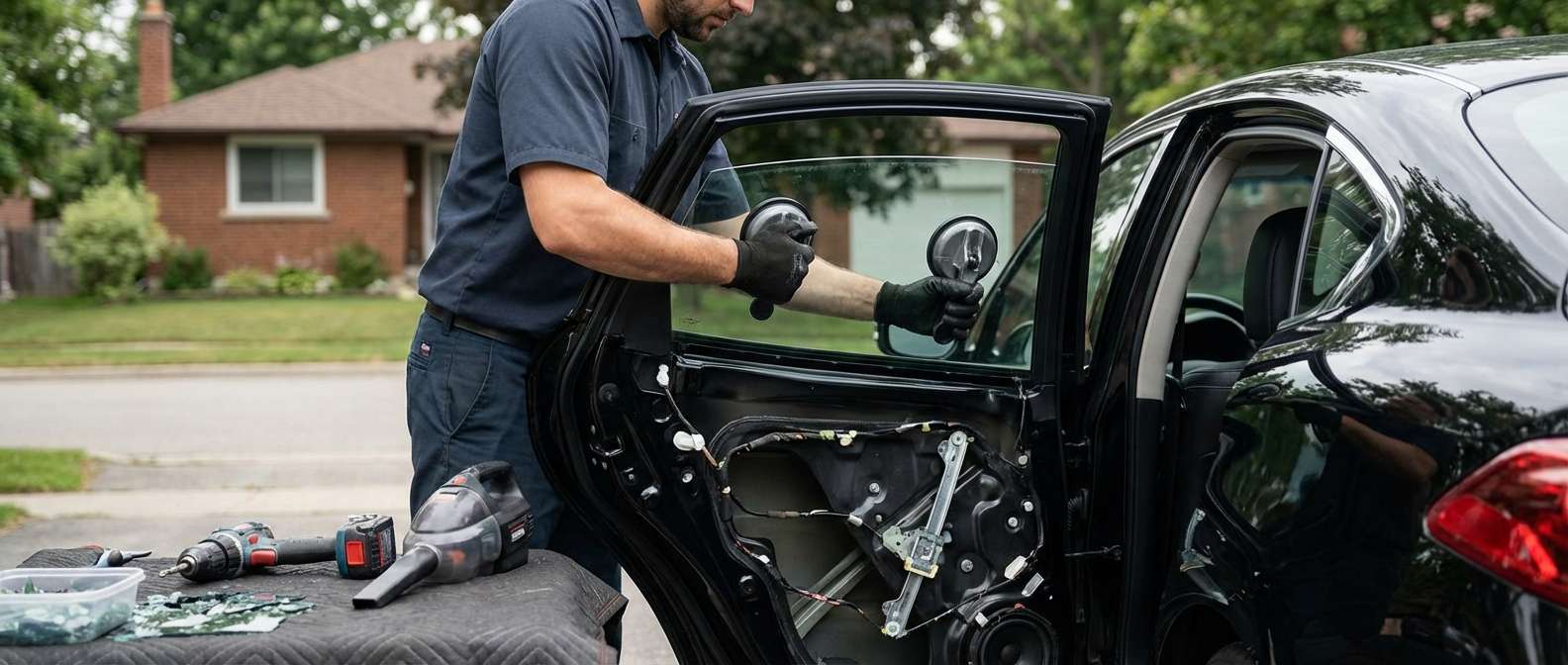
A shattered door window is not the only reason these panels need attention. The Y51 relies on a motorized dual-rail, cable-driven regulator secured behind the interior trim card. Over time, the internal steel lifting cables can fray, creating severe drag inside the tracks. When this drag occurs, the power window motor draws excess current, triggering the car's anti-pinch safety mechanism.
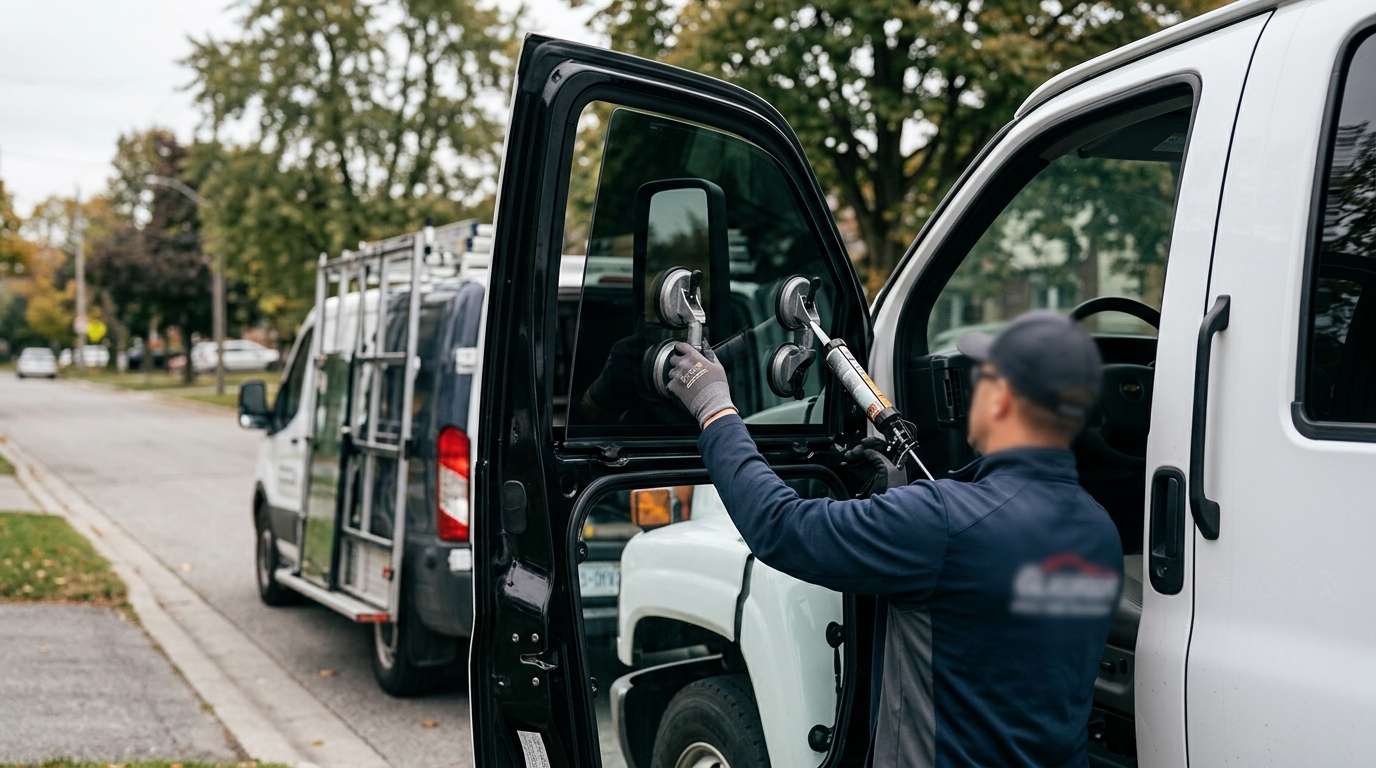
This issue often looks like an electrical fault: you pull the one-touch switch to close the window, the glass reaches the top frame, strikes the upper rubber seal, and immediately reverses downward four to six inches. If the glass has become unseated from its bottom sash clamps or the regulator cables are binding, the vehicle assumes an obstacle is trapped in the frame. I handle door glass replacements with an entirely mobile service, travelling directly to your driveway or office parking spot across Toronto and the GTA to replace broken glass and reset binding tracks on site.
Resetting the Window Limit Switch
Whenever a door panel is removed, the battery is unhooked, or a new glass panel is bolted to the regulator carriage, the motor loses its zero-position memory. Without completing the manual limit-switch reset, the one-touch automatic up and down features will stop working, or the glass will bounce back continuously at the top of its travel.
- Close the car door completely and switch the ignition to the ON position.
- Hold the window switch down manually until the glass lowers all the way, continuing to hold the toggle down for an extra three seconds.
- Pull the switch up manually until the glass seals into the upper frame run, holding the switch upward continuously for three to five seconds after it stops.
- Release the toggle, switch the ignition off, and test the one-touch auto-up function.
If the window fails to seal properly after the reset, the rear edge of the glass may be cocked inside the channel run strip. Ensuring the glass sits level in both bottom lift brackets eliminates excessive friction, allowing the motor's encoder to read top-dead-center accurately.