Winter Freeze Snaps and Regulator Failures in Sonata Doors
Most of the broken door windows I replace on this car are not caused by break-ins, but by what happens inside the door cavity during freezing weather. The rubber run channels along the metal window frame hold moisture easily, and when winter temperatures drop, the glass freezes solid inside the frame. When drivers trigger the window switch while the pane is anchored in ice, the cable-driven regulator strains against the resistance. On this LF platform, the plastic drive gears inside the motor housing or the cable spools tend to strip under that load, or the regulator cable snaps outright, dropping the pane into the bottom of the shell. In other cases, the factory pinch-protection logic gets confused by the resistance, bouncing the glass downward repeatedly until the cable binds up on its spool and shatters the tempered pane inside the channel.
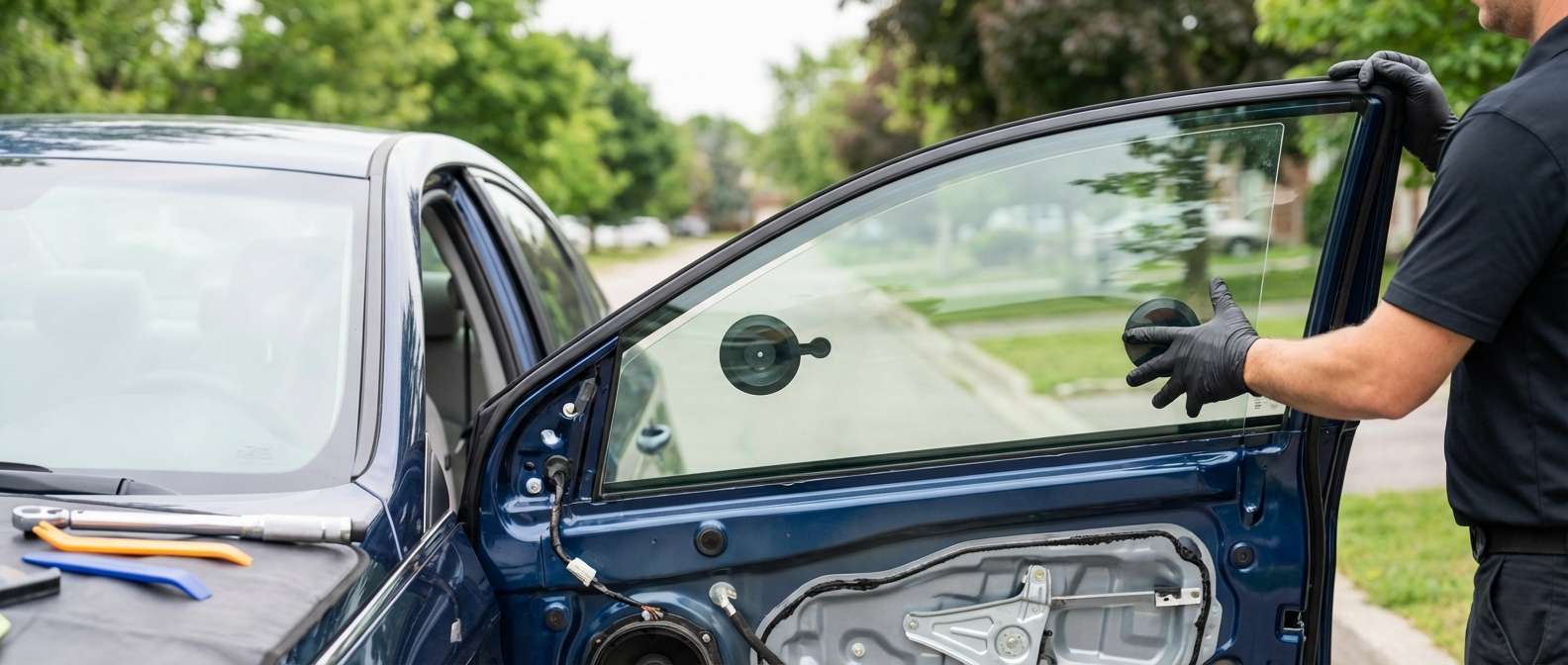
When the glass gives way, the door requires complete internal disassembly to clear out the fragments. Unlike older designs that used simple stamped access holes behind a plastic vapor barrier, these doors utilize a full plastic composite carrier plate bolted directly to the inner door frame. The door latch release cables, interior wiring harness, and inner door skin all have to come off before I can access the lower shell to vacuum out broken safety glass. If those fragments are left behind inside the bottom wells, they rattle constantly and chew through the replacement regulator cables.
Framed Glass Specs and Quarter Vent Variations
Every roll-down pane on these sedans is solid green-tinted tempered safety glass. While the front windshield on upper trims like the Limited or Ultimate features an acoustic interlayer, the front door glass is standard single-layer tempered glass without acoustic lamination. The driver side front door uses NAGS catalog number FD26408 (matching factory reference 82410-C2000), while the front passenger side takes FD26407 (OEM 82420-C2000). For every replacement, I install brand-new aftermarket glass sourced from proven manufacturers like PGW, Pilkington, FYG, or XYG, ensuring the curvature and solar tint match the rest of the vehicle flawlessly.
Rear doors are divided assemblies. The roll-down glass operates alongside a stationary triangular vent window, separated by a slender metal vertical division bar. The roll-down driver side rear pane is NAGS FD26410 (dealer reference 83410-C1010 or 83410-C2000), and the passenger side is FD26409 (dealer reference 83420-C1010 or 83420-C2000). On higher trims equipped with the manual pull-up sunshades, the shade housing sits directly along the top interior beltline moulding and hooks into catches on the upper metal frame. Taking apart these shade-equipped doors requires extra attention so the spring-loaded roller mechanism is not damaged while unhooking the trim to reach the glass clamps.
Aligning Glass Clamps on the Composite Carrier Plate
The glass does not bolt directly through open holes in the pane; instead, it rests in pinch clamp retainers operated by fasteners that must be accessed through specific circular service plug holes in the composite module. Aligning a new pane requires cycling the regulator so the clamp bolts line up dead center with these access ports. If the regulator cable has already jumped its track or the motor drive is stripped, the entire carrier assembly must be freed from the door structure to reset the carrier brackets.
Once the glass is seated in the clamps, the alignment inside the run channels and against the exterior B-pillar applique garnish dictates how the window operates. If the vertical division bar in the rear door or the run channel rubber up front is misaligned by even a fraction of an inch, the motor will draw excessive amperage, causing the auto-up safety feature to reverse the glass before it seals into the roofline frame. Ensuring smooth travel between the inner and outer beltline sweeps prevents premature stress on the regulator and stops wind leaks around the upper frame.