Rear Door Vent Glass Versus Body Quarter Panels
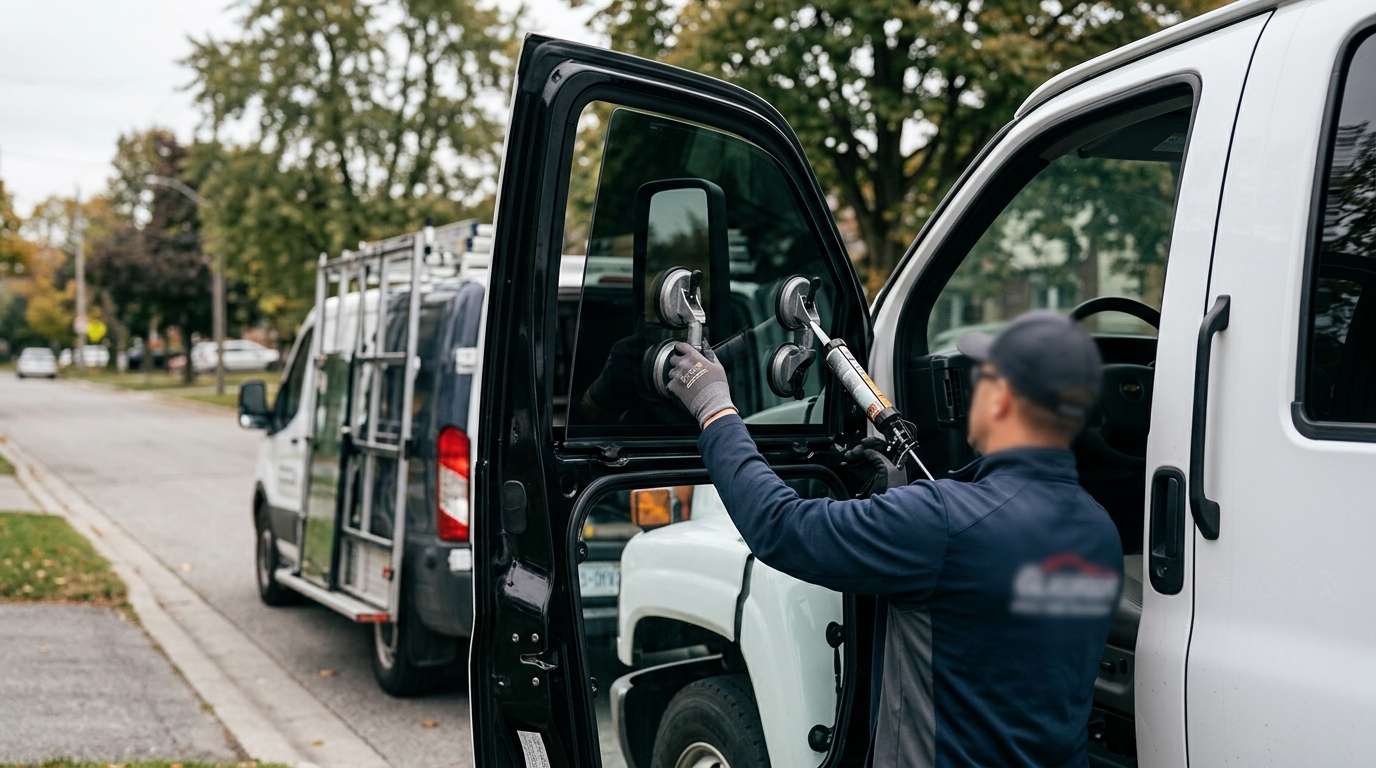
Unlike sedans that mount stationary glass directly to the rear quarter pillar with urethane adhesive, the rear triangular quarter glass on this vehicle is an encapsulated door vent piece built directly into the rear door frame. It sits immediately behind the roll-down window, separated by a vertical metal division bar channel. Because the door features a full upper steel frame rather than a frameless design, the encapsulated rubber perimeter of the stationary glass slots into the door's track rather than bonding to the exterior painted sheet metal.
Because thieves often target this smaller piece of glass for cabin break-ins, the single-pane tempered safety glass bursts into hundreds of tiny pellets rather than staying intact like laminated glass. When this happens, those dense shards fall down into the bottom of the door cavity. If they are not vacuumed thoroughly from behind the door trim panel, the debris drops straight into the lower door latch linkages and jams the bottom run channel of the power window regulator, preventing the main roll-down window from dropping smoothly.
Differences Across Fifth and Sixth Platform Cycles
The stationary rear glass shifted substantially during the transition between the 2008–2009 fifth production run and the complete redesign introduced for 2010 through 2019. The earlier 2008–2009 models carry vent glass cataloged under National Auto Glass Specifications as FVD23028 (left) and FVD23029 (right). Starting in the 2010 model year, Ford altered the rear door profile, shifting to a more swept-back pillar angle that uses NAGS units FVD24424 (left) and FVD24425 (right). The two glass shapes do not interchange between these year groups.
Trim levels also dictate the glass appearance across these sedans. Base SE and mid-range SEL trims rolled off the assembly line with standard solar-green tint, while upper trims like the Limited and the twin-turbo SHO often carry darker rear solar-absorbing privacy shading. Because these pieces are purely passive glass units, you will not find embedded AM/FM antenna grids, defroster elements, or acoustic dampening membranes on either side. Whenever a break-in leaves your car stranded, I come directly to your driveway or workplace parking spot anywhere across Toronto and the GTA to replace the damaged unit on-site.
Outside of the glass itself, these doors carry high-gloss or matte black exterior B-pillar appliques. Ford issued recall 25S74 (NHTSA campaign 25V-583) covering 2016–2019 sedans due to factory adhesive failure on those pillar appliques, so it is helpful to note that loose exterior pillar plastics are held by double-sided tape and clips, fully independent of the rubber-retained vent glass channel.
Post-Replacement Inspection Points
- Confirm the vertical division bar sits plumb and tightly fastened, ensuring the main roll-down door glass slides past it without catching or binding.
- Check the integrated exterior rubber moulding on the perimeter of the new stationary glass to ensure it sits completely flush inside the door frame without bunching or pinching.
- Operate the rear power window switch to verify the drop glass seals fully against the inner weatherstrip and does not drag against leftover glass pellets in the lower door cavity.
- Inspect the lower rear door latch and interior lock rod mechanism to verify both operate smoothly without mechanical resistance.
- Verify that the interior door card was reseated with all retaining clips firmly engaged, sitting flat against the sheet metal moisture barrier.