Steel-Cab Sunroof Architecture on 2011–2016 Super Duty Trucks
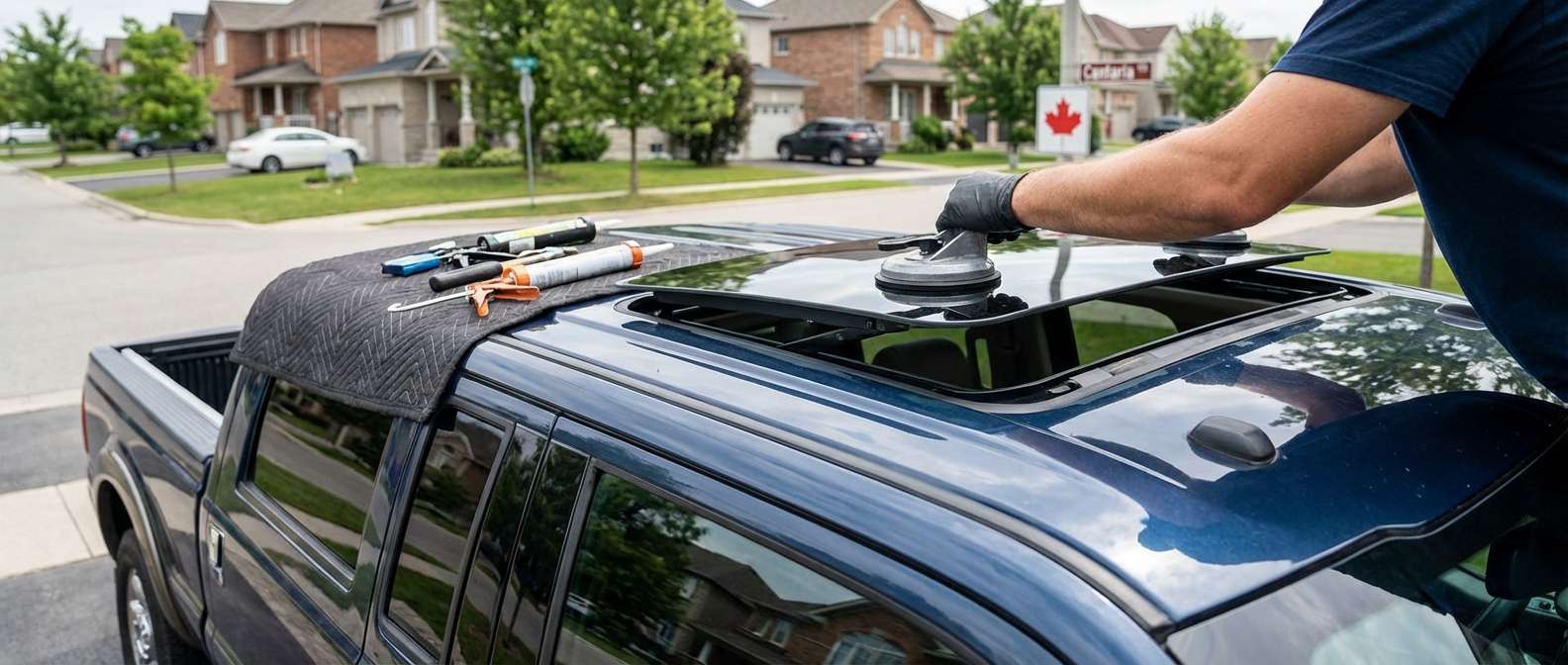
Replacing the sunroof glass on a 2011 to 2016 Ford F-250 or F-350 involves working with Ford's traditional single-pane tilt-and-slide electric moonroof rather than the expansive dual-pane panoramic Vista Roof found on later aluminum trucks. This factory-tinted safety glass panel, originally cataloged under Ford part number 9L1Z-18500A18-A and later superseded by 9C3Z-18500A18-B, was factory-fitted primarily to Crew Cab configurations—and select SuperCab models—in upper-tier Lariat, King Ranch, and Platinum trim packages. Because the tempered panel features integrated perimeter moulding bonded directly to its outer edge without an active defroster, rain sensor brackets, or embedded antennas, physical glass failures are usually contained directly to the glass face or its perimeter seal interface.
The panel attaches to internal guide arms with four Torx fasteners, two concealed beneath each side bellow trim cover. I frequently see these trucks when the glass sits unevenly or binds against the roof skin. In this steel cab era, brittle composite lift arms and guide track channels often crack under stress, especially if the perimeter seal has baked in the sun and adhered to the metal roof aperture. When replacing this panel, I back the physical aftermarket glass against manufacturer defects for a year, while my labor on the mechanical installation and weatherstrip fit carries lifetime coverage. If the drive cables skip or the BC3Z-15790-A drive motor loses its timing index, a replacement glass panel will not seat flush until the mechanism travel limits are fully reset.
Hardware Integration and Water Management Components
The roof glass does not act as a hermetic barrier; it manages volume runoff through a perimeter tray system seated beneath the sheet metal. Below the sliding sunshade, overhead console toggles, and headliner, four dedicated corner drain spouts lead into routing tubes that travel down the A-pillars and rear C-pillars. If track fragments break or foreign debris bypasses the outer rubber moulding, water pools in the drip channel and runs past the inner track edges into the cab.
| Component / Feature | 2011–2016 Super Duty Details |
|---|---|
| Glass Assembly Type | Single-pane tempered glass with bonded encapsulation seal |
| Factory OEM Part Reference | 9C3Z-18500A18-B (supersedes 9L1Z-18500A18-A) |
| Drive Motor Hardware | BC3Z-15790-A electric drive motor |
| Common Trim Packages | SuperCrew / SuperCab: Lariat, King Ranch, Platinum |
| Internal Track Retention | 4 Torx screws concealed by flexible side accordion bellows |
Whenever new glass goes into these roof assemblies, track alignment must be checked alongside the height settings. The glass must sit marginally below the front roof leading edge to reduce wind resistance, and flush or slightly above at the trailing edge so water sheds cleanly back into the rear troughs instead of creeping forward under heavy highway crosswinds.
Post-Replacement Inspection Checklist
- Inspect the outer perimeter rubber seal to confirm it is seated evenly around the entire perimeter of the steel roof opening without pinching or roll-under.
- Ensure the factory side accordion bellows snap securely into their retaining channels on both guide arms without fouling when the glass slides rearward.
- Check that the glass panel sits flush to the sheet metal contour: 1mm to 1.5mm below the front roof seam and level to 1mm above at the rear trailing edge.
- Cycle the overhead console toggle switch to verify clean travel through vent tilt, slide open, and full closure without mechanical hesitation, pops, or cable slippage.
- Verify that the interior sliding sunblind slides smoothly along its dedicated runners without catching on the guide arm fasteners or lower drip pan edges.
- Pour a measured amount of water along the side encapsulated gutters to confirm rapid, unobstructed drainage through the front A-pillar tubes to the ground outside the cab.