Tracing Cargo Area Leaks to the Rear Side Window
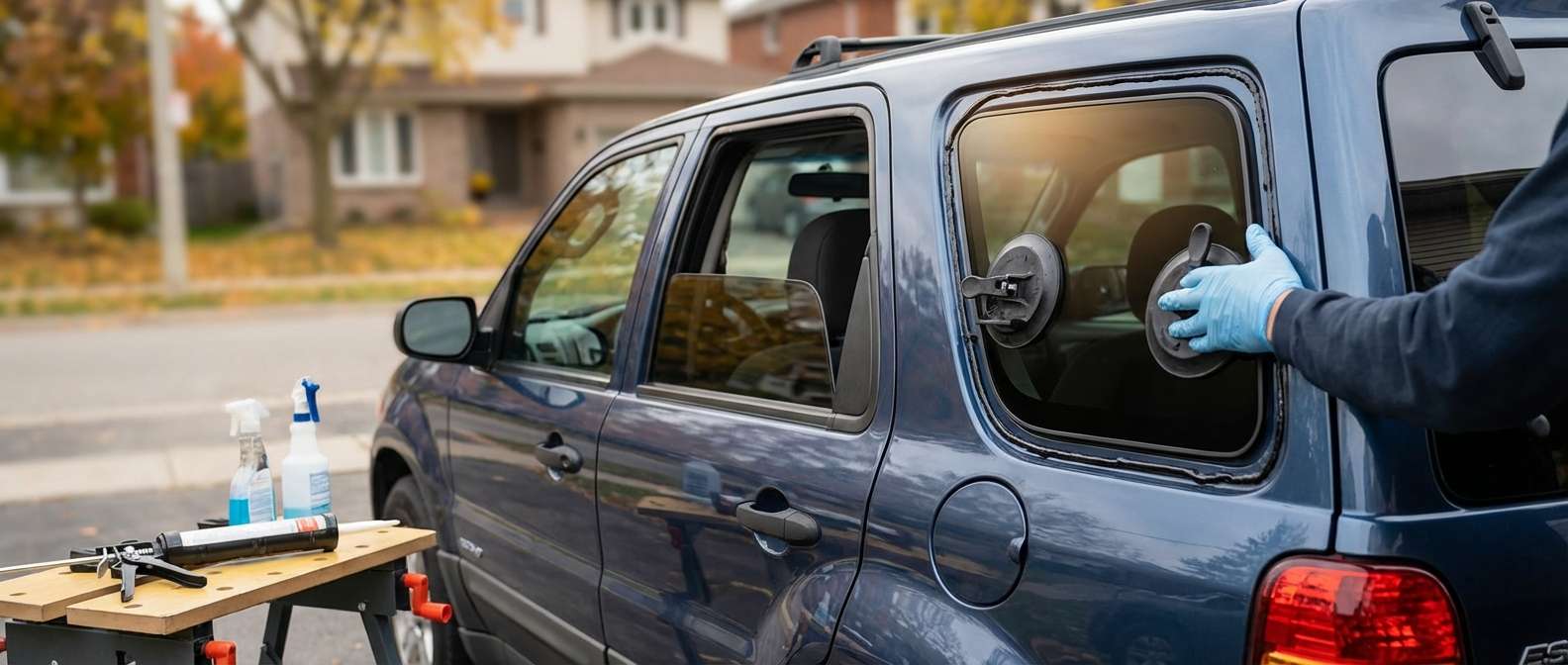
When water pools beneath the carpet in the rear cargo compartment or collects around the spare tire well, Escape owners often suspect the liftgate weatherstripping before realizing the factory seal around the quarter panel glass has failed. On this vehicle, the fixed rear side window uses threaded retention studs that project inward through the sheet metal, secured by 10mm nuts tucked behind the interior quarter trim. Over years of body flex and exposure, the original adhesive bead gives way, or the fasteners work loose against the sheet metal, letting rainwater seep past the C-to-D pillar opening and track downward into the cabin floor. Identifying the leak path requires examining the inner wall of the wheel tub directly beneath the lower edge of the interior panel.
The structural layout behind the glass means reaching these fasteners requires stripping back the upper D-pillar plastic, the main cargo side liner, and dismounting the lower rear seat belt anchor bolt. Torquing these nuts requires a gentle touch because the studs are anchored straight into the glass perimeter frame; overtightening them or putting uneven mechanical stress on the frame can easily shear the stud or shatter the solar-controlled tempered pane. When I replace this quarter glass, I back my workmanship with a lifetime guarantee against leaks and wind noise, alongside a one-year warranty on the replacement glass itself.
Variations in Mouldings and Factory Tint Across Trims
Replacing this side window requires matching the exact production run, as Ford altered the perimeter frame moulding between model cycles. Initial 2001 builds use glass cataloged under NAGS part numbers DQ09755 for the right side and DQ09756 for the left, which correspond to early factory part designations like YL8Z-7829701-DA featuring an encapsulated perimeter moulding. Beginning in 2002 and running through 2007, the perimeter frame design was revised, shifting catalog listings to DQ10055 for the passenger side and DQ10056 for the driver side. These same dimensions and mounting points cross over directly to sister CD2-platform models, including the 2001 to 2007 Mazda Tribute and the 2005 to 2007 Mercury Mariner.
Aside from the framing change, you have to verify the factory glass tint to ensure the replacement matches the rest of the cabin. Base XLS trims generally left the factory with a standard solar green tint, identified in parts catalogs by the GTN suffix. The higher-spec XLT, Limited, and Hybrid editions came equipped with dark privacy glass, indicated by the YPN suffix code. The quarter window itself is completely bare of electrical components—there are no embedded radio antenna grids, heating wire circuits, or electronic modules bonded to the inner surface.
Sheet Metal Protection During Outer Glass Separation
Separating the quarter window assembly from the exterior side of the vehicle carries a risk of panel deformation if the technician rushes the job. The outer edge of the glass sits close against the recessed quarter panel flange, leaving very little room between the frame lip and the painted steel. Applying leverage directly against the exterior quarter pillar to loosen a stubborn butyl or urethane bond will permanently crease the sheet metal long before the adhesive releases.
Because the panel uses tempered safety glass rather than laminated glass, any uneven twisting force or focal pressure applied near the glass edge will cause the entire pane to fracture instantly into thousands of small pebble-sized fragments. The glass must release evenly from the exterior flange while the inner studs pass straight through the pillar holes, preserving both the surrounding paintwork and the shape of the body aperture.