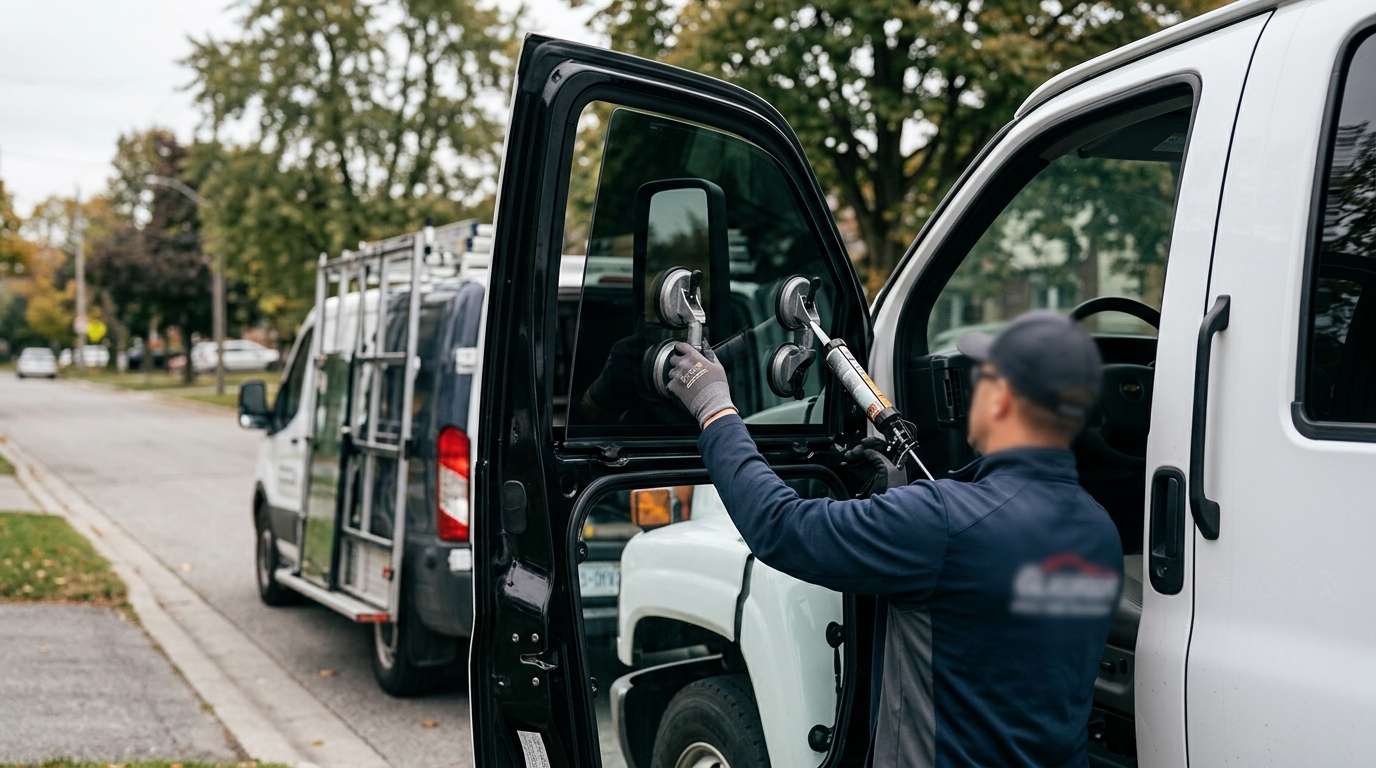
Frameless Side Glass and Butterfly Door Articulation
Working on the side windows of this limited run of 799 cars requires dealing directly with the mechanics of Ferrari's dual-axis butterfly doors. Because the doors swing forward and upward to nearly a ninety-degree angle, the frameless side glass operates as a structural edge within the upper pre-preg carbon-fiber door shell. There is no exterior window frame to hide misalignments; the top edge of the curved glass must mate precisely into multi-lip EPDM moulded channels running along the carbon monocoque roof pillars. The cabin greenhouse sits in a compact canopy that is 50 mm lower than the LaFerrari greenhouse, meaning the vertical travel path of the window glass is exceptionally tight inside the door's hollow autoclave-cured composite shell.
Aerodynamic Beltline Channels and Glass Geometry
The curvature of this side glass does more than seal the narrow "1+" offset cockpit against weather. The lower glass edge sets the baseline for an integrated external aerodynamic channel carved into the carbon skin. This channel directs air pressure away from front-wheel thermal wash and guides clean air straight into the rear side cooling ducts. A millimeter of deviance in the glass seated depth disrupts that air path or causes high-speed wind buffeting against the roof recess.
| Component / Feature | Engineering Configuration |
|---|---|
| Glass Architecture | Frameless curved side pane with acoustic dampening |
| Door Mechanism | Dual-axis forward/upward rotation butterfly hinge |
| Lower Beltline Integration | Continuous boundary for front-wheel airflow ducting |
| Perimeter Sealing | Multi-lip EPDM moulded channel bonded to carbon roof structure |
| Embedded Sensors | None (rain and ambient light sensors remain on the windshield frame) |
I back every replacement with a lifetime guarantee on my own labor alongside a full one-year coverage on the glass panel itself, which matters when dealing with the high-stress demands of a vehicle capable of severe track loads. The glass itself contains no integrated antenna elements, defroster lines, or driver-assist sensor brackets, as those remain isolated within the primary windshield and mirror assemblies. Instead, the focus is entirely on acoustic performance and specialized thermal protection built into the glass core, helping prevent cabin heat soak across the compact passenger space.
Window Micro-Drop Indexing on the Carbon Monocoque
Because the frameless side glass tucks deep into the composite roof recess to maintain cabin sealing at track speeds, the vehicle relies on an electronic micro-drop regulator inside the carbon door. When the exterior touch-point or interior door release is triggered, the glass drops a fraction of an inch to clear the carbon monocoque's upper lip before the hinge swings up. When fitting replacement glass to the internal regulator tracks, mechanical leveling must be exact. If the pane sits tilted even slightly rearward or forward, the micro-drop will bind against the EPDM weatherstrip or drag along the clear-coated carbon edge during door opening.
Does the side door glass carry built-in antenna wires or defrosters?
No. The movable door glass panes are completely clear of defroster grids, embedded radio antennas, and camera mounts, ensuring no electrical wiring runs through the movable window panel itself.
Why does the window drop slightly before the butterfly door rises?
The frameless pane extends into an undercut slot within the carbon-fiber roof frame to ensure an airtight seal. An automated micro-drop mechanism lowers the glass several millimeters the instant the door unlatches, preventing the glass edge from striking the composite roof structure as the dual-axis hinge swings upward.