Inspecting the Rear Door Vent Glass Prior to Placement
Checking the replacement rear stationary window before starting work on a Dodge Dart prevents fitment complications that cannot be corrected once the door is reassembled. The rear vent unit on this sedan sits directly behind the descending door glass, housed within the steel door sash rather than glued to the rear quarter sheet metal. I examine the integrated black perimeter encapsulation to verify that the moulding profile matches the contours of the factory door frame. If the encapsulated edge is distorted or unevenly cast, it will fail to compress cleanly against the exterior C-pillar applique panel (part 68082734AF on the passenger side), allowing water into the door cavity.
Because the factory glass uses green-tinted solar-control tempered glass across the Dart SE, SXT, Aero, Limited, and GT trim levels, I also verify that the aftermarket glass has the correct matching transparency. Tempered vent panels lack defroster grids or internal antennas, meaning the inspection focuses entirely on optical clarity, perimeter edge consistency, and the molded bead that seats into the vertical guide channel.
| Component Details | Right Hand (Passenger Side) | Left Hand (Driver Side) |
|---|---|---|
| Dealer Reference Baseline | 68145466AC | 68145467AC |
| Glass Material | Solid Tempered Safety Glass | Solid Tempered Safety Glass |
| Adjacent Pillar Applique | 68082734AF | 68082735AF |
| Integrated Hardware | Bonded Perimeter Moulding | Bonded Perimeter Moulding |
Division Bar Alignment and Drop-Glass Clearance Checks
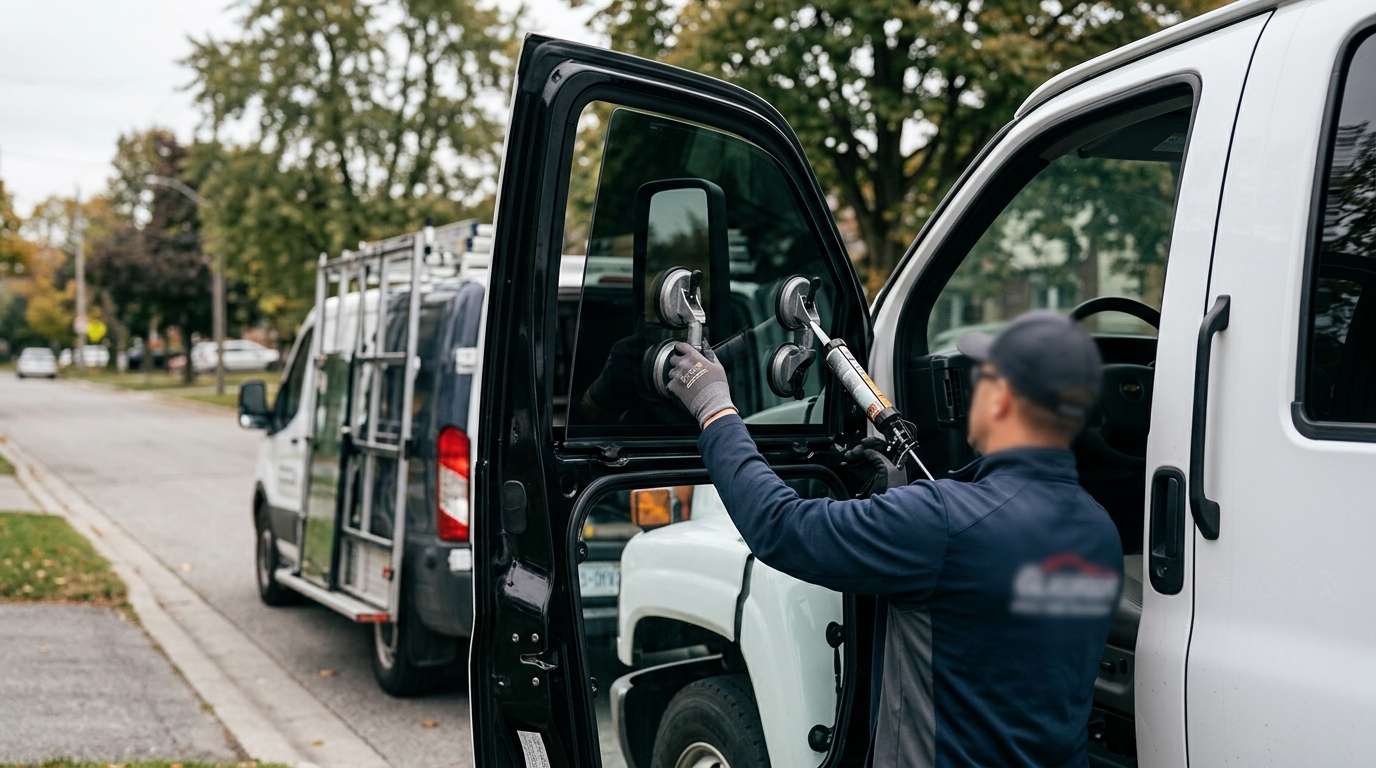
The rear vent glass cannot be properly evaluated without testing how it interacts with the vertical division bar inside the door frame. I travel directly to your home or workplace across Toronto and the GTA to handle the entire replacement on-site, which includes checking the mechanical travel of the main roll-down window beside the stationary section. The division channel separates the two panes of glass, acting as the rear guide run for the movable window while securing the forward edge of the vent unit.
Before closing up the interior door card, I perform three specific mechanical and structural checks inside the door shell:
- Division channel vertical parallel: I confirm the upright channel has not shifted laterally toward the front of the vehicle. Even a two-millimeter inward tilt narrows the glass run channel, causing the power window regulator to drag, bind, or trip its safety reversal mechanism.
- Rubber run seating: The flexible channel weatherstrip must seat flush against the leading edge of the stationary vent window without pinching or folding over on itself inside the sash.
- Fastener retention: The lower retaining bolt at the base of the division channel bracket must sit centered in its adjustment slot so the division bar remains rigid under highway wind pressure.
Post-Installation Acoustic and Weatherstrip Inspection
Once the stationary glass is locked into the sash, I inspect the outer seals to verify the cabin remains protected from wind rush and exterior moisture. Dart owners frequently encounter cabin whistling if the weatherstripping surrounding the rear stationary glass is pulled out of shape during replacement. I verify that the exterior glass run seal sits uniform against the rear door window frame and seats tightly against the black gloss C-pillar trim.
I roll the main rear window up and down through multiple complete cycles to verify the glass edge glides into the division bar without hesitation. Finally, I press firmly along the perimeter of the stationary glass to confirm there is zero play between the encapsulated frame, the upright division post, and the welded door sash.