Body Style Differences Dictate Rear Window Structure
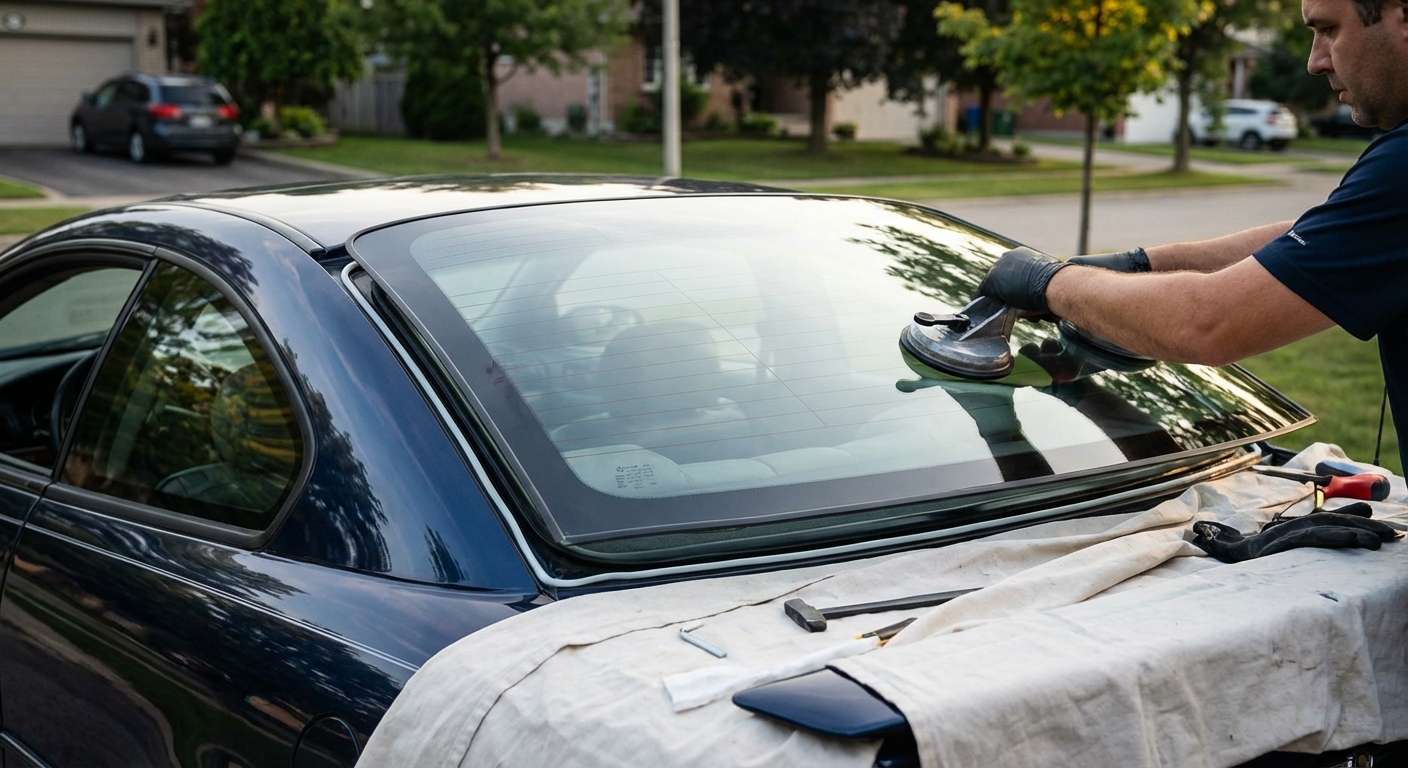
Replacing the back glass on this model requires knowing the exact body style before ordering any parts, as three completely different rear window designs were used across the lineup. The four-door sedan (JR41 platform) and the two-door coupe (ST-22 platform derived from the Mitsubishi Eclipse architecture) utilize stationary, direct-glazed glass bonded directly to the steel pinchweld. In contrast, the two-door convertible (JR27 platform) houses its heated glass inside a flexible rear window curtain fastened to lower tack strips rather than an adhesive-bonded perimeter.
The differences carry over into the cabin hardware surrounding the glass. On the four-door sedan, the high-mount third brake light sits flat on the interior rear parcel shelf right up against the bottom of the glass, flanked by the C-pillar interior trim covers. The coupe features a similarly enclosed interior rear deck, but the convertible moves the third brake light entirely off the glass boundary, embedding it directly into the rear trunk lid skin.
| Body Style | Glass Retention Method | Third Brake Light Position | Defroster Grid Harness Style |
|---|---|---|---|
| 4-Door Sedan (JR41) | Direct-glaze polyurethane | Interior rear parcel shelf | Fixed body harness via C-pillar |
| 2-Door Coupe (ST-22) | Direct-glaze polyurethane | Interior rear parcel shelf | Fixed body harness via rear quarter |
| 2-Door Convertible (JR27) | Fabric curtain / lower tack strip | Exterior trunk lid assembly | Flexible dynamic pigtail harness |
Factory Defroster Grids and Terminal Fragility
Every factory rear window variation from this era came equipped with heat-absorbing solar safety glass embedded with an electric defogger grid. Because there are no rear wiper mechanisms, embedded radio antennas, or forward-facing camera brackets attached to this glass, electrical requirements are focused entirely on the heating lines.
Terminal detachment is a recurring issue, particularly on the folding convertible. Repeated tension during roof retraction frequently snaps the electrical soldered tabs clean off the conductive grid. Chrysler issued a technical service bulletin to address detached heating contacts, pointing to a dedicated terminal repair kit under Mopar part number 5093179AA to resolder or re-bond pull-off tabs. On the sedan, factory rear heated panes carried Mopar service numbers 04814908AB through 04814908AD over their production run. I replace these damaged or shattered panels on-site across Toronto and the GTA, coming directly to your driveway or office parking space with the correct aftermarket glass.
Convertible Window Separation Versus Fixed Glass Replacement
On sedans and coupes, physical breakage from impact is the primary reason for a new rear window. On the convertible, the failure mode is almost always structural debonding. Heat cycling, tension from the folding roof bow linkage, and weather exposure cause the glass edge to separate from the surrounding vinyl or canvas top fabric. Once the seal fails, rain bypasses the rear well, causing heavy water pooling on the rear floorboards and inside the lower trunk wells.
Because the convertible back window was built as an integrated, heat-pressed element inside the rear fabric curtain, attempting to glue a detached glass pane back onto aged canvas rarely holds under tension. A proper fix on the convertible requires replacing the entire zippered and tacked rear window curtain assembly to restore full weather sealing and structural stability.