Understanding the Trailblazer C-Pillar Glass Setup
When searching for vent glass on this crossover, the catalog terminology can easily mislead you. The rear passenger doors do not carry a split divider bar or a secondary triangular pane; the door glass rolls all the way down into the stamped steel door frame. The piece of glass commonly indexed in parts systems as the rear vent or mini-quarter is actually the fixed triangular glass bonded directly to the vehicle body structure between the C-pillar and D-pillar, sitting just aft of the rear passenger doors on GM's VSS-F architecture.
Because these fixed side panels are made of single-pane tempered glass rather than laminated glass, a strike from gravel or vandalism causes the entire pane to fracture into thousands of blunt fragments instantly. Unlike modern windshields or specialized rear glass, these fixed side units do not house complex electronics. There are no embedded radio antenna grids, no rear defroster heater lines, and no brackets for parking sensors or driver assistance hardware glued to the inside surface.
Factory Tint Codes and Exterior Pillar Appliqués
Ordering the correct aftermarket replacement requires matching the factory tint package assigned to your specific equipment group. On base L and LS trim levels, Chevrolet fitted light green solar-absorbing glass that allows a high degree of light transmission. If you drive the LT, the rugged ACTIV trim, or the RS model, the vehicle left the factory with deep-tinted solar privacy glass, designated by General Motors under production option code AKO. Matching this factory dark shading is essential so the new aftermarket panel matches the factory roll-down glass on NAGS part numbers DD13304YPN on the left and DD13305YPN on the right.
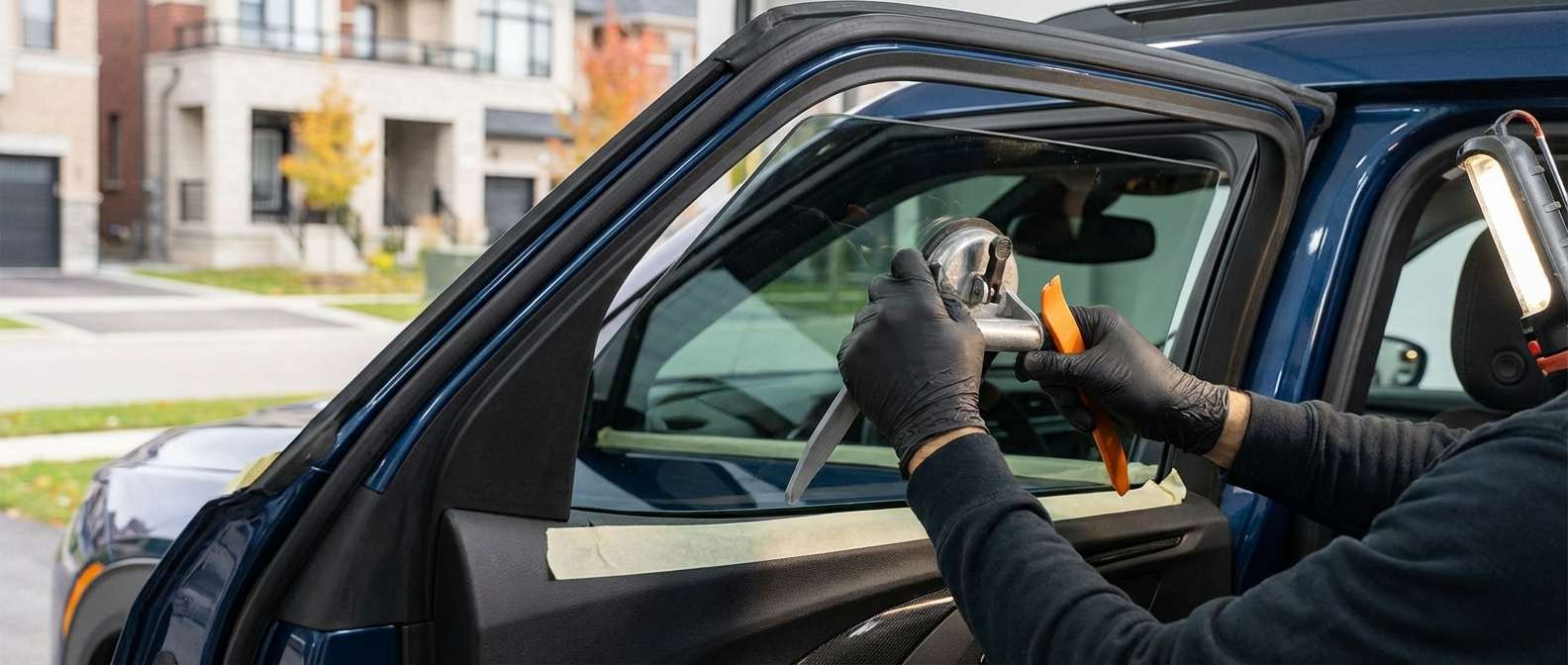
I operate entirely on a mobile basis across Toronto and the surrounding GTA, replacing these damaged side panels directly at your home driveway or workplace parking spot without disrupting your day. When I set up alongside your vehicle, protecting the surrounding trim components is one of the most critical aspects of the repair. The glass sits tightly recessed against the painted exterior quarter sheet metal and butts directly against the glossy black plastic exterior C-pillar appliqué trim, which defines the floating roofline aesthetic on two-tone ACTIV and RS models. Removing the interior rear cargo plastics and upper quarter pillar trim gives the required clearance from the cabin side, avoiding any pry marks, scratches, or stress fractures on the delicate black exterior trim molding.
Ceramic Frit Perimeter and Structural Glass Integration
The replacement glass features a wide, fired-on ceramic black frit band running along the entire outer edge of the panel. This opaque border serves a dual purpose: it conceals the inner pinchweld flange and sheet metal stamping from exterior view, and it creates an impenetrable barrier that prevents ultraviolet rays from degrading the structural polyurethane bonding that holds the glass to the vehicle frame.
Because the panel is completely stationary and does not utilize mechanical sash brackets, tracks, or manual latches, achieving a dead-flat visual alignment with the rear door beltline is paramount. The glass must sit perfectly flush with the adjacent black C-pillar appliqué so highway air currents flow smoothly over the rear flanks without buffeting against an exposed glass edge.