Silverado HD Crew Cab Sunroof Glass Hardware and Fitment
Replacing the power tilt-and-slide sunroof glass on heavy-duty Silverado 2500 and 3500 trucks involves dealing with a dedicated single-panel unit rather than the expansive multi-pane panoramic roofs seen on passenger SUVs. General Motors reserves this electric sliding roof strictly for Crew Cab cabs across the LT, LTZ, High Country, and off-road ZR2 trims, entirely excluding it from the Regular Cab and Double Cab commercial bodies. While GM initially cataloged the replacement panel under part number 84515806, they updated the factory assembly to part number 87822092. The glass itself is heavy dark-tinted tempered safety glass that provides solar filtering and ultraviolet block without any embedded electrical components—you will find no radio antenna grids, heating defrosters, or forward sensors adhered to the panel.
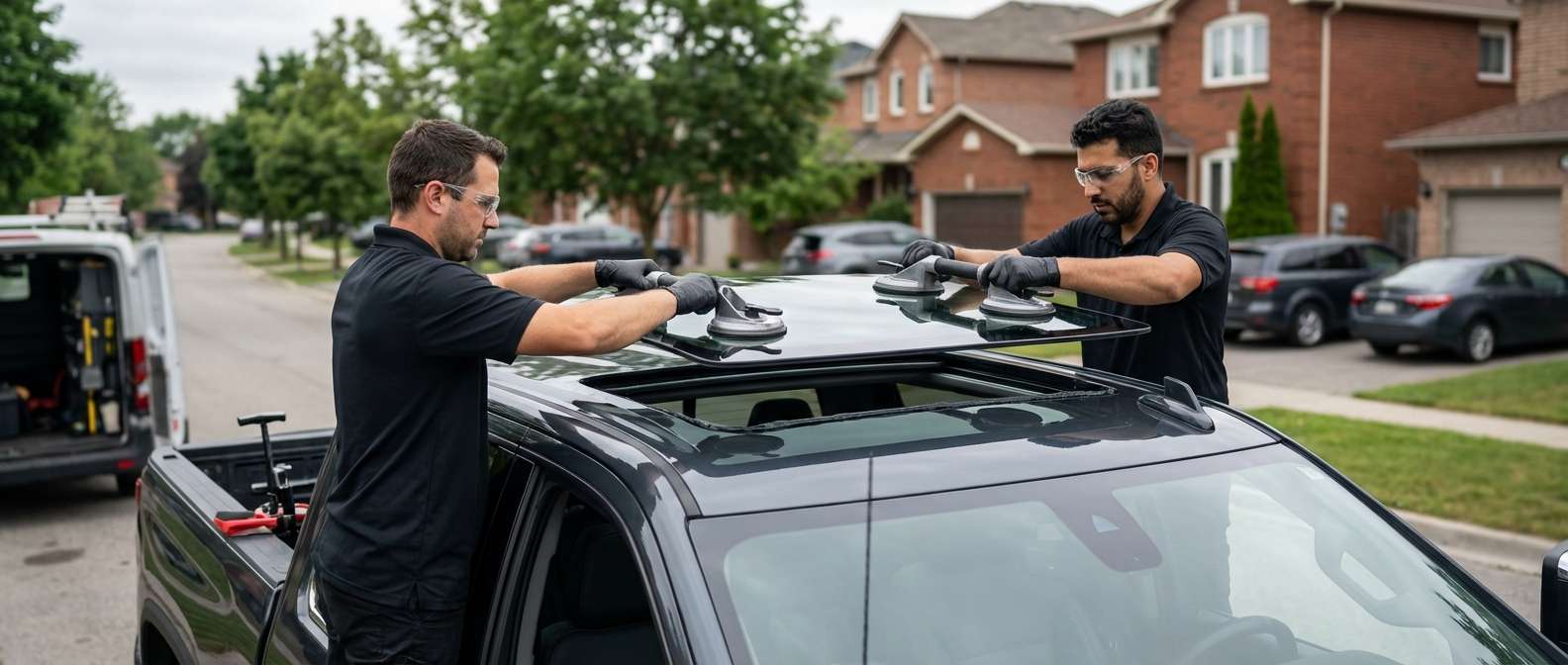
When I replace one of these shattered or scratched panels, I rely exclusively on trusted aftermarket glass manufacturers including PGW, Pilkington, XYG, and FYG, which replicate the exact factory solar tint and curvature. The panel arrives fully pre-assembled with its vulcanized perimeter weatherstrip encapsulation and side mounting brackets already bonded to the glass. These side brackets sit directly on the cassette track shoes, fastening into the truck's sliding mechanism using Torx machine screws. Just beneath the glass rides the manual fabric-wrapped sunshade, which travels along the same internal track housing fastened against the inner roof stamping above the molded headliner.
Diagnostic Nuances and Cab Leak Isolation
Water intrusion inside the cabin of these three-quarter and one-ton pickups frequently points an owner toward a faulty sunroof seal, but the underlying problem often lives in the surrounding structure. The sunroof perimeter weatherstrip is merely a deflection barrier; water that bypasses it enters a catchment tray designed to evacuate moisture through four corner drain tubes that run through the A-pillars down to the kick panels and through the rear cab pillars. GM Service Bulletin 23-NA-087 specifically documents cabin carpet saturation and overhead console dripping caused by disconnected or pinched front drain tubes, while Bulletin 20-NA-219 dictates drain hose modifications to prevent drainage from soaking hidden body electrical blocks.
Before condemning the sunroof glass encapsulation, I verify other notorious leak points peculiar to this cab architecture. GM truck owners often misidentify water dripping from the headliner as a sunroof failure when the real culprit is a cracked rear sliding window surround (addressed in TSB 18-NA-383), a degraded high-mount third brake light gasket, or water seeping beneath the amber cab clearance marker lamps fastened through the forward roof sheet metal. Confirming the leak path saves unnecessary component swaps when the original encapsulation is still intact.
Panel Height Alignment and Wind Noise Control
Eliminating wind buffeting and whistling at highway speeds depends entirely on manual panel depth adjustment relative to the outer roof skin and its adjacent roof ditch mouldings. The sunroof frame shared across the Silverado HD, Silverado 1500, and GMC Sierra lines provides slotted Torx mounting holes specifically to clock the glass to the cab contour. Setting the panel completely level with the roof steel often generates an aggressive wind draft over the leading edge. The mechanical alignment requires fastening the leading glass edge slightly recessed beneath the outer steel skin while allowing the trailing edge to sit marginally raised above the roofline, allowing passing air to ramp cleanly over the gap rather than catching on the perimeter weatherstrip.