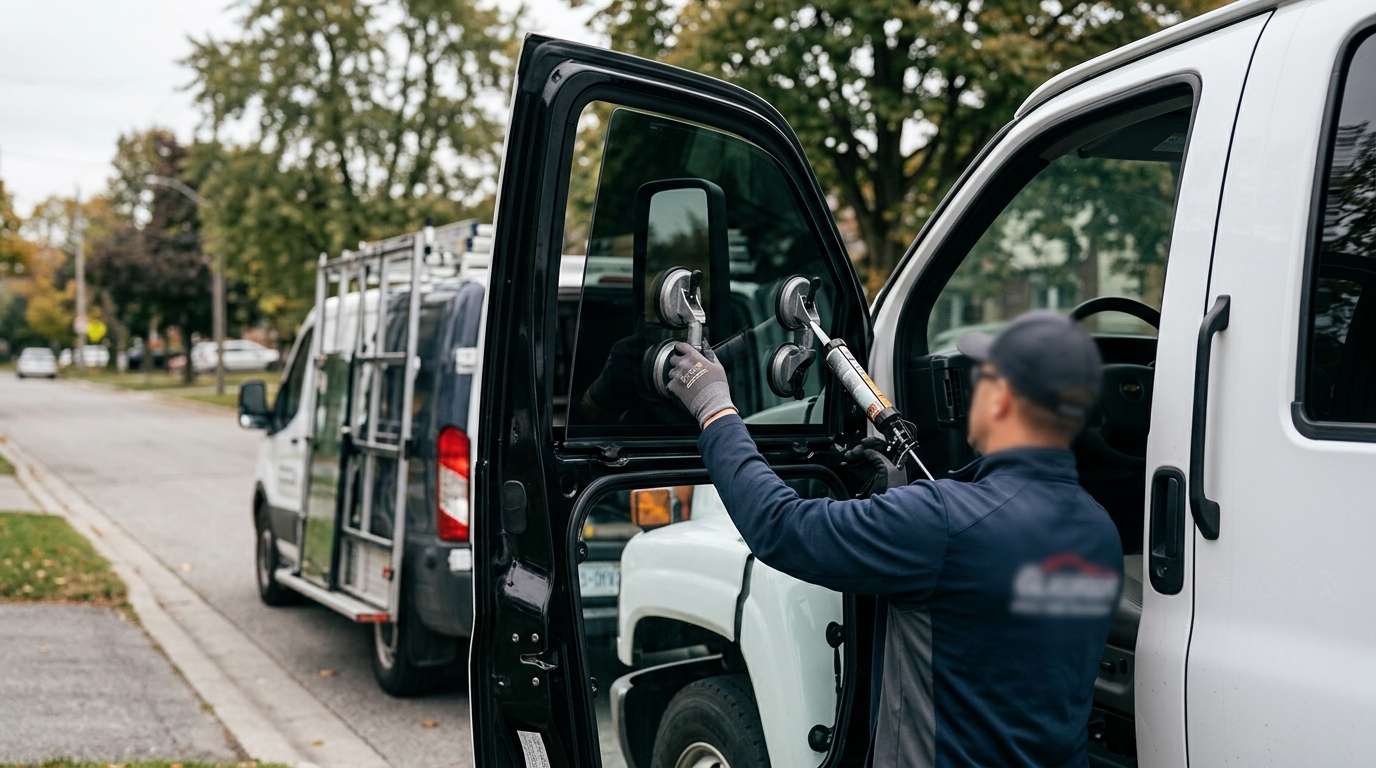
Acoustic Laminated Front Glass vs. Tempered Rear Panels
Cadillac engineered the side profile of this sedan to block out powertrain and tire thrum, which directly dictates what type of glass goes into each door. The front driver (GM part 23186511) and front passenger (GM part 23186510, which supersedes 20905685) doors require acoustic laminated glass. Unlike standard tempered side windows, these laminated front units feature a specialized vinyl sound-dampening interlayer sandwiched between two sheets of glass. If a broken front window is mistakenly swapped with standard tempered glass, you will instantly notice a sharp spike in wind whistle right next to your ear at highway speeds.
The rear doors present an entirely different scenario. Rear side panels—cataloged under NAGS numbers DD12017 for the left and DD12016 for the right—are single-pane tempered safety glass. When a rear window breaks, it shatters into thousands of small, blunt fragments that drop straight down into the bottom of the door shell. All positions on this car carry a factory green solar-absorbing tint to cut down solar gain through the large cabin. Because the sedan is built on GM's extended Super Epsilon platform, it shares internal window lift hardware architecture with the tenth-generation Chevrolet Impala, though the acoustic glass thickness and perimeter shaping are unique to the luxury shell.
Hardware Quirks Inside the Framed Door Shell
Behind the interior door cards, the windows rely on a dual-rail cable-and-pulley regulator driven by an electric motor (original units LH 20905688 and RH 20905689). The glass does not clamp into friction blocks like older sedans; instead, the bottom edge of the glass features integrated mounting guide clips that snap and bolt directly into the regulator lift carriage plates. Over time, plastic clip fatigue or cable stretch along the dual tracks can cause the glass to tip forward into the front run channel, binding before the motor stalls out.
Working on these doors requires handling the heavy door cards, unhooking the modular wiring harness, and releasing the weather barrier without tearing the butyl bead. Every replacement panel I fit carries a one-year warranty on the glass itself, alongside my lifetime guarantee covering the workmanship inside the door. Once a new panel is fastened to the regulator sliders, the vehicle's express-up logic often refuses to close fully because the anti-pinch module detects tension changes along the molded rubber run channels. Running an explicit window relearn cycle is necessary so the door control module recognizes the upper travel stop without immediately bouncing the glass back down four inches.
Post-Replacement Inspection Points for Owners
- Verify that the glass rolls up smoothly without shuddering or tilting forward inside the vertical side run channels.
- Test the one-touch express-up function to confirm the window reaches the top frame seal and stays closed without triggering the automatic safety bounce-back.
- Inspect the inner and outer beltline weatherstripping sweeps along the bottom of the window frame to make sure the rubber lips sit flat against the glass and are not tucked inward.
- Check the acoustic glass stamp on the lower corner of the front doors to confirm the acoustic damping symbol matches factory sound-deadening standards.
- Listen along the door perimeter on the road to ensure no wind rush is penetrating past the upper framed run channels.