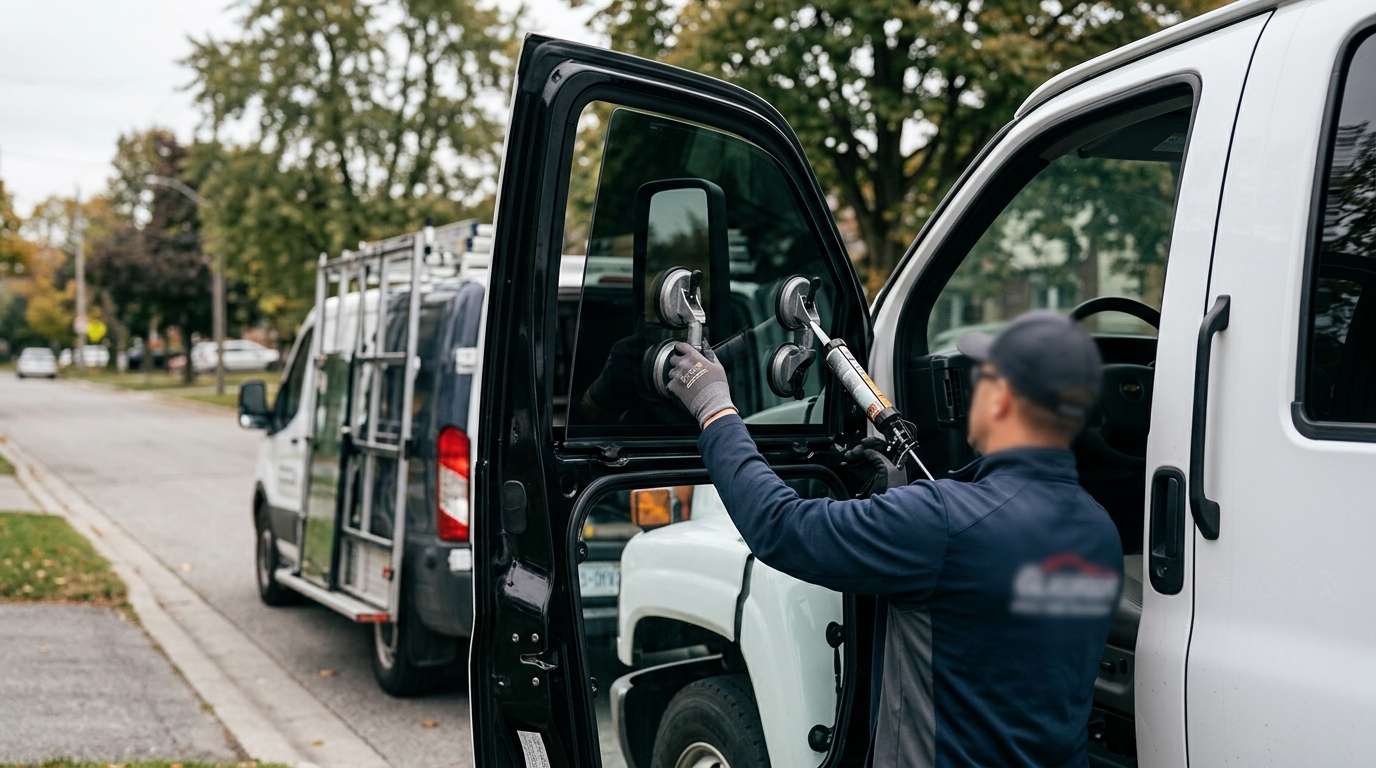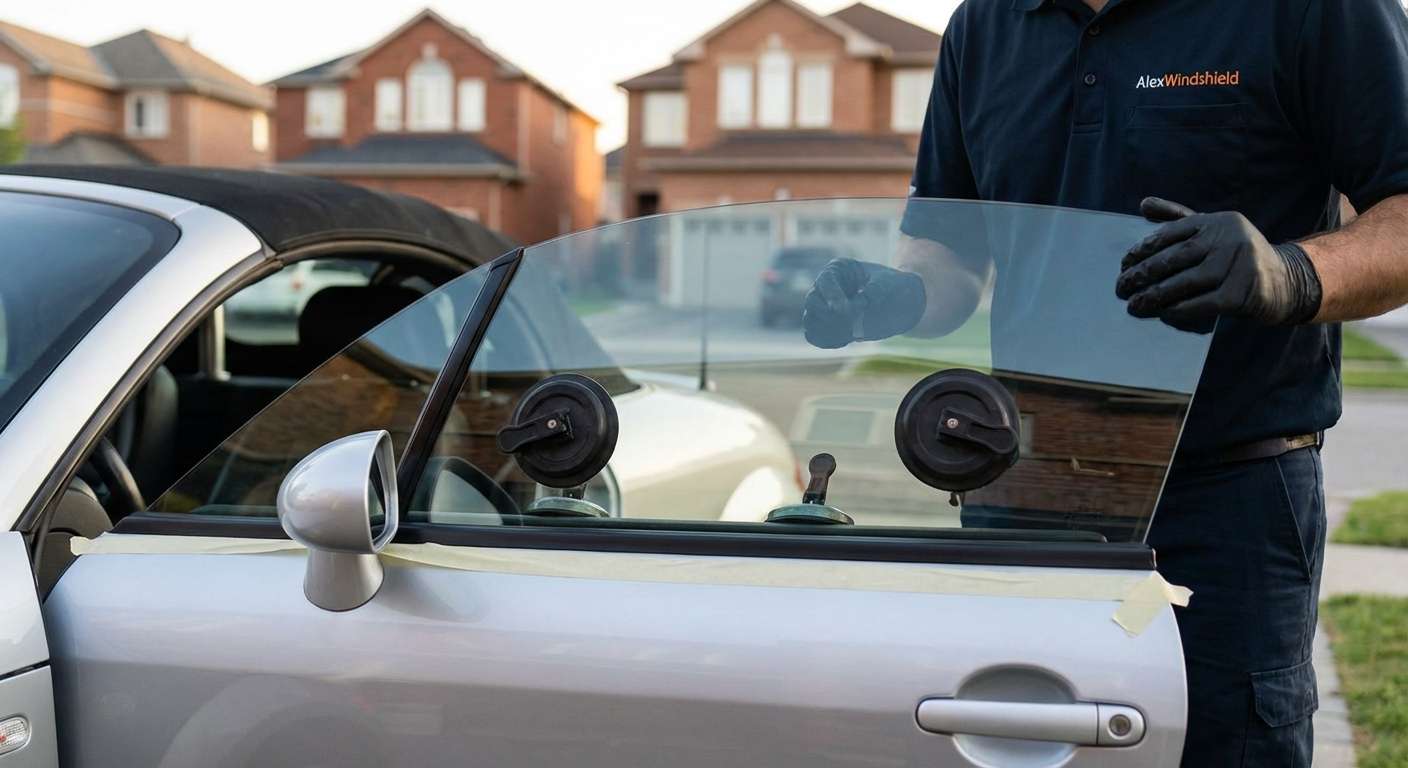
Frameless Side Glass and Coupe versus Roadster Distinctions
Replacing the door glass on this sports car requires recognizing right away whether you are dealing with a fixed hardtop or the convertible variant. The Coupe and Roadster use completely different door panes that cannot be swapped under any circumstance. The Coupe relies on part numbers 8N8845201 through 8N8845201B for the driver side and 8N8845202 through 8N8845202B for the passenger side, cataloged under NAGS references FD20786 and FD20787. Roadster variants require 8N7845201 through 8N7845201B on the left and 8N7845202 or 8N7845202A on the right. Because the soft-top header and rear pillar create an entirely distinct contour along the weatherstripping compared to the sweeping roofline of the Coupe, the curvature and upper edge profile of the tempered glass differ noticeably between the two bodies.
Each pane is a single-layer tempered green solar glass piece without embedded antennae, defrosters, or acoustic laminates, but it relies on two precise mounting holes bored directly through the bottom edge. When I source replacements, I fit high-grade aftermarket units from manufacturers such as Pilkington, FYG, PGW, or XYG that replicate the factory Sekurit green tint and exact edge bevels. These bottom holes must align squarely with the clamping brackets of the cable-and-pulley regulator suspended behind the aluminum door framework. If the glass is not seated dead center within those lower clamps, it will bind against the inner waist rail seals before reaching full travel.
The Indexing Drop and Door Latch Microswitch Complexities
Because these doors use a true frameless construction with no upper metal sash, the glass must tuck deeply into the rubber body channels along the A-pillar and roof rail to stop wind whistle at highway speeds. To make this possible without catching the weatherstrip when you pull the handle, the car utilizes a short-drop sequence. Operating either the interior or exterior handle signals the door control module to immediately lower the glass roughly ten to twelve millimeters. Once the latch secures shut, the pane powers back up into its upper weatherstrip pocket.
Failures in this sequence almost always trace back to the microswitches integrated inside the door lock actuator rather than the window motor itself. Over the years, the plastic cam lobe inside the latch wears down, or moisture seeps into the switch casing, preventing the car from sensing that the door is opening. When that occurs, the glass stays fully seated at its highest travel limit. Shutting the door while the pane is stuck up causes the bare top edge to violently strike the roof trim or convertible frame, risking immediate shattering of the tempered panel. On Roadster models, an additional switch mounted inside the windshield header latch can also fault, interrupting window operation when the soft top is locked down.
Regulator Failures and Precise Camber Alignment
The cable-driven regulators inside the Typ 8N door assemblies carry a notorious reputation for structural fatigue. The plastic slider clips become brittle and snap, or the steel drive cables fray and jump the track of the lower guide pulleys. This produces a loud crunching or scraping sound, frequently causing the heavy glass to tilt forward and drop straight down into the door shell. Compounding this, the wiring loom passing through the rubber accordion boot at the A-pillar flexes continuously until the heavy-gauge power lines or signal wires to the window motor snap internally, cutting power completely.
Restoring proper operation goes beyond simply bolting in new glass and cables. Frameless panes demand thorough mechanical alignment. Internal Torx adjusters positioned at the bottom of the door shell control the inward tilt, fore-aft slide, and vertical pitch of the glass against the B-pillar seal. If the inward camber is too loose, air rushes past the A-pillar seal; if tilted too aggressively, the window motor strains against the upper channel and overloads. Whenever the battery is disconnected during repairs, the control module forgets its upper and lower limits. Restoring the automated drop requires rolling the pane fully up, holding the console toggle switch for several seconds, rolling it completely down, and holding the switch again to re-adapt the travel range.