Side Window Impact Points and Break-In Damage
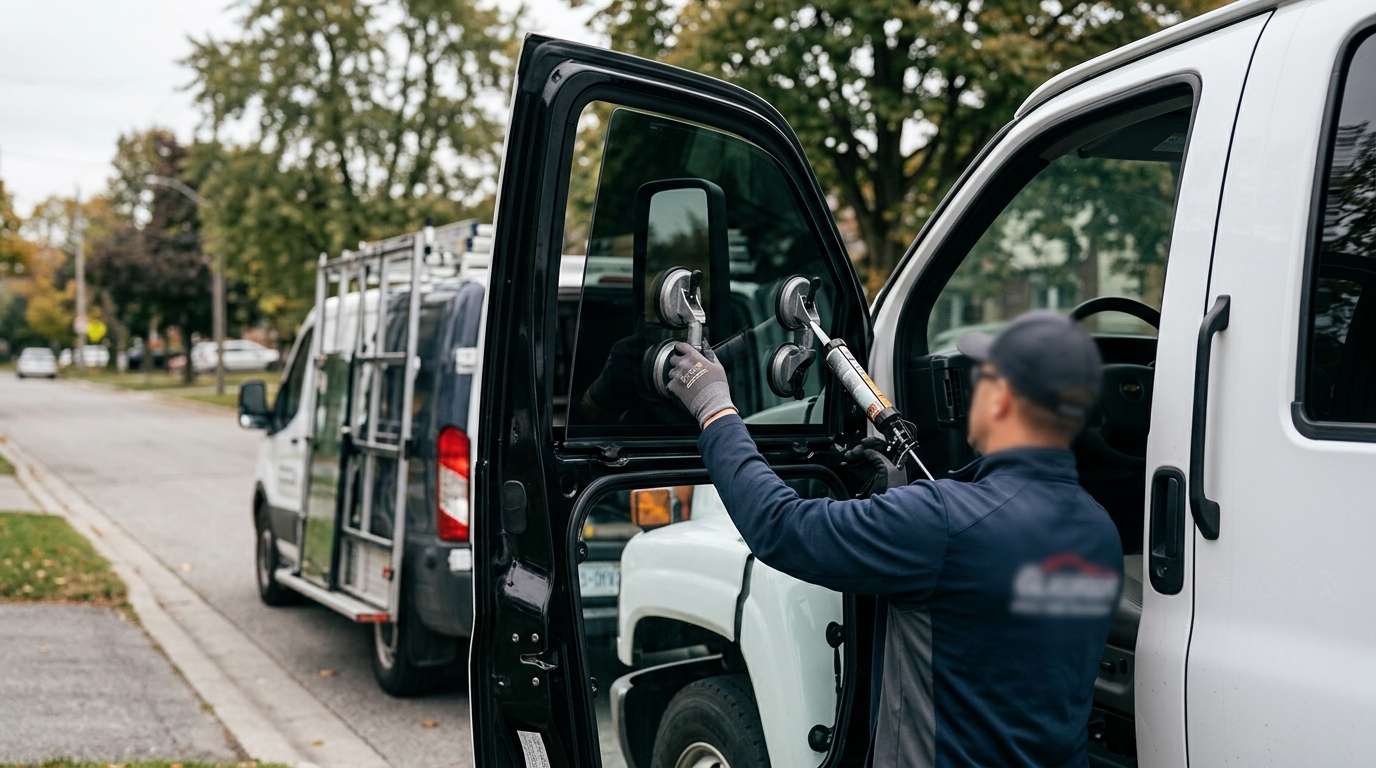
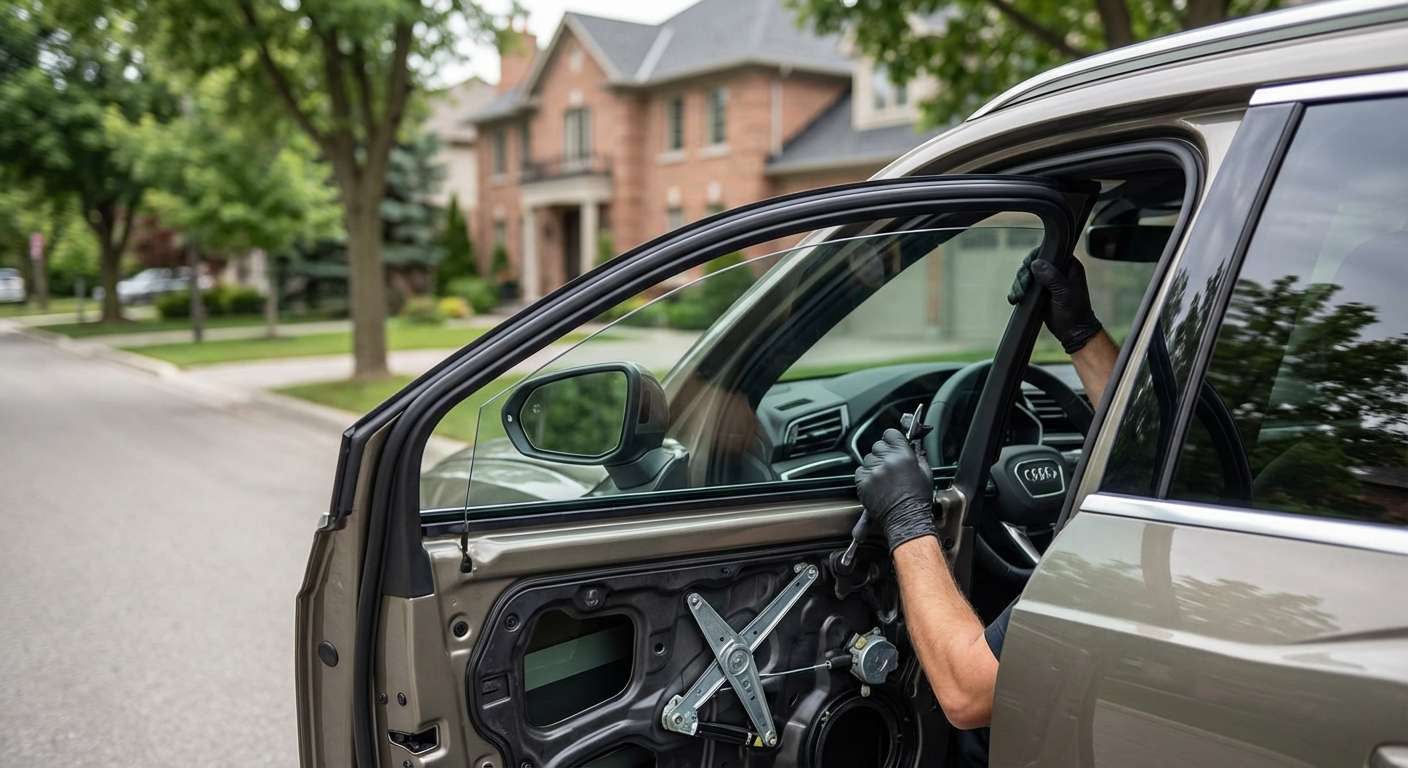
Tempered front door glass on this vehicle shatters entirely upon impact, usually because a thief strikes the lower corner near the exterior waist seal or road debris catches the pane at highway speeds. When the glass breaks, thousands of blunt cubes drop into the interior cavity of the door, lodging inside the lower sound-deadening pocket, resting around the speaker assembly, and clogging the bottom drain slots. The front doors use fully framed window surrounds rather than frameless glass, meaning impact forces often push stray fragments upward into the felt-lined rubber run channel, where they bind against the track. Replacing this pane requires thoroughly vacuuming the inner door structure so loose remnants do not rattle or jam the drop mechanism.
Typ F3 Glass Profiles and Hardware Retention
For the second-generation Typ F3 design, Audi shifted the front door glass dimensions to match the updated beltline and mirror geometries. The driver side movable window corresponds to NAGS reference FD28443 GT, representing green solar-tinted tempered glass, while the right passenger side is cataloged under FD28442 GT. At the dealer level, these front units were engineered under part numbers 83A845201, superseded by 83A845201A for the left, and 83A845202, superseded by 83A845202A for the right. When an unexpected break leaves your interior open to the weather, I typically arrive at your location within about an hour of your call to clear out the debris and fit the replacement pane.
The bottom edge of the glass does not rely on simple pressure friction. It locks into the regulator carriage via dedicated retention cutouts secured by specialized guide pins, matched to OEM pin 8K0845867. If an impact shatters the pane while rolling up or down, this clip hardware can tear loose from the regulator lifting bracket. The inner door card, vapor barrier, and wiring harness connectors must be detached to reach the access holes in the inner steel skin. From there, I clear remaining shards from the twin-rail cable tracks, replace broken guide hardware, and mount the new glass so it seats flush against the front triangular sail panel trim near the side-mirror base.
Felt Channel Friction and Pinch-Sensor Complications
The power window motor on this vehicle relies on an electronic anti-pinch system that measures motor current to detect physical obstructions. When replacement glass is set slightly crooked, or if coarse glass gravel remains wedged deep inside the flocked felt run channels, the upward drag increases dramatically. The motor module interprets this resistance as a trapped hand or arm, automatically halting the glass and reversing travel several inches downward. Rear movable panes, cataloged under dealer base number 83A845205 for the left side with dark privacy tint, are equally sensitive to friction against the vertical division bar that borders the fixed quarter glass. Clearing all residual glass from the perimeter rubber channels and resetting the one-touch limit travel on the door switch ensures the safety reverse mechanism functions normally without false triggers.