Identifying the Correct Sunroof Glass for Your B5 Audi A4
Determining the right replacement sunroof glass for your car comes down to verifying the body style, because the glass panel footprint and mounting frame differ between the four-door sedan and the five-door Avant wagon. While both versions utilize dark privacy-tinted tempered safety glass without any embedded antennas, defroster lines, or rain-sensing hardware, the Avant features a dedicated roof curvature and track cassette that takes a wagon-specific panel assembly.
You can identify the panel configuration directly through the factory equipment codes on the vehicle build sticker or by checking the body style attributes against the original parts references below.
| Vehicle Body Variant | OEM Glass Assembly Reference | Perimeter Rubber Gasket | Mounting Fastener Type |
|---|---|---|---|
| B5 Sedan (1996–2001) | 8D0877071A | 8D0877297 | T25 Torx (hidden behind side bellows) |
| B5 Avant Wagon (1998–2001) | 8D5877049 / 8D9877051 | 8D0877297 | T25 Torx (hidden behind side bellows) |
Sedans use assembly reference 8D0877071A, whereas Avant estates require 8D5877049 or 8D9877051. Both variants share the 8D0877297 perimeter weather seal, but swapping a sedan glass panel into an Avant track assembly causes severe sealing gaps and alignment bind along the roof skin.
Distinguishing Glass Breakage from Track and Electrical Failures
Before replacing shattered or fractured glass, I inspect the mechanical components beneath the aperture to confirm the panel was not damaged by an underlying track seizure. These cars use a roof cassette system prone to distinct mechanical and electrical failures that mimic glass misalignment:
- Overhead rotary dial switch failure: The potentiometer inside the roof-mounted rotary dial switch wears down over time. When internal contacts degrade, the sunroof will twitch, tilt open uncommanded while driving, or refuse to settle into its closed detent position.
- Delaminating sunshade fabric: The fabric on the sliding interior sunshade frequently separates from its backing board, bunching inside the rear cassette cavity and wedging the glass panel tight against the guide rails.
- Snapped guide shoes: The factory plastic cable clips and guide shoes turn brittle from decades of heat cycles. If one side snaps, the glass twists sideways in the track, creating immense tension that can shatter tempered glass or bind it halfway open.
- Manual override requirement: If an electrical failure leaves the glass stuck open during rain, prying off the front overhead dome light console exposes a hex drive socket on the motor assembly, allowing manual closure with an Allen key.
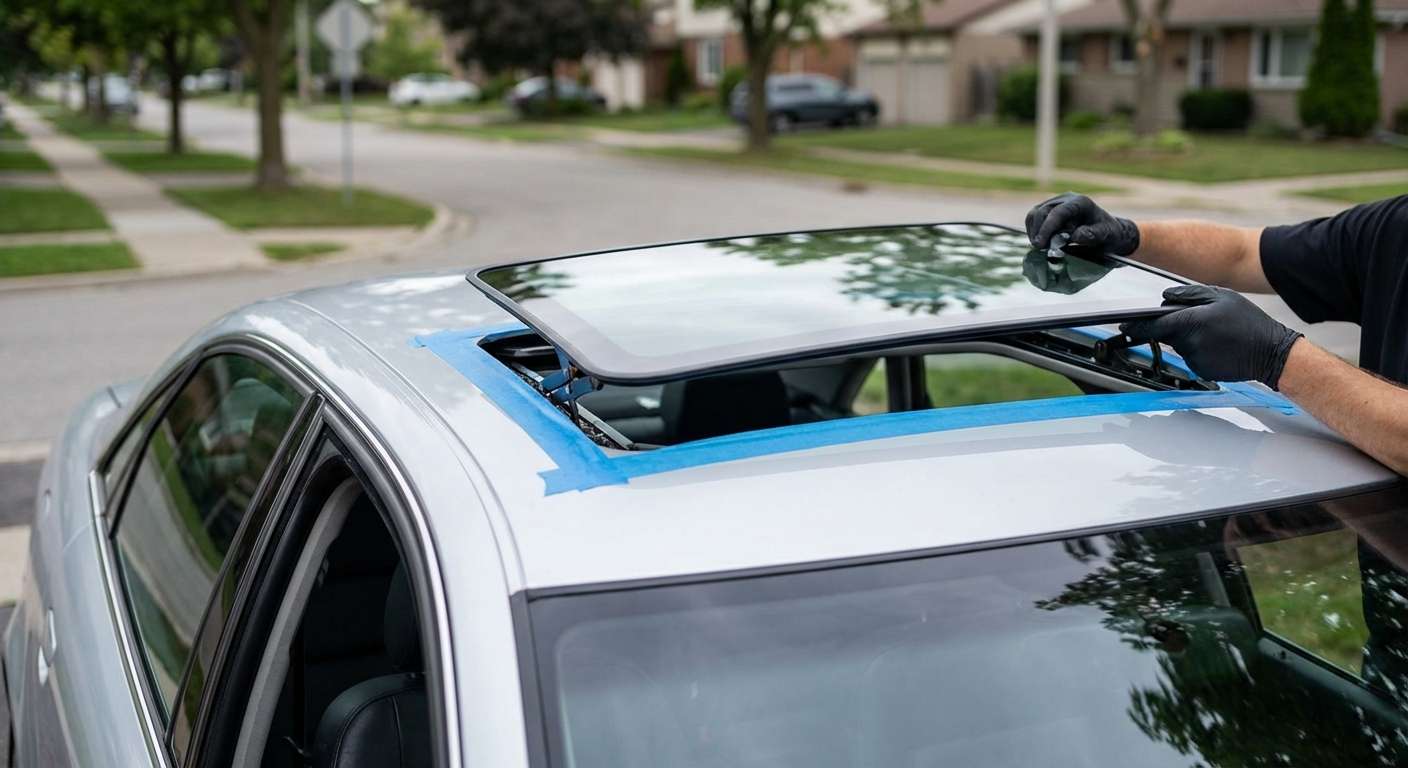
When you are dealing with broken glass or a jammed roof mechanism, I run a mobile-only service and travel directly to your home or workplace across Toronto and the GTA to replace the damaged panel on-site.
Perimeter Gaskets, Water Management, and Floor Module Risks
The rubber edge seal (8D0877297) wraps around the outer edge of the panel to block primary wind buffeting and road wash, but the system is intentionally designed to channel residual water into an internal cassette tray. From there, four flexible drain tubes guide water through the front A-pillars and rear C- or D-pillars to exit beneath the wheel wells.
If debris blocks these narrow tubes, water pools inside the metal sunroof cassette and overflows into the cabin. In this vehicle, water leaking down the A-pillar collects directly under the front passenger carpet, which submerges the factory Transmission Control Module (TCM) and central locking pump. Ensuring the replacement glass sits flush—level with the front roof edge and roughly one millimeter above the rear sheet metal—prevents premature seal fatigue, cabin wind rush, and excess drainage burden on the internal run-off channels.