Identifying Moonroof Glass Compatibility Across Acura TSX Trims
When you need to replace damaged sunroof glass on your Acura TSX, figuring out whether your specific vehicle requires a distinct panel comes down to understanding how Honda engineered the CU2 sedan and CW2 Sport Wagon roof openings. Many drivers assume the addition of the 3.5L V6 engine in 2010, the wagon body style introduced in 2011, or the aggressive aero styling of the 2012–2014 Special Edition changed the glass dimensions. Fortunately, Acura kept the power tilt-and-slide tempered glass moonroof panel completely uniform across every single variation of this vehicle.
Every configuration—from an entry-level 2.4L four-cylinder Base sedan to a fully optioned Technology Package Sport Wagon—relies on the exact same glass footprint. The original factory glass assembly corresponds to dealer reference number 70200-TL2-305 (which superseded the earlier 70200-TL2-A21 release). Unlike modern windshields that carry camera brackets or rain sensors, this vehicle's overhead glass is unencumbered by forward-facing electronics, rear defroster grids, or integrated radio antennas.
| Model Variant | Chassis Code | Engine Configuration | Glass Hardware Interchange |
|---|---|---|---|
| Base Sedan / Technology Package | CU2 | 2.4L K24A2 Inline-4 | Interchangeable (2009–2014) |
| V6 Sedan / V6 Tech | CU2 | 3.5L J35Z6 V6 | Interchangeable (2010–2014) |
| TSX Sport Wagon / Tech Wagon | CW2 | 2.4L K24A2 Inline-4 | Interchangeable (2011–2014) |
| Special Edition Sedan | CU2 | 2.4L K24A2 Inline-4 | Interchangeable (2012–2014) |
Integrated Encapsulation and Mechanical Features
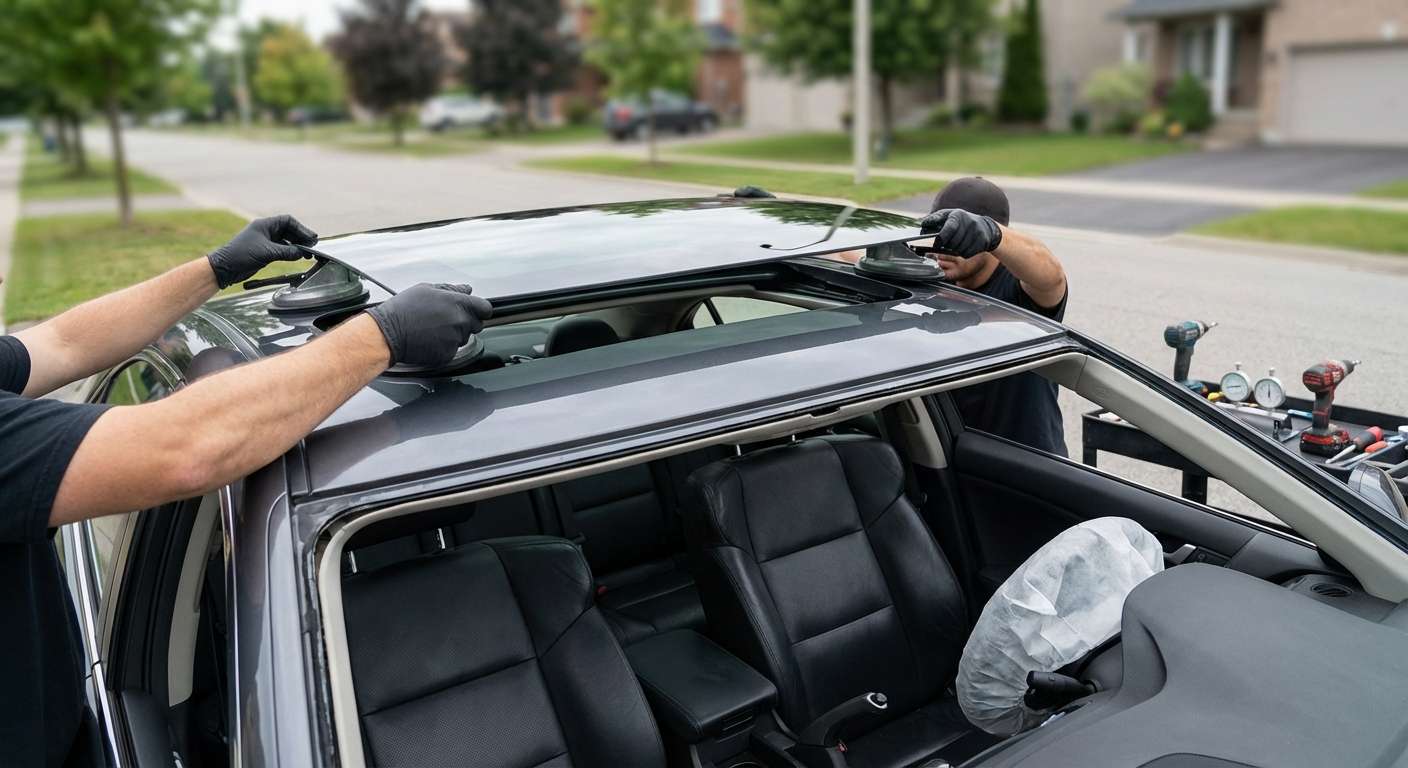
The TSX moonroof does not use loose, universal rubber that you stretch over the perimeter during an installation. The replacement panel comes pre-encapsulated with an integrated perimeter weatherstrip seal permanently bonded to the tempered glass edge. This factory solar-tinted glass functions directly alongside an interior pop-up wind deflector mounted to the cassette frame, cutting aerodynamic buffeting when retracted while filtering UV infiltration into the cabin.
If your sunroof is stuck open due to a blown fuse or track obstruction before a repair, you can bypass the overhead console switch manually. Acura incorporated an emergency drive socket directly into the electric motor housing; removing the overhead map light console provides access to a 4mm hex drive point that lets you wind the drive cables and close the panel manually to prevent interior rain damage. Whenever road debris shatters this tempered roof panel, I typically reach your driveway roughly an hour after you schedule the service so the open cabin is not left exposed to unpredictable weather.
Distinguishing Glass Damage from Track and Drainage Failures
Before replacing glass due to water ingress or movement issues, it helps to confirm whether the panel itself or the surrounding cassette is at fault. While physical breakage from highway gravel or falling branches demands a panel replacement, interior wetness often stems from issues below the glass line.
- Perimeter Seal Degradation: Over years of sun exposure, the encapsulated edge rubber can shrink, harden, or deform, generating elevated highway wind rush or letting excessive water bypass the outer lip.
- A-Pillar and C-Pillar Drain Blockages: Water that slips past the perimeter seal is designed to drop into an internal collection tray and exit through four dedicated rubber drain hoses. When pine needles or road silt plug the front A-pillar tubes, runoff overflows the frame, soaking the molded headliner and pooling in the front footwells.
- Track Contamination and Motor Resistance: The drive module utilizes an auto-reverse pinch protection safety feature. If dried rail grease or road grit jams the dual guide tracks, the safety logic mistakes the friction for an obstruction and prevents the glass from sealing flush against the roof skin.